Life in the limelight
Axworthy reflects on life in politics and beyond in new memoir
Advertisement
Read this article for free:
or
Already have an account? Log in here »
To continue reading, please subscribe:

Digital Subscription
One year of digital access for only $205*
- Enjoy unlimited reading on winnipegfreepress.com
- Read the E-Edition, our digital replica newspaper
- Access News Break, our award-winning app
- Play interactive puzzles
*First annual payment billed as $205.00 + GST for one year. This annual subscription will automatically renew at $233.00 + GST every 52 weeks (10% off the regular annual price of $259.35). Offer available to new and qualified returning subscribers only. Cancel any time.
To continue reading, please subscribe:
Add Free Press access to your Brandon Sun subscription for only an additional
$1 for the first 4 weeks*
- Enjoy unlimited reading on winnipegfreepress.com
- Read the E-Edition, our digital replica newspaper
- Access News Break, our award-winning app
- Play interactive puzzles
*Your next Brandon Sun subscription payment will increase by $1.00 and you will be charged $17.95 plus GST for four weeks. After four weeks, your payment will increase to $24.95 plus GST every four weeks.
Read unlimited articles for free today:
or
Already have an account? Log in here »
Hey there, time traveller!
This article was published 19/10/2024 (695 days ago), so information in it may no longer be current.
Since the province’s inception, beginning with Louis Riel, Manitoba has generated many nationally influential politicians. One of those is Lloyd Axworthy, who tells his life story in his new memoir Lloyd Axworthy: My Life in Politics.
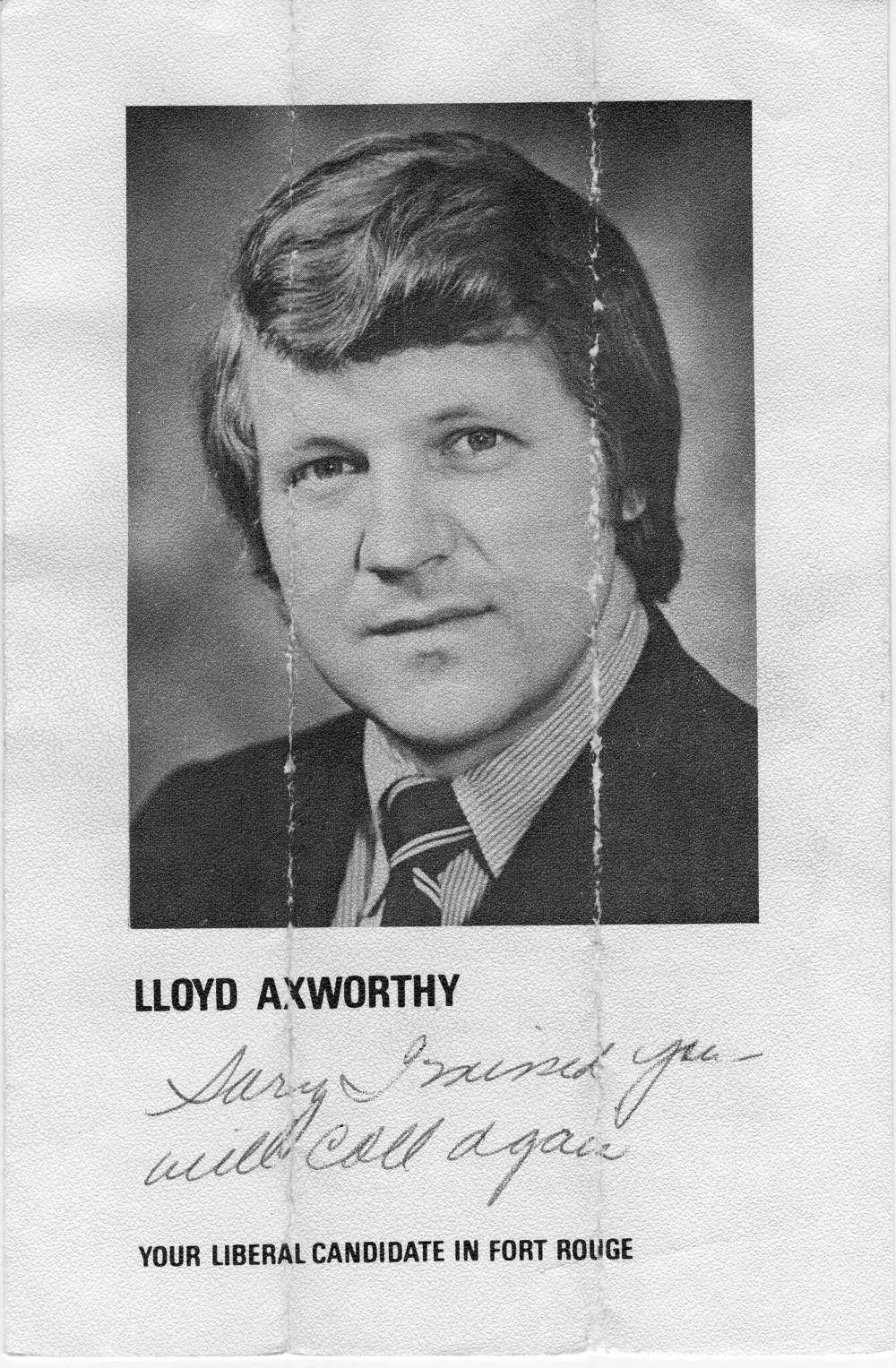
The 84-year-old Axworthy’s political career began at the provincial level, when he represented the riding of Fort Rouge from 1973 to 1979, a period in which he eventually became the lone Liberal in the Manitoba Legislature.
He jumped into federal politics in 1979 after narrowly defeating Sidney Spivak in the Winnipeg-Fort Garry riding. Beating Spivak — a prominent lawyer, businessman, provincial cabinet minister and past leader of the Manitoba Progressive Conservatives (PCs) — was no small feat. The margin of victory was so small that at on election night Axworthy, thinking he had lost, was giving his concession speech when campaign workers rushed in to tell him he had won.
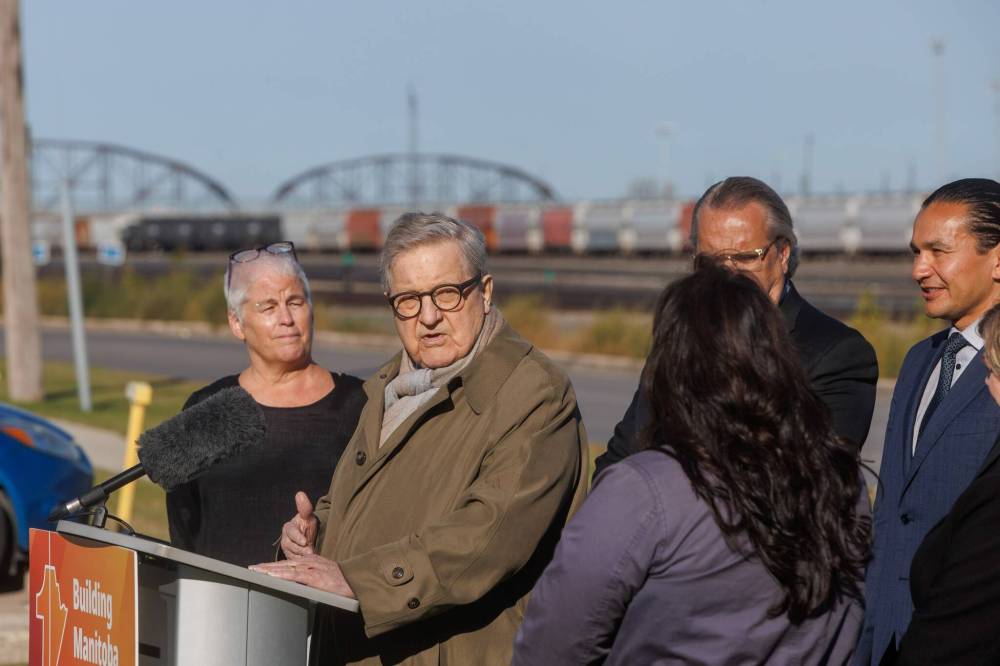
Mike Deal / Free Press
On Oct. 15, Manitoba Premier Wab Kinew (right) announced Lloyd Axworthy would lead a study to determine the feasibility of relocating the rail lines that run through Winnipeg.
When Axworthy took his seat in the House of Commons, he was facing Joe Clark and his short-lived PC government. With the Liberals resuming power in 1980, Axworthy was the only elected Liberal MP west of Ontario, thereby elevating him to national prominence. Pierre Trudeau made him Minister of Employment and Immigration, and then Minister of Transport.
There was an almost chemical affinity between what Axworthy refers to as his “progressive liberalism” and his riding’s supporters, who leaned centre-left and were comparatively well educated. This allowed him to survive the PCs’ landslide victory of 1984, which left John Turner’s Liberal caucus decimated, reduced to 40 elected MPs. Only two Western ridings went Liberal: Turner’s riding of Vancouver Quadra, and Axworthy’s.
Axworthy refers to the subsequent four years leading up to the 1988 federal election as his “sabbatical.” Rather than joining in on the antics of what the media referred to as the Liberal “rat pack” (a small cadre of effectively vocal MPs who ranted against Brian Mulroney’s PC government), Axworthy says he focused on studying policy issues, being with his family and traveling. With a greatly diminished caucus with fewer staff resources, one wonders how such colleagues as Sheila Copps, Don Boudria and Brian Tobin viewed this approach.
When Turner announced his resignation, Axworthy’s run for the federal leadership in 1990 was short-lived. “I thought I might have a chance based on my experience, ideas, and visibility during the ‘88 election representing the progressive wing of the party,” he writes. He concludes that “it wasn’t to be,” blaming his lack of a base in Ontario or Quebec, his not being bilingual and antipathy from the business community due to his strong opposition to the U.S.-Canada Free Trade Agreement.
As a student at Sisler High School, Axworthy recalls attending a speech by Lester Pearson at Winnipeg’s civic auditorium. Pearson had recently won the Nobel Peace Prize for his role in brokering a peace deal during the Suez Canal Crisis. Axworthy recalls Pearson telling his audience that “our strength as a country (is) in our humanist values, active commerce, and our independence as a player in the world.” The speech’s impact would be felt in later years.
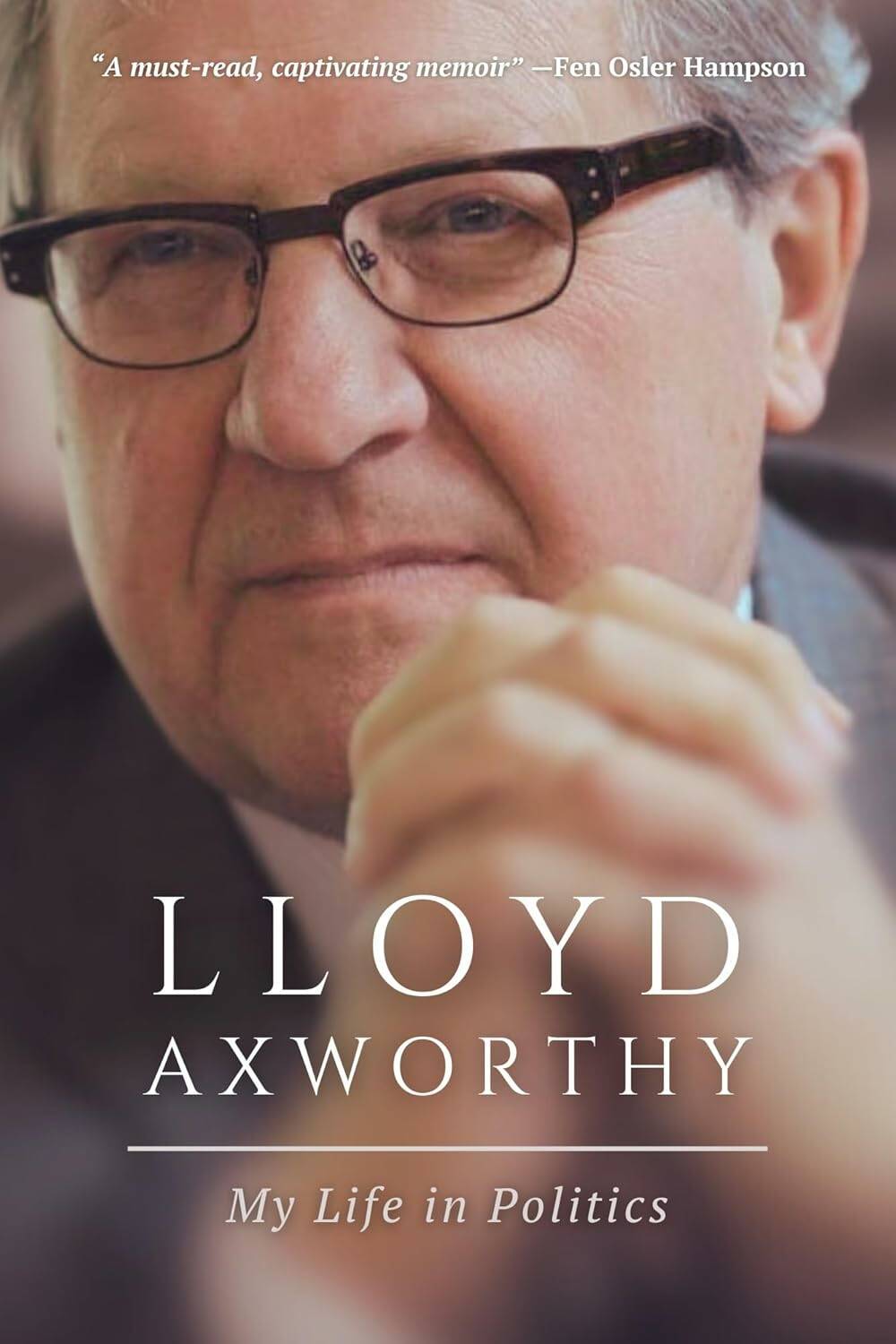
Lloyd Axworthy: My Life in Politics
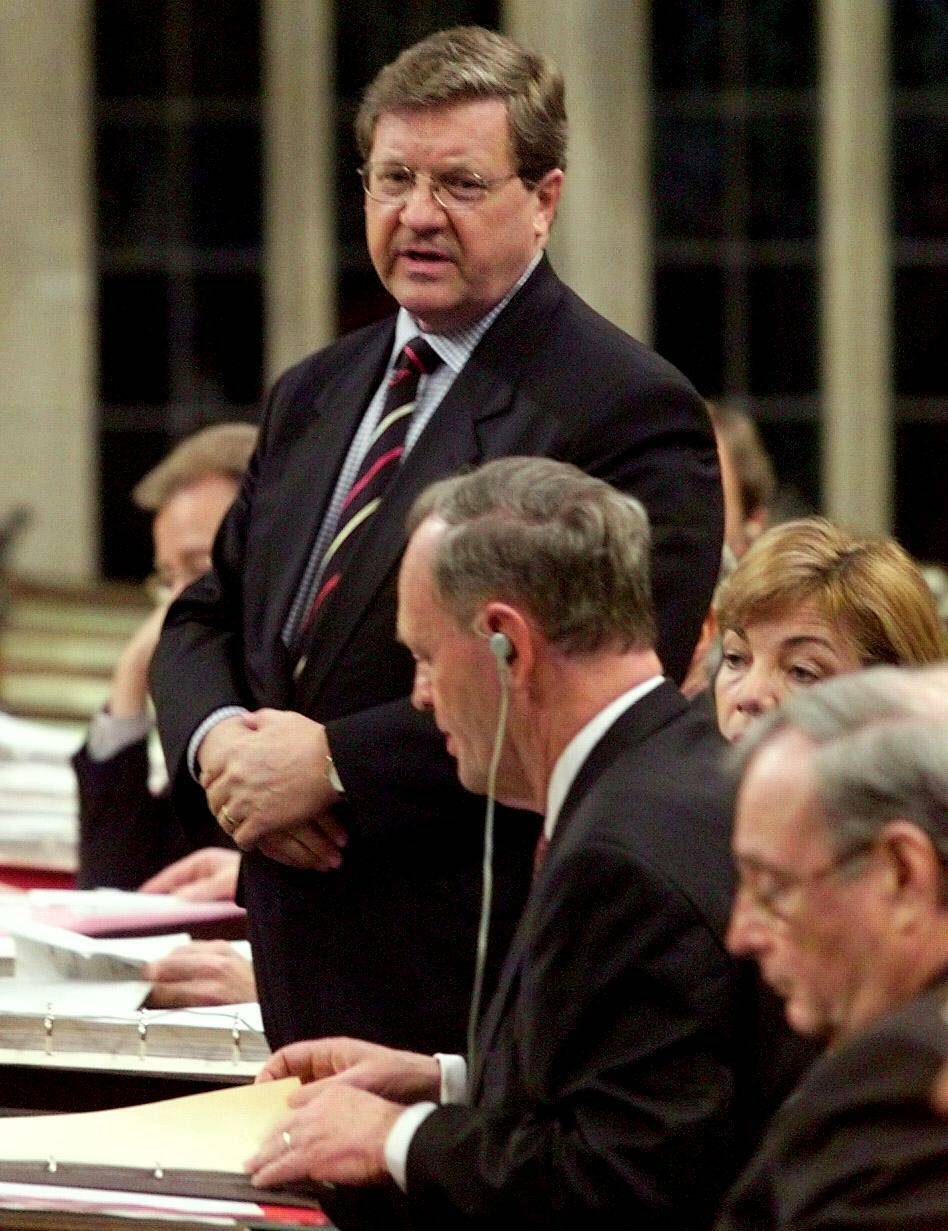
In 1993, when Jean Chrétien and his Liberals returned to power, Axworthy returned to cabinet as Minister of Human Resources Development. In 1996, the PM moved him to Foreign Affairs, which is where Axworthy writes he felt truly at home. In many ways, he was following a path laid out by Pearson so many years earlier. He believed, and still does, that Canada can and should play a positive role on the world stage, and makes a strong case that under both Stephen Harper and Justin Trudeau, Canada is failing in this regard.
Axworthy writes of his many successes at Foreign Affairs. In 1997, for example, he launched and coordinated a global treaty to ban landmines. Despite the ban being only a partial success — due to a lack of support from the U.S., China and Russia — the ban saved countless lives and prevented the loss of limbs for many throughout the world.
While his memoirs will satisfy those wanting to better understand federal government policies relating to social programs and international affairs in the 1980s and ‘90s, Axworthy is generally silent on the dynamics of the Manitoba Liberal Party in this same period. Regarding the need to rebuild the provincial party and leaving it to others, he writes that “I was not the right person for that task.”
Absent is anything about his disputes with provincial Liberal leader Sharon Carstairs over constitutional matters or electoral strategies; he mentions Carstairs only once. By contrast, Carstairs wrote in her own memoir, Not One of the Boys, about her many problematic dealings with Axworthy and her deepening “alienation from the federal Liberals” in the 1980s.

Axworthy is also silent regarding his support for Wab Kinew and the NDP during the last provincial election. As someone often regarded as the elder statesman of Manitoba’s Liberals, it was an unanticipated blow to then-Liberal leader Dugald Lamont and his party. This abandonment aligned with the NDP’s strategy to win over soft Liberal voters. Lamont lost his seat, and of the three Liberal incumbents only Cindy Lamoureux survived the campaign.
Free Press files
Axworthy served in as a provincial Liberal in the Fort Rouge riding from 1973 to 1979.
Perhaps not coincidentally, earlier this month, Axworthy was tasked by Kinew and the provincial NDP to head a two-year study of the feasibility of relocating the rail lines that run through Winnipeg.
Following his 2000 departure from politics, including 21 years as an MP, Axworthy’s life has been fruitful, including participating in various peace-related initiatives and serving as president of the University of Winnipeg from 2004 to 2014. Here he converted his longstanding interest in city planning into expanding the university’s downtown footprint. His tenure produced many new buildings and an increasingly positive relationship for the university with the surrounding community, including Indigenous peoples.
Beyond his work as a cabinet minister, both representing our province at the national level and working internationally, many will remember Axworthy’s local work and how he benefited the city’s downtown, which will be felt for decades to come.
Christopher Adams is an adjunct professor in political studies at the University of Manitoba, the rector of St. Paul’s College, and author of Politics in Manitoba.
TOM HANSON / THE CANADIAN PRESS FILES
Axworthy, seen here in 1999, says he felt most at home as Minister of Foreign Affairs.