

Civic forum seeks brighter spotlight for economic development
Advertisement
Read this article for free:
or
Already have an account? Log in here »
To continue reading, please subscribe:
Digital Subscription
One year of digital access for only $1.44 a week*
- Enjoy unlimited reading on winnipegfreepress.com
- Read the E-Edition, our digital replica newspaper
- Access News Break, our award-winning app
- Play interactive puzzles
*Billed as $5.77 plus GST every four weeks. After 52 weeks, price increases to the regular rate of $19.95 plus GST every four weeks. Offer available to new and qualified returning subscribers only. Cancel any time.
To continue reading, please subscribe:
Add Free Press access to your Brandon Sun subscription for only an additional
$1 for the first 4 weeks*
- Enjoy unlimited reading on winnipegfreepress.com
- Read the E-Edition, our digital replica newspaper
- Access News Break, our award-winning app
- Play interactive puzzles
*Your next Brandon Sun subscription payment will increase by $1.00 and you will be charged $17.95 plus GST for four weeks. After four weeks, your payment will increase to $24.95 plus GST every four weeks.
Read unlimited articles for free today:
or
Already have an account? Log in here »
Hey there, time traveller!
This article was published 22/10/2024 (731 days ago), so information in it may no longer be current.
Chris Lorenc, longtime president of the Manitoba Heavy Construction Association and a former Winnipeg city councillor, has long held the belief growing the economy should be “job one” for every leader of government.
“Without that there would be insufficient funds for the programs that establish the quality of life that we enjoy,” he said.
That thesis inspired Lorenc and the leaders of nine other economic development organizations in Winnipeg to hold their first forum Tuesday with Mayor Scott Gillingham. The group’s idea is to alternate between the mayor of the Manitoba capital and the province’s premier each year.
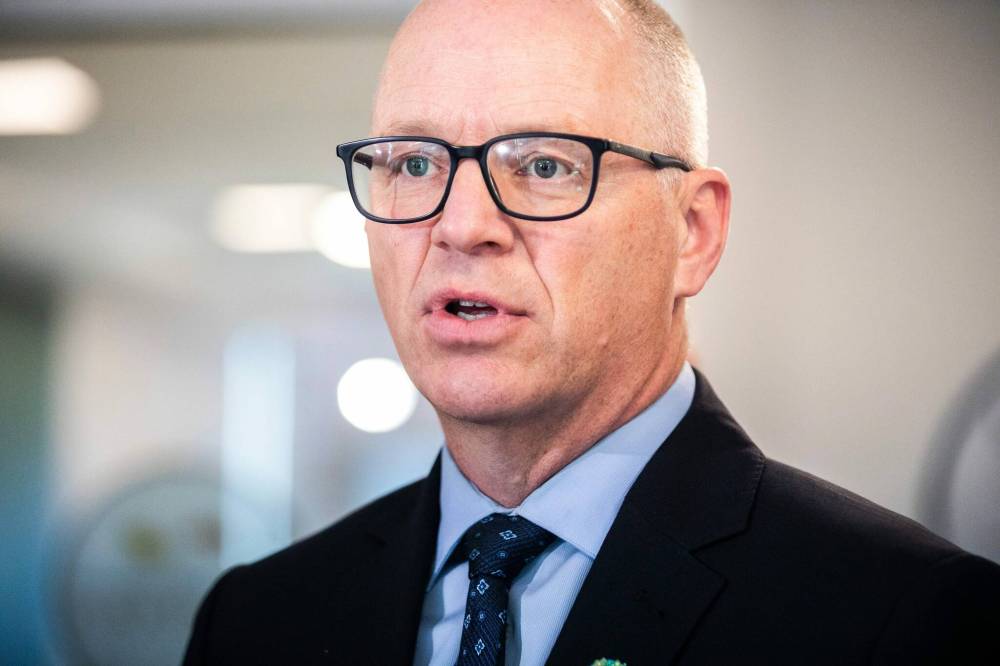
MIKAELA MACKENZIE / FREE PRESS FILES
Winnipeg Mayor Scott Gillingham acknowledged progress has been made to speed up the building-permit process but, “We’re not there yet.”
Gillingham, who campaigned in 2022 on that sort of economic growth dynamic, congratulated the organizers Tuesday, saying: “You are the people who are building our city.”
The event was “hosted” by the Business Council of Manitoba, Canadian Manufacturers & Exporters, MHCA, Manitoba Home Builders’ Association, Manitoba Hotel Association, Manitoba Trucking Association, Merit Contractors Association, Urban Development Institute, Winnipeg Construction Association and Winnipeg Regional Real Estate Board.
“The role of government is to create the environment and conditions for you (the business community) to succeed through sound infrastructure investment, efficient service and strategic planning,” the mayor said.
Gillingham was particularly keen to talk about housing and the work his administration has done to both increase the number of units approved (8,800 so far this year) and to speed up the process of approval.
The $122 million of federal money from the Housing Accelerator Fund, largely responsible for the increased housing approvals, has meant the city has had to reform some its housing zoning and permitting processes.
“That has been intense work,” said Gillingham. “It’s necessitated that all departments see themselves as the ‘housing department.’ I have appreciated the work that has taken place.”
Gillingham acknowledged progress in speeding up the permitting process is being made but, “We’re not there yet.”
The mayor was well-received by the business community members in attendance — but that doesn’t mean they all agreed with everything he said.
“What we are hearing about the permitting process is not necessarily the reality on the ground,” said Terry Shaw, CME regional vice-president for the Prairies.
Shaw said members have voiced concerns about lining up permits for plant expansions, never mind new builds.
The other main theme Gillingham wanted to convey was the age-old matter of a new funding model for the city, something that many of his predecessors have sought in the past.
“A priority for me is the ongoing conversations I’m having with Premier (Wab) Kinew and Finance Minister (Adrien) Sala about a new financial agreement with the province. It is essential,” the mayor said.
He pointed out a spike in Winnipeg’s population over the past three years (an increase in 65,000 people) is exciting for the city in many ways, but brings new challenges.
“Unlike other levels of government, the City of Winnipeg sees minimal immediate revenue growth from population increases,” Gillingham said. “The demand on services like policing and transit and recreation … increases immediately.”
He cited the example of the current servicing of 1,800 acres in CentrePort South. The city committed $20 million to the project, leveraging $40 million from the province, but costs went up and the city had to add another $13 million.
Meanwhile, the rate of return on that investment is so much different for the province and city.
“As soon as the first surveyor takes her half-ton to the gas station and starts pumping fuel, provincial and federal revenue begins to flow. There is immediate payback for two levels of government,” he said.
“But the City of Winnipeg has to wait until the pipes are in the ground and someone builds a widget-making factory and the assessed value of the land goes up and they start paying property tax.”
Gillingham said he’s aware every Winnipeg mayor in the recent past has advocated for a new funding model with the province.
“But this time it’s different,” he said. “This is not about (funding for) bells and whistles and legacy projects. We are talking about funding for basic service: pipes, pavement and police.”

Included in those basic services is funding for the billion-dollar-plus north end water pollution control centre, which Gillingham said was “the most expensive and complicated project the city has ever undertaken in its 150-year history.’
Gillingham said he understands the financial constraints the province is under and would not give any specifics as to how a new model would work, other than to say: “It would be one that rewards the city with a portion of the growth of the economy. Something that would benefit everybody.”
Lorenc said the time is right for a new deal for the city, with both leaders of the same mind. (Kinew has stated his appreciation for “the economic horse that pulls the social cart.”)
“The climate is beautiful, but I want to know if they emerge with a suntan,” said Lorenc.
martin.cash@freepress.mb.ca