

Bad state data may misdirect nearly $1 billion in federal funds to replace lead pipes
Advertisement
Read this article for free:
or
Already have an account? Log in here »
To continue reading, please subscribe:
Monthly Digital Subscription
$0 for the first 4 weeks*
- Enjoy unlimited reading on winnipegfreepress.com
- Read the E-Edition, our digital replica newspaper
- Access News Break, our award-winning app
- Play interactive puzzles
*No charge for 4 weeks then price increases to the regular rate of $19.00 plus GST every four weeks. Offer available to new and qualified returning subscribers only. Cancel any time.
Monthly Digital Subscription
$4.75/week*
- Enjoy unlimited reading on winnipegfreepress.com
- Read the E-Edition, our digital replica newspaper
- Access News Break, our award-winning app
- Play interactive puzzles
*Billed as $19 plus GST every four weeks. Cancel any time.
To continue reading, please subscribe:
Add Free Press access to your Brandon Sun subscription for only an additional
$1 for the first 4 weeks*
*Your next subscription payment will increase by $1.00 and you will be charged $16.99 plus GST for four weeks. After four weeks, your payment will increase to $23.99 plus GST every four weeks.
Read unlimited articles for free today:
or
Already have an account? Log in here »
Hey there, time traveller!
This article was published 23/10/2024 (409 days ago), so information in it may no longer be current.
ST. LOUIS (AP) — The Environmental Protection Agency is at risk of misallocating nearly $1 billion in lead pipe replacement funding to the wrong states because it didn’t verify inaccurate data provided by Texas and Florida, an agency watchdog announced.
It’s possible that the EPA can avoid much of the misallocation and can recover some funds that already went where they shouldn’t have, the EPA’s Office of Inspector General said. But the errors mean some states with the biggest needs may have to wait longer for funds — or will get less than they should have, the OIG said in a report this week.
The EPA disputed the watchdog’s conclusions, saying it tried to balance evolving information on lead service lines in each state with the need to quickly allocate money from the Bipartisan Infrastructure Law. Officials promised to review future allocations for Texas and Florida.
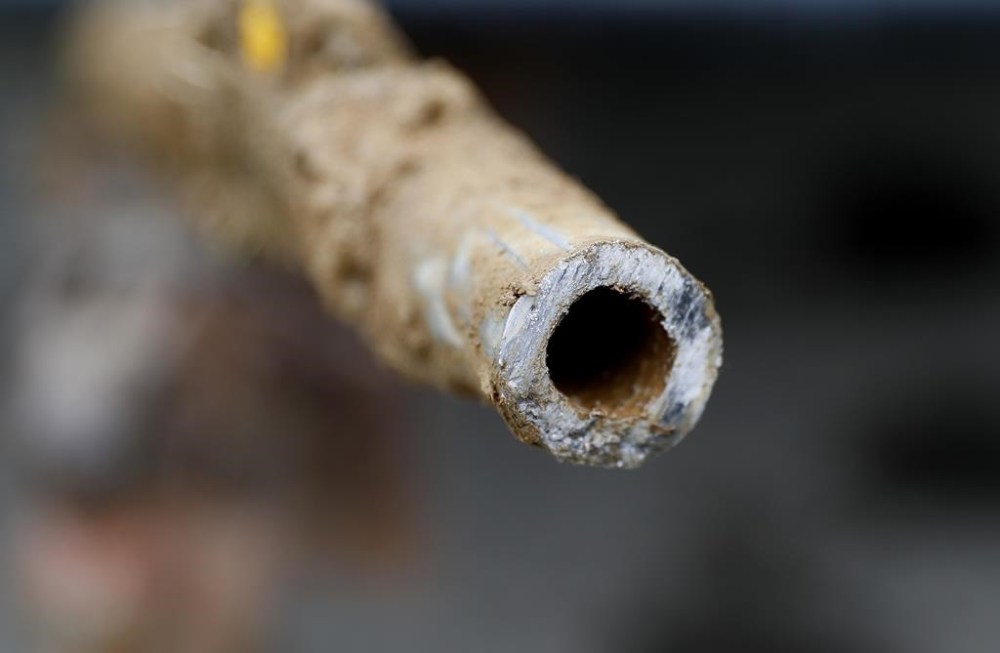
At issue is a first-of-its-kind EPA survey that asked local officials to estimate the number of lead pipes in their state. Some states with long industrial legacies like Illinois and Michigan have far more than others. The bipartisan infrastructure law provided $15 billion to find and replace lead pipes. The survey was to ensure states with more pipes got more money.
But the EPA didn’t verify what states told them and there were glaring problems with the numbers provided by Texas and Florida, according to the inspector general. For example, a single data entry error by Houston caused the EPA to allocate nearly $120 million more to Texas than it probably should have in fiscal year 2023, the report said. When Houston told Texas officials about the mistake, the state didn’t inform the EPA, the report said.
“Florida seriously screwed up and Texas was obstinate,” said Tom Neltner, national director of the lead policy nonprofit Unleaded Kids.
The findings were released just weeks after the Biden administration finalized an ambitious rule mandating that most cities remove their lead pipes within a decade, highlighting how difficult that effort will be. Lead harms brain development in children and increases blood pressure in adults and the agency estimates it will cost $50-$80 billion to replace the country’s roughly 9 million lead pipes. Federal funds are vital for ensuring the cost doesn’t fall too heavily on homeowners.
“We have warned the EPA repeatedly about the real and significant consequences of using unreliable data. The Agency needs to fix these systemic flaws before more taxpayer dollars are misdirected,” said EPA Inspector General Sean W. O’Donnell.
O’Donnell’s office wants the agency to develop methods to verify state data. EPA says the OIG misunderstood the point of its survey and wants to focus on addressing the questionable Florida and Texas data and allocations. It’s considering what to provide to those states going forward.
Texas did not return a request for comment. The OIG provided an initial report on the problem in May. At that time, Florida said the EPA estimate for the state was premature and too high. They blamed the EPA for a flawed calculation. Florida officials did not respond this week to AP’s questions about the inspector general’s report.
The EPA survey was important because many water providers don’t know how many lead pipes they have or where they are. Before the survey, lead funding levels weren’t linked to how many pipes a state had. Accurate inventories are expensive and time-consuming so the agency relied on states to provide their best judgment so it could quickly distribute federal funds based more closely on each state’s needs.
“This agency effort redirected hundreds of millions of dollars to areas of the country with higher need for lead service line replacement,” the agency said.
The EPA also gave states a chance to update faulty data, and funds that aren’t used by states eventually are reallocated to places that can use it.
When the EPA initially released state results, however, some experts immediately raised questions about some, including Florida’s, because they differed widely from prior industry and nonprofit estimates. In 2023, Florida received the highest allocation in the country, Texas the fifth most.
The inspector general said that skepticism was warranted. The report said Florida used an estimation method that inflated its lead pipe count and inconsistently applied that methodology. The watchdog also talked directly to eight water providers that accounted for about 40% of the state’s total number of reported lead pipes. Four showed the OIG that they reported no known lead pipes.
“None of their responses matched the (lead pipe) data that the state submitted to EPA,” the report said, adding that one anonymous water system manager told the inspector general’s office that the data the state submitted for their system “made absolutely no sense.”
The EPA tried to collect better data from Florida, but state officials didn’t update their submission when given the chance. Florida was awarded its full amount — $254.79 million – for 2023, the report said. Its allotment was reduced to $228.68 million the following year — a high amount the inspector general also called into question.

“Flaws in Florida’s (lead pipe) data carry significant financial implications for other states,” the report said.
Neltner said it matters if Florida, a state with few lead pipes, spends a lot on searching for them when other states with documented problems desperately need money to get lead out of the ground now.
Even after the EPA allocates money, there’s time to correct problems. It is unclear how much Texas actually received in 2023, Neltner said. The following year, Texas was given the minimum. That meant that others states like Minnesota and New Jersey received more money.
___
The Associated Press receives support from the Walton Family Foundation for coverage of water and environmental policy. The AP is solely responsible for all content. For all of AP’s environmental coverage, visit https://apnews.com/hub/climate-and-environment