Scientists tag great white sharks to learn how best to protect endangered species
Advertisement
Read this article for free:
or
Already have an account? Log in here »
To continue reading, please subscribe:

Digital Subscription
One year of digital access for only $205*
- Enjoy unlimited reading on winnipegfreepress.com
- Read the E-Edition, our digital replica newspaper
- Access News Break, our award-winning app
- Play interactive puzzles
*First annual payment billed as $205.00 + GST for one year. This annual subscription will automatically renew at $233.00 + GST every 52 weeks (10% off the regular annual price of $259.35). Offer available to new and qualified returning subscribers only. Cancel any time.
To continue reading, please subscribe:
Add Free Press access to your Brandon Sun subscription for only an additional
$1 for the first 4 weeks*
- Enjoy unlimited reading on winnipegfreepress.com
- Read the E-Edition, our digital replica newspaper
- Access News Break, our award-winning app
- Play interactive puzzles
*Your next Brandon Sun subscription payment will increase by $1.00 and you will be charged $17.95 plus GST for four weeks. After four weeks, your payment will increase to $24.95 plus GST every four weeks.
Read unlimited articles for free today:
or
Already have an account? Log in here »
Hey there, time traveller!
This article was published 31/10/2024 (677 days ago), so information in it may no longer be current.
FREDERICTON – Over four days on the water in the Gulf of St. Lawrence, Heather Bowlby and her team from Fisheries and Oceans Canada tagged 15 great white sharks.
The animals are listed as endangered on the federal Species at Risk Act, and data from the tags will help Bowlby and her team answer important questions that can help with conservation efforts: where the sharks tend to live, what time of year they arrive in Canadian waters, and how old they are.
The team used seal meat to attract the animals to a boat, where a researcher then harpooned a tag into their dorsal muscles. She said that method is one of the least invasive ways of tagging because it doesn’t involve catching the shark, which causes the animal additional stress.
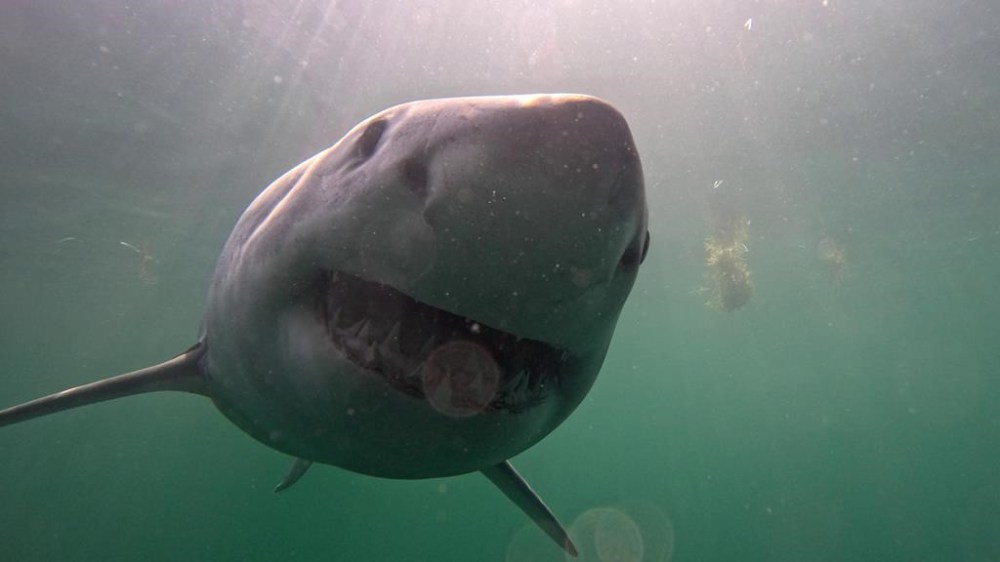
“They definitely will flinch when the tag anchor goes in,” Bowlby said in a recent interview after her trip, adding that she doesn’t think it bothers the sharks too much because the animals tend to stick around.
“You’d imagine if they were very hurt or very stressed out by the event they’d leave the area. But they don’t do that. Some of them stay around for hours. We’ve actually had to change tagging sites to get away from some animals because they wouldn’t leave the boat.”
The animals were implanted with a mix of acoustic and pop-off satellite-linked archival tags in the waters near Îles-de-la-Madeleine, Que. Pop-off tags are named like that because they come off the animal after about one year, float to the surface of the water and begin emitting signals to a satellite. The tags record depth, temperature and light level, giving researchers an idea of the location of the animal.
Acoustic tags don’t record any data; rather, they send a coded signal allowing researchers to identify the shark associated with a tag when the animal swims within range of one of the hundreds of receivers around the Bay of Fundy, Atlantic coast, Gulf of St. Lawrence and surrounding areas, Bowlby said.
Acoustic tags, which can last up to 10 years, help scientists answer questions about the time of year the animals come to Canada, what parts of the region they prefer, and whether they return year after year.
Bowlby described the animals as shy yet curious. “They have excellent senses, and they tend to investigate things they don’t understand. They’re actually surprisingly cautious as well.”
Most of the great white shark’s senses are concentrated around its mouth. Apart from the five senses it shares with humans — sight, hearing, touch, smell and taste — it also has electromagnetic and pressure sense.
And because they are curious but lack hands to manipulate objects, the animals use their mouths, which can, unfortunately, go badly for people.
Data from tags doesn’t immediately answer questions about what food they like, especially since white sharks are considered a “generalist predator,” meaning they eat a buffet of stuff, but the places they travel to can help researchers understand feeding behaviour based on what prey is found in the surrounding area.
Fisheries and Oceans Canada’s great white shark tagging program began in 2018, and this year the team tagged 15 in three days at sea, the most number of animals on a single trip.

Last year, scientists found on the beach one of the tags they had implanted in a shark months before. “When that happens, it’s a bit of a gold mine, because the tags themselves record so much more data than they can ever transmit to satellite,” she said.
“The satellite transmissions are limited by the number of messages that the tag can give to the satellite, but when you actually get the tags back, they have information collected at every … 10 seconds through the duration of the deployment.
“It was almost like finding a unicorn.”
This report by The Canadian Press was first published Oct. 31, 2024.
Note to readers: This is a corrected story. A previous version said there are 6,900 receivers around the Bay of Fundy, Atlantic coast, Gulf of St. Lawrence and surrounding areas. In fact, there are hundreds of receivers.