

Monteris Medical laser tech marks patient treatment milestone
Advertisement
Read this article for free:
or
Already have an account? Log in here »
To continue reading, please subscribe:
Digital Subscription
One year of digital access for only $1.44 a week*
- Enjoy unlimited reading on winnipegfreepress.com
- Read the E-Edition, our digital replica newspaper
- Access News Break, our award-winning app
- Play interactive puzzles
*Billed as $5.77 plus GST every four weeks. After 52 weeks, price increases to the regular rate of $19.95 plus GST every four weeks. Offer available to new and qualified returning subscribers only. Cancel any time.
To continue reading, please subscribe:
Add Free Press access to your Brandon Sun subscription for only an additional
$1 for the first 4 weeks*
- Enjoy unlimited reading on winnipegfreepress.com
- Read the E-Edition, our digital replica newspaper
- Access News Break, our award-winning app
- Play interactive puzzles
*Your next Brandon Sun subscription payment will increase by $1.00 and you will be charged $17.95 plus GST for four weeks. After four weeks, your payment will increase to $24.95 plus GST every four weeks.
Read unlimited articles for free today:
or
Already have an account? Log in here »
Hey there, time traveller!
This article was published 31/10/2024 (576 days ago), so information in it may no longer be current.
Monteris Medical, a medical device company founded in Winnipeg in 1999, just passed the 7,000th patient treated with its minimally invasive technology to treat brain tumors and other brain tissue conditions.
The company, that was started in the St. Boniface Hospital Research Centre but moved its head office to the Minneapolis area in 2016, uses a robotic-guided laser probe to zap brain tumours.
When it moved to Minnesota its technology had been acquired by about 35 hospital in Canada and the U.S. It is now up to 110 hospitals, including virtually all of the advanced academic medical centres in the U.S. as well as all the advanced epilepsy diagnostic centres
SUPPLIED
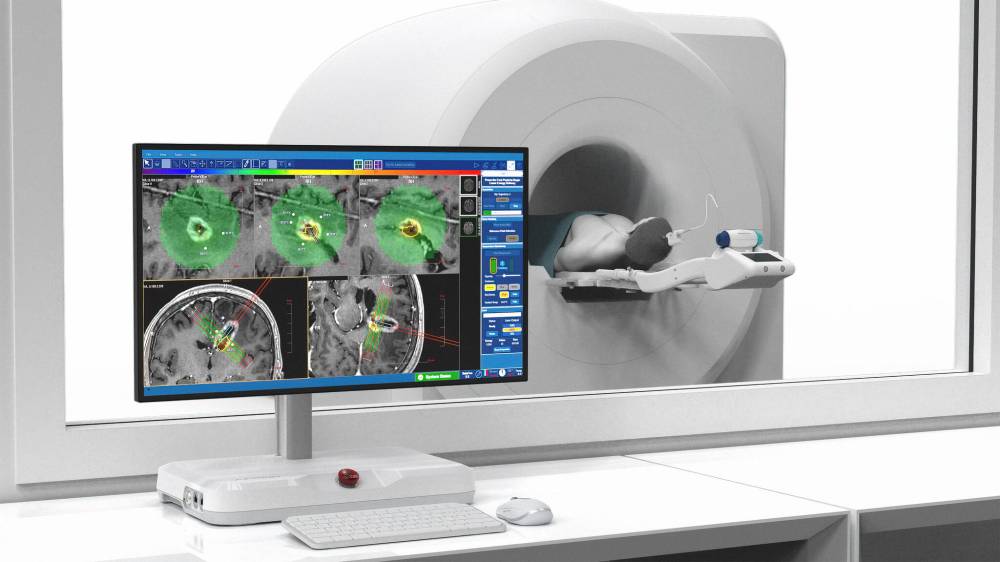
Monteris’s Laser Interstitial Thermal Therapy (LITT)
In addition to treating primary brains tumours (tumours that originate in the brain) and metastatic brain tumours (cancerous tumours that have spread to the brain from elsewhere in the body) the Monteris NeuroBlate technology also is used to treat drug-resistant epilepsy.
Richard Tyc, senior vice-president science and technology, leads a group of close to a dozen software engineers in Winnipeg, a component of the company that has remained domiciled here.
Tyc, who co-founded the company along with Mark Torchia (now the vice-provost of the University of Manitoba) both received the prestigious Earnest C. Manning Principal Prize in 2015 and the inaugural Governor General of Canada’s Award for Innovation in 2016.
The company has been effectively owned and financed by venture capital funds for many years and raised close to $40 million in a round in late 2022.
“We’re currently in the process of raising money again,” Tyc said.
In addition to recent studies that showed that outcomes for close to 60 per cent of drug-resistant epilepsy patients who underwent Monteris’s Laser Interstitial Thermal Therapy (LITT) remained seizure free for at least a year, Tyc said there is now plenty of evidence to show that patient outcomes in general are on par with surgery outcomes.
But the difference is that Monteris’s patients are able to leave the hospital the next day or sooner. That’s because of the minimal invasion of just a pencil-sized hole in the skull is required to insert the robotic-guided laser probe.
The patient leaves with just a couple of stitches and requires an average of only 34 hours of hospitalization.
Open brain surgery patients can have a lengthy and significant recovery process, potentially including a stay in the ICU as well as possible post-surgical complications.
The procedure is done while the patient is in an MRI so the neuro-surgeon has a 3D visual on the procedure at all times thanks to Monteris’s Winnipeg software engineers.
Its technology is available in virtually every hospital that has an IMRIS inter-operative MRI suite. (IMRIS was also a company that was founded in Winnipeg and then moved to Minnesota. That company has gone through a bankruptcy procedure.)
Monteris may have moved to Minnesota for capital and other business development reasons but Tyc notes that the majority of its business is in the U.S.
Of the 110 locations it has, fewer than half dozen are in Canada.
SUPPLIED
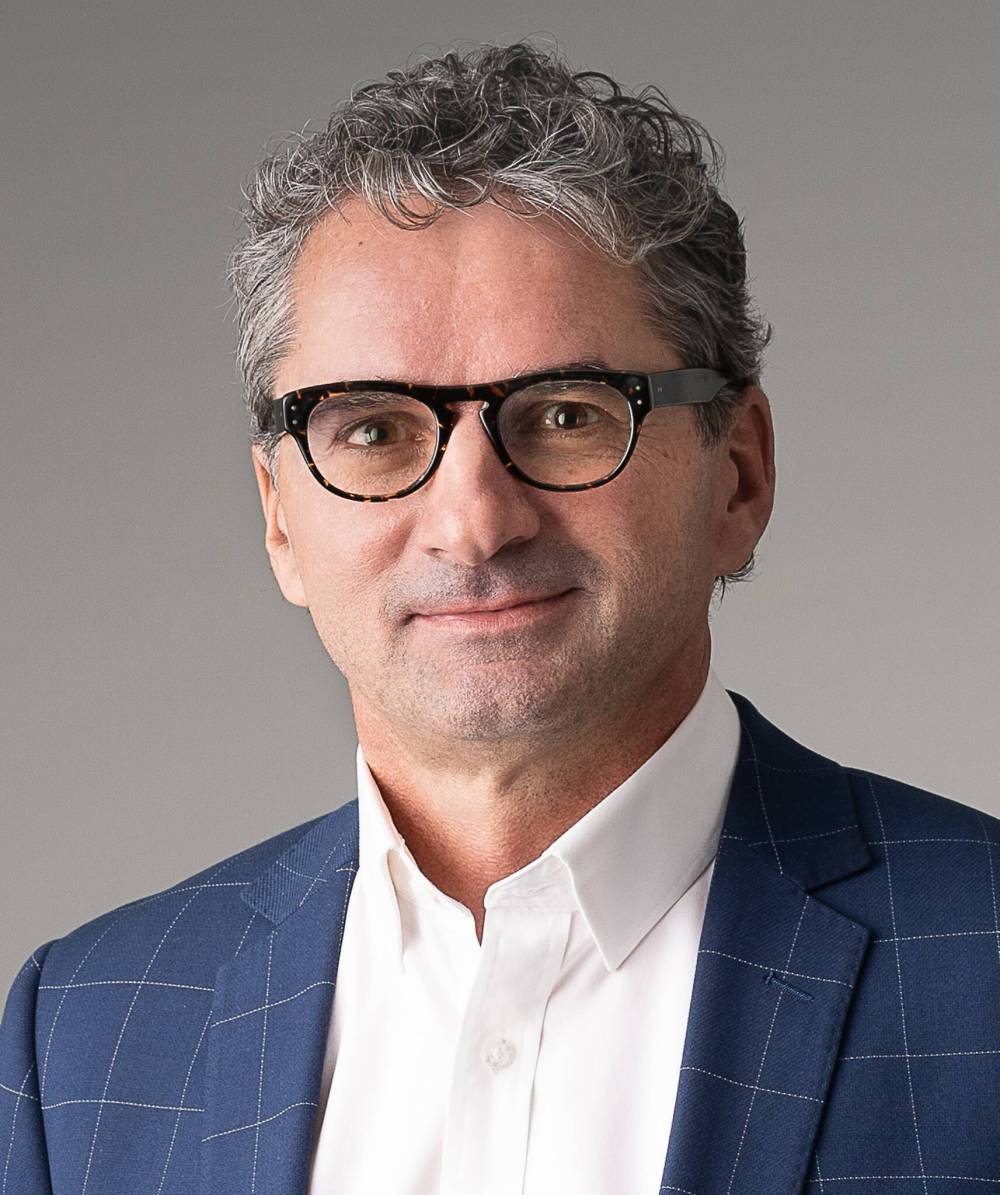
Monteris Medical Richard Tyc Senior Vice President, Science and Technology.
(That said the 7,000th patient was at Sick Kids Hospital in Toronto.)
Tyc said it’s hard to get new medical technologies approved for use in Canada.
“That’s the reality of getting things done in Canada,” he said. “We started in Winnipeg but if we had to only bank on Canadian business we would not be in business anymore. We really had to go to the U.S.”
Emily Smith, Monteris’s vice-president marketing, said with the number of installations it currently has, the company is stable and sustainable.
It is even able to compete with a similar offering from the med-tech giant, Medtronic, whose technology is not specific to the brain.

“They have many other technologies,” she said, “This is all we do so we have to be really, really good at it.”
The company’s sales force is always pitching new hospitals and neurosurgeons to establish new sites.
But there is also an issue with utilization where some sites may do five to 10 procedure per month, some might only do one.
“There is a ton of opportunity to grow utilization,” Smith said.
martin.cash@freepress.mb.ca