‘How old are you?’ not a scary question

Advertisement
Read this article for free:
or
Already have an account? Log in here »
To continue reading, please subscribe:
Digital Subscription
One year of digital access for only $1.44 a week*
- Enjoy unlimited reading on winnipegfreepress.com
- Read the E-Edition, our digital replica newspaper
- Access News Break, our award-winning app
- Play interactive puzzles
*Billed as $5.77 plus GST every four weeks. After 52 weeks, price increases to the regular rate of $19.95 plus GST every four weeks. Offer available to new and qualified returning subscribers only. Cancel any time.
To continue reading, please subscribe:
Add Free Press access to your Brandon Sun subscription for only an additional
$1 for the first 4 weeks*
- Enjoy unlimited reading on winnipegfreepress.com
- Read the E-Edition, our digital replica newspaper
- Access News Break, our award-winning app
- Play interactive puzzles
*Your next Brandon Sun subscription payment will increase by $1.00 and you will be charged $17.95 plus GST for four weeks. After four weeks, your payment will increase to $24.95 plus GST every four weeks.
Read unlimited articles for free today:
or
Already have an account? Log in here »
Hey there, time traveller!
This article was published 02/11/2024 (717 days ago), so information in it may no longer be current.
On occasion, journalists have to ask people uncomfortable questions. Sometimes you need to offer someone accused of something heinous the chance to respond. Sometimes you need to talk to a bereft family after a tragedy strikes.
And sometimes, you have to ask actors how old they are.
I can tell you that the question “How old are you?” is often met with a look of abject horror, as though I had just asked if they’ve ever seriously considered becoming a cannibal.
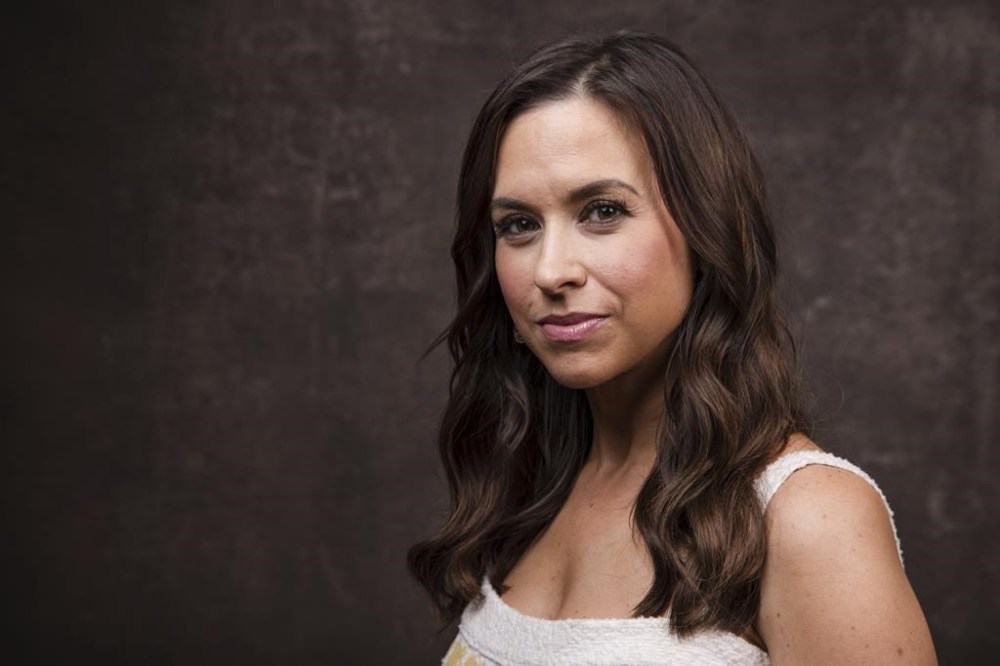
It seems an innocuous enough question. It’s a simple, straightforward biographical detail that provides context about someone’s life and career — and a detail readers notice when it’s missing. But it’s frequently regarded as some sort of “gotcha” question and, oof, that makes me so depressed.
I completely understand why revealing one’s age still feels like a career killer for mid-career working actors who aren’t a Meryl or a Mirren. After all, female actors have long been treated as though they have a best-before date like milk, only instead of curdling, they are cast as the mothers of men seven years their junior.
Last week, Hallmark was hit with an ageism suit filed by former casting director Penny Perry, 79, who says she was pushed out of the company and is suing for wrongful termination, age and disability discrimination and defamation.
Perry also claims that Lisa Hamilton Daly, Hallmark’s executive vice-president of programming, said, “Our leading ladies are aging out,” specifically naming longtime Hallmark stars Lacey Chabert, who is 42, and Holly Robinson Peete, who is 60.
Perry alleges that Daly said of Chabert, “Lacey’s getting older and we have to find someone like her to replace her as she gets older,” and of Peete, “No one wants her because she’s too expensive and getting too old. She can’t play leading roles anymore.”
These claims — which Hallmark denies — are disappointing. The suit arrives at a time when it seems as if things are finally changing, slowly, for the better when it comes to representation of older women onscreen.
Jean Smart, 73, is having a massive moment right now, thanks in large part to her leading role in the acclaimed HBO Max comedy Hacks.
Angela Bassett, 66, is leading the popular Fox procedural 9-1-1. Wendie Malick, 73, stars as the neurologist love interest of Harrison Ford, 82, in AppleTV’s dark comedy Shrinking.
Meryl Streep, 75, stars as the breakout actress love interest of Martin Short, 74, in Disney+’s Only Murders in the Building.
And then there’s June Squibb who, at 94, starred in this summer’s Thelma, a bona fide action flick.
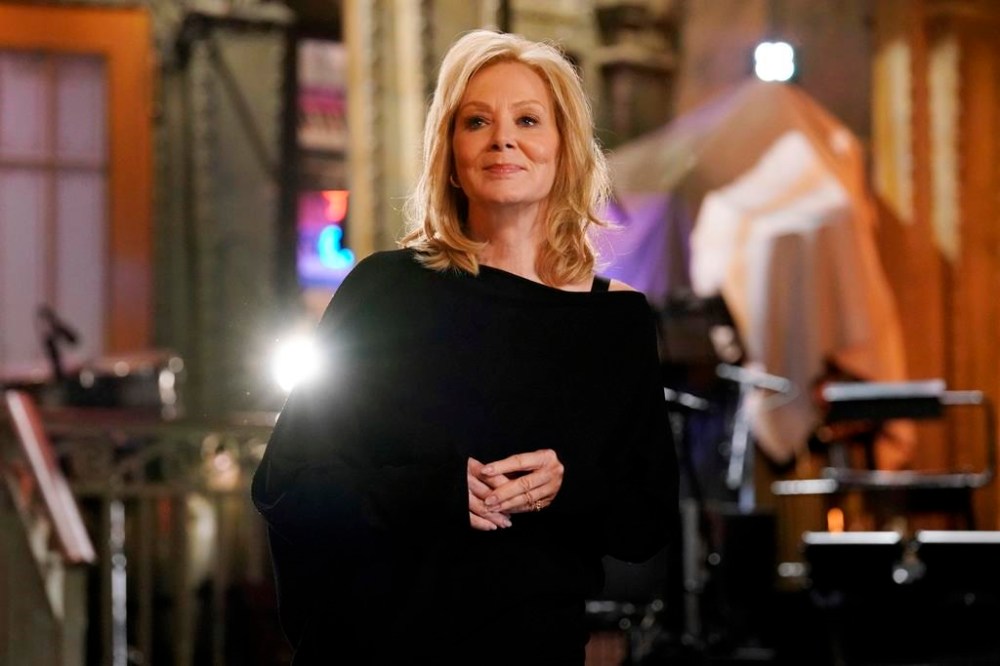
This is just a handful of examples, but all these actors prove that not only can older women lead popular TV shows and movies, they can also be cast as funny, interesting, complicated, dynamic characters — and, for that matter, age-appropriate love interests, because older people have sex lives, too.

To be fair, even the Hallmark Cinematic Universe has some older leading ladies this season. Caroline Rhea, 60, and Beth Broderick, 65 — whom millennials will recognize as Aunt Hilda and Aunt Zelda, respectively, from the 1990s sitcom Sabrina the Teenage Witch — will star in Holiday Mismatch as “meddling moms,” which I don’t love, but I’m happy to see them together and onscreen.
But we have a long way to go. Women are still being sent the message that life ends at menopause. Even the idea that it’s “impolite to ask a lady her age” is rooted in ageism and shame.
We need to see more stories about older people — people who have really lived — reflected back to us in media. I want older women to be visible in our culture. I want more movies, more TV shows, more novels, more memoirs and more music. I want their experience, perspective and wisdom to be respected, valued and, above all, coveted — by executives, by directors and by audiences.
Maybe it would be easier for us to embrace our age if others did, too. Maybe then “How old are you?” wouldn’t be such a terrifying question to answer.
jen.zoratti@winnipegfreepress.com
Jen Zoratti is a columnist and feature writer working in the Arts & Life department, as well as the author of the weekly newsletter NEXT. A National Newspaper Award finalist for arts and entertainment writing, Jen is a graduate of the Creative Communications program at RRC Polytech and was a music writer before joining the Free Press in 2013. Read more about Jen.
Every piece of reporting Jen produces is reviewed by an editing team before it is posted online or published in print – part of the Free Press‘s tradition, since 1872, of producing reliable independent journalism. Read more about Free Press’s history and mandate, and learn how our newsroom operates.
Our newsroom depends on a growing audience of readers to power our journalism. If you are not a paid reader, please consider becoming a subscriber.
Our newsroom depends on its audience of readers to power our journalism. Thank you for your support.
Jen Zoratti is a columnist and feature writer working in the Arts & Life department, as well as the author of the weekly newsletter NEXT. A National Newspaper Award finalist for arts and entertainment writing, Jen is a graduate of the Creative Communications program at RRC Polytech and was a music writer before joining the Free Press in 2013. Read more about Jen.
Every piece of reporting Jen produces is reviewed by an editing team before it is posted online or published in print – part of the Free Press‘s tradition, since 1872, of producing reliable independent journalism. Read more about Free Press’s history and mandate, and learn how our newsroom operates.
Our newsroom depends on a growing audience of readers to power our journalism. If you are not a paid reader, please consider becoming a subscriber.
Our newsroom depends on its audience of readers to power our journalism. Thank you for your support.
Related Articles
Hallmark exec sought to replace 'old talent,' lawsuit alleges, naming actors like Lacey Chabert
Advertisement Advertise With Us
Advertisement Advertise With Us