

Quebec religious group focused on suicide prevention files constitutional challenge
Advertisement
Read this article for free:
or
Already have an account? Log in here »
To continue reading, please subscribe:
Monthly Digital Subscription
$0 for the first 4 weeks*
- Enjoy unlimited reading on winnipegfreepress.com
- Read the E-Edition, our digital replica newspaper
- Access News Break, our award-winning app
- Play interactive puzzles
*No charge for 4 weeks then price increases to the regular rate of $19.00 plus GST every four weeks. Offer available to new and qualified returning subscribers only. Cancel any time.
Monthly Digital Subscription
$4.75/week*
- Enjoy unlimited reading on winnipegfreepress.com
- Read the E-Edition, our digital replica newspaper
- Access News Break, our award-winning app
- Play interactive puzzles
*Billed as $19 plus GST every four weeks. Cancel any time.
To continue reading, please subscribe:
Add Free Press access to your Brandon Sun subscription for only an additional
$1 for the first 4 weeks*
*Your next subscription payment will increase by $1.00 and you will be charged $16.99 plus GST for four weeks. After four weeks, your payment will increase to $23.99 plus GST every four weeks.
Read unlimited articles for free today:
or
Already have an account? Log in here »
Hey there, time traveller!
This article was published 02/11/2024 (413 days ago), so information in it may no longer be current.
MONTREAL – A Quebec religious group headed by a man who lost his son to suicide has filed a constitutional challenge against the municipality of Waterloo after it was ticketed for going door-to-door to share its message about suicide prevention.
Groupe Jaspe, a Christian group based in Magog, Que., received two tickets in February, worth over $900 after fees, for violating a city bylaw requiring non-profit groups to obtain a permit for “selling, collecting or soliciting in the municipality.”
But rather than pay the tickets, Claude Tremblay, the group’s president and founder, is taking the municipality to court for what he said is a violation of his Charter rights.
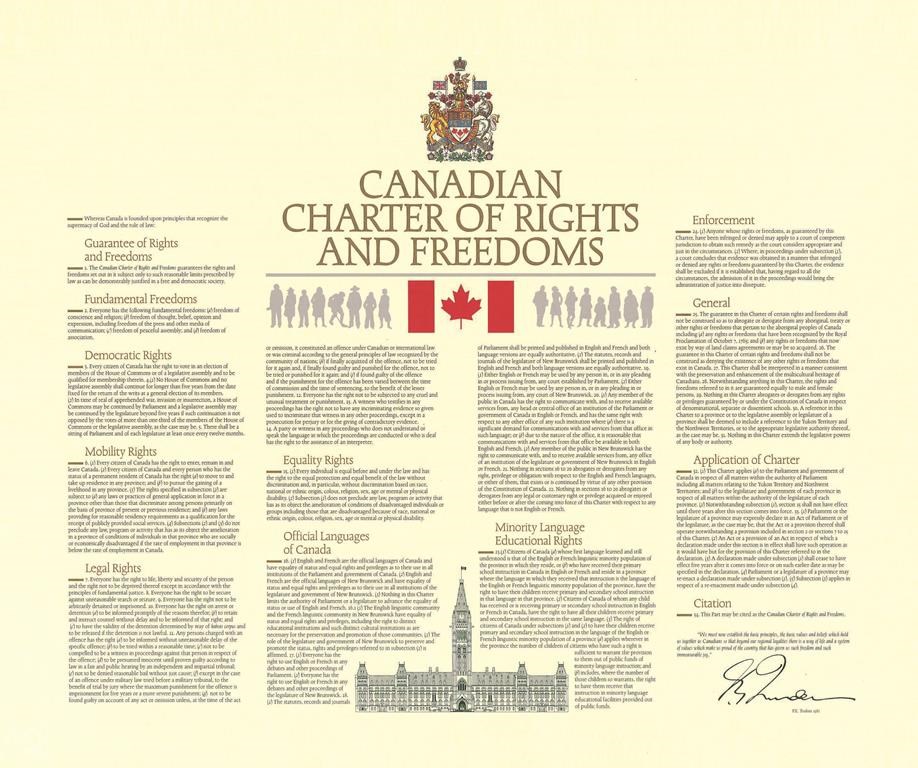
A Quebec religious group has filed a constitutional challenge against the municipality of Waterloo, Que., after it ticketed one of its members for going door-to-door to share its message about suicide prevention. The document of the Canadian Charter of Rights and Freedoms is shown in this file image. THE CANADIAN PRESS
“The constitution gives us the right to share our faith,” Tremblay said in an interview.
The challenge argues that the bylaw’s provisions “constitute a non-negligible obstacle to its practice of door-to-door canvassing” and therefore infringe on the group’s freedom of religion and expression as enshrined in Canada’s Charter of Rights and Freedoms.
The municipality of Waterloo was not immediately available for comment.
Tremblay’s son died by suicide in 1997. Since the group’s founding in 1999, Tremblay said he has been going door-to-door with volunteers to help prevent others from taking their lives.
“I’ve been visiting homes for 24 years, and it’s the best way because people are in their house. Its easier for them to share,” he said, adding that he talks to people about placing their faith in God and allowing Him to help them.
Tremblay said he has brought his Christian approach to 900 villages, 73 cities and 88 Indigenous communities in Canada.

Tremblay says his group has received multiple tickets over the past two decades, but none since winning a similar court case in 2015 in a different municipality on the grounds of religious freedom.
Lawyer Olivier Séguin represents Groupe Jaspe and works with The Justice Centre for Constitutional Freedoms for Quebec cases, which is sponsoring the challenge. He said the current battle may play out differently in court.
Despite previous court rulings, including a 2001 decision in favour of Jehovah’s Witnesses who were ticketed in Blainville, Que., he said he is expecting the municipality to invoke Quebec’s secularism laws.
“The prosecutor for the City of Waterloo already mentioned that he would raise the fact that, since 2001, when the Court of Appeal judgment was rendered in Blainville … things have changed,” said Séguin. “And one of the things that changed is Quebec’s secularism laws.”
This report by The Canadian Press was first published Nov. 2, 2024.
The Free Press acknowledges the financial support it receives from members of the city’s faith community, which makes our coverage of religion possible.