

No single factor led to water main failure in Calgary: preliminary report
Advertisement
Read this article for free:
or
Already have an account? Log in here »
To continue reading, please subscribe:
Monthly Digital Subscription
$0 for the first 4 weeks*
- Enjoy unlimited reading on winnipegfreepress.com
- Read the E-Edition, our digital replica newspaper
- Access News Break, our award-winning app
- Play interactive puzzles
*No charge for 4 weeks then price increases to the regular rate of $19.00 plus GST every four weeks. Offer available to new and qualified returning subscribers only. Cancel any time.
Monthly Digital Subscription
$4.75/week*
- Enjoy unlimited reading on winnipegfreepress.com
- Read the E-Edition, our digital replica newspaper
- Access News Break, our award-winning app
- Play interactive puzzles
*Billed as $19 plus GST every four weeks. Cancel any time.
To continue reading, please subscribe:
Add Free Press access to your Brandon Sun subscription for only an additional
$1 for the first 4 weeks*
*Your next subscription payment will increase by $1.00 and you will be charged $16.99 plus GST for four weeks. After four weeks, your payment will increase to $23.99 plus GST every four weeks.
Read unlimited articles for free today:
or
Already have an account? Log in here »
Hey there, time traveller!
This article was published 15/11/2024 (383 days ago), so information in it may no longer be current.
CALGARY – A preliminary report into the feeder main failure in Calgary that led to two rounds of water restrictions earlier this year has indicated that it wasn’t caused by any one factor.
The Bearspaw South Feeder Main in northwest Calgary burst in early June, forcing a citywide clampdown on water use that included residents being asked to skip toilet flushes and hold off on doing laundry and dishes.
Restrictions had mostly been eased when the city said in August that more trouble spots had been found along the pipe and it would need to be dug up and reinforced, meaning a return of rules like a ban on using potable water outside.
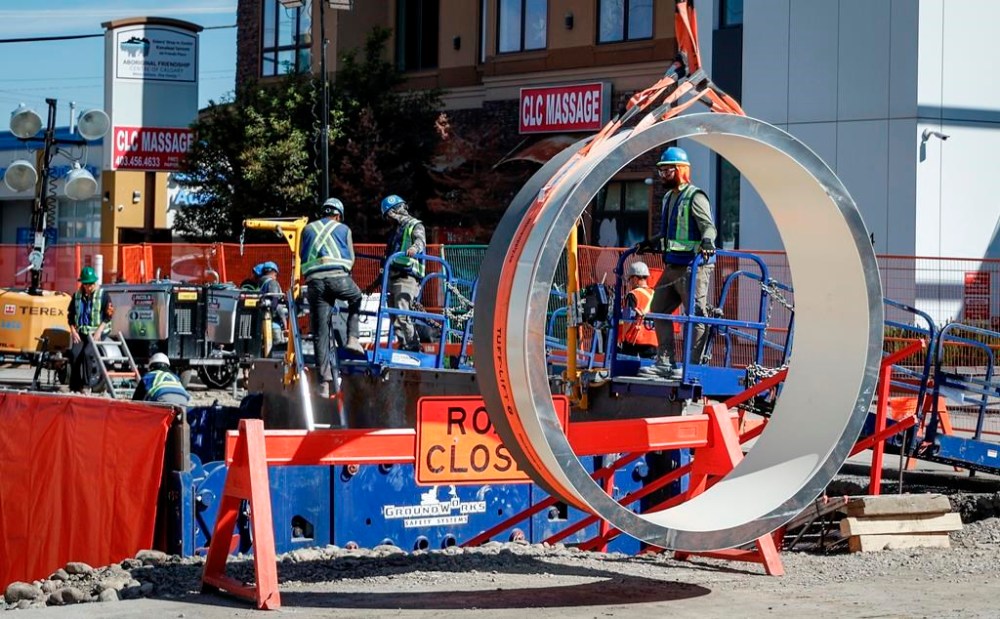
The preliminary report says several factors may have contributed to the feeder main failure, including microcracking of the protective mortar outer layer of the pipe, high chloride levels in soil, and wires that snapped due to corrosion and hydrogen embrittlement.
The city says administration will be updating the public on the preliminary findings at a council meeting on Nov. 26, with the final report to be presented to a committee in December.
It says it’s reviewing options for long-term rehabilitation of the feeder main and continuing with contingency planning.
Michael Thompson, the city’s general manager of infrastructure services, says the pipe is responding well to the rehabilitation work that has been done since June and it is now stabilized.
“Through our acoustic monitoring, we have recorded only two wire snaps on the feeder main between October and November,” Thompson said in a statement. “Throughout July and August, there were 23 wire snaps.”

Officials say the preliminary review also confirmed the original design of the pipe was consistent with the proper guidelines at the time and operations were well within design parameters.
This report by The Canadian Press was first published Nov. 15, 2024.