Slightly reshaped Giller Prize to go on, despite boycotts and protests
Advertisement
Read this article for free:
or
Already have an account? Log in here »
To continue reading, please subscribe:

Digital Subscription
One year of digital access for only $205*
- Enjoy unlimited reading on winnipegfreepress.com
- Read the E-Edition, our digital replica newspaper
- Access News Break, our award-winning app
- Play interactive puzzles
*First annual payment billed as $205.00 + GST for one year. This annual subscription will automatically renew at $233.00 + GST every 52 weeks (10% off the regular annual price of $259.35). Offer available to new and qualified returning subscribers only. Cancel any time.
To continue reading, please subscribe:
Add Free Press access to your Brandon Sun subscription for only an additional
$1 for the first 4 weeks*
- Enjoy unlimited reading on winnipegfreepress.com
- Read the E-Edition, our digital replica newspaper
- Access News Break, our award-winning app
- Play interactive puzzles
*Your next Brandon Sun subscription payment will increase by $1.00 and you will be charged $17.95 plus GST for four weeks. After four weeks, your payment will increase to $24.95 plus GST every four weeks.
Read unlimited articles for free today:
or
Already have an account? Log in here »
Hey there, time traveller!
This article was published 17/11/2024 (656 days ago), so information in it may no longer be current.
TORONTO – The shine on CanLit’s glitziest night has dulled, at least according to some, amid sustained backlash against the Giller Foundation for maintaining ties with lead sponsor Scotiabank and other funders linked to Israel.
Monday’s Giller Prize gala is set to take a slightly different shape this year after pro-Palestinian protesters interrupted the ceremony last November.
It brought the televised event to a brief halt — not a risk this year as the CBC won’t be broadcasting live. Instead, the event will be taped and air hours later.
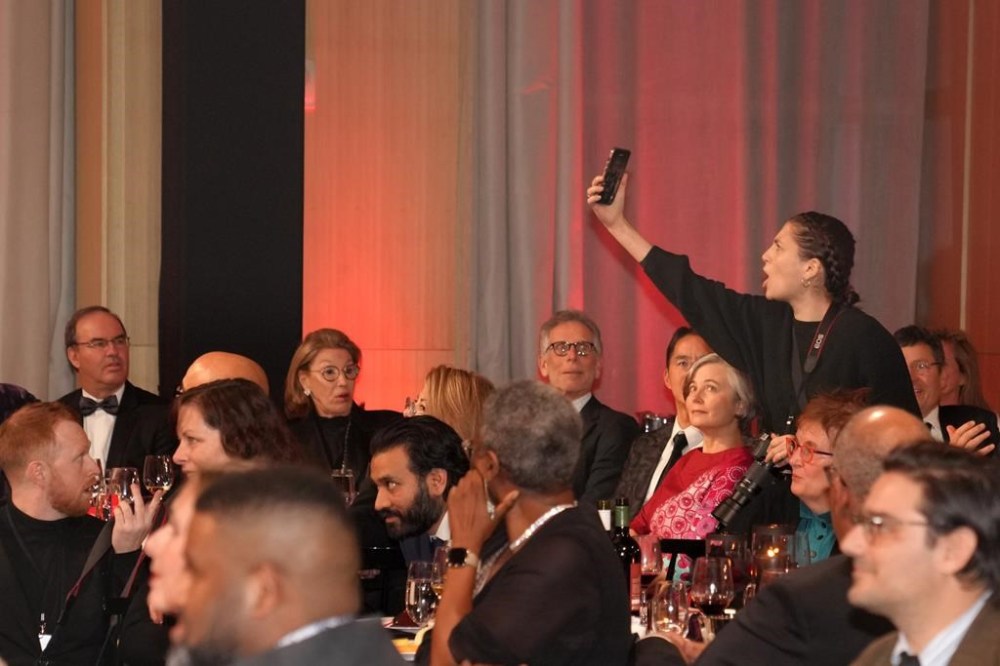
Neither the Giller Foundation nor the TV network connected the change to the protests when asked, and noted they’ve made the same move for other awards shows in recent years.
But the demonstrations and calls to action continue to ripple through the world of Canadian literature. The protesters were arrested that night, and soon after hundreds of people signed a letter calling for the charges against them to be dropped, many of them authors with ties to the award.
“There isn’t really a way I can rationalize my way out of this if I feel that what’s happening is a genocide and I feel that it’s wrong,” said Thea Lim, a past Giller finalist who signed the letter early on and has continued to align with advocacy group No Arms in the Arts.
It became a question for her of “sway,” Lim said. Her lofty position in the CanLit scene — one she still credits in part to the spot of her debut novel “An Ocean of Minutes” on the Giller short list in 2018 — meant she might have some influence on an issue she cared deeply about.
“It also gave me a feeling of having created a space for other authors to be able to do that,” Lim said.
“Because there’s a lot of risk and I think we’re seeing that very clearly,” she said.
Lim and others are protesting the Giller Foundation’s funders, in particular Scotiabank, due to its stake in Israeli arms manufacturer Elbit Systems.
No Arms in the Arts is also protesting funders Indigo, for its CEO’s charity that supports Israeli Defense Force officers from abroad, as well as the Azrieli Foundation, in part for its connection to Israeli real estate company Azrieli Group, which has a stake in Bank Leumi. The United Nations Human Rights Office has previously included Bank Leumi on a list of businesses involved in activities relating to settlements in the occupied Palestinian territory.
Dozens of authors pulled their books from consideration for this year’s Giller Prize, including some who went on to nab spots on other notable short lists such as the Writers’ Trust fiction prize and the Governor General’s Literary Award.
Meanwhile, CanLit Responds has strengthened its calls for action against the Giller, urging all members of the Canadian literary scene to boycott the event. The letter had more than 200 signatories as of Saturday, who pledged to abstain from submitting works to the prize or participating in any events related to it — “for as long as it takes until our demands are met.”
To Lim, the collective action seems to be paying off. While the Giller Foundation hasn’t cut ties with the big bank altogether, it did remove Scotiabank from the name of its prize.
Giller executive director Elana Rabinovitch, whose late father founded the award some 30 years ago to honour his deceased wife, said in a statement at the time that the foundation was still grateful for the bank’s support but that the prize was not political.
Rabinovitch said in an email Saturday, after declining interview requests, that the Giller’s contract with Scotiabank expires at the end of next year and that the organization would announce the next steps when it’s ready.
Rabinovitch also said that while she supports the authors’ right to protest, she questions their methods.
“Nobody could take issue with writers saying what they think, writing what they believe and protesting what they might see as unfair,” she said. “But boycotting, censoring, and blacklisting writers seems to me antithetical to the spirit of what great literature is all about.”
A spokesperson for the No Arms in the Arts campaign denies this assertion.
“Equating strategic boycotts to censorship is ludicrous, and ignores the fact that it is literary prizes, institutions, and monopolistic book chains that have the power to blacklist authors, not the other way around,” Aliya Pabani said in a statement Sunday.
For their part, some of this year’s shortlisted authors have said they’re still working through how to communicate their feelings on the boycott.
“I can say that I’ve been thinking about it non-stop and writing about it every day for weeks now, because what has to be said has to be said so meticulously, because it matters so much, and so I’m not ready yet to talk about it,” said Anne Michaels, a finalist for her novel “Held.”
Similarly, Anne Fleming, whose novel “Curiosities” made the list, said she didn’t “want to wade into it.”
“I think it’s a complicated situation,” Fleming said in the hours after she was shortlisted. “I think what I do feel comfortable saying is I think that, broadly speaking, as a culture, we’re in the middle of an important shake up about where funding for the arts comes from. It’s not just the Giller. It extends far beyond that, and it’s not just here.”
Lim and many of the other authors who have spoken out against the sponsorship feel it’s notable that Scotiabank’s subsidiary sold some of its stake in Elbit Systems.
Securities filings show the bank’s 1832 Asset Management had about 642,000 shares in Elbit at the end of the second quarter of this year, worth about US$113 million. That’s down from about 2,237,000 shares worth US$467.4 million a year earlier.
Scotiabank has denied the protests had anything to do with that change, saying the calls were based on “investment merit” and were made independently of the bank itself. But Israeli business publication Globes reported Elbit’s CEO attributed the partial divestment — and a correlated temporary drop in share price — to antiwar pressure in Canada.
Scotiabank has declined to comment on the protests.
Lim said the partial divestment is a partial win.
She said taking a stand on this issue has also made room for something new to grow.
“For me, it has recast the way that I think about connections, the way that I think about cultural capital, and how much I’d be willing to give up of, not necessarily dollars, because everyone knows there’s not a lot of money in Canadian publishing, but out of prestige and fame,” Lim said.
While she’s no longer rubbing elbows with wealthy benefactors, Lim said the No Arms in the Arts movement has led to other opportunities, including four book club events featuring authors who withdrew their books from Giller contention. There, the authors read from their books and discuss ways the literary community can create change.
The winner of the Giller will receive $100,000, while the finalists receive $10,000. For translated works, the money is split, with 70 per cent going to the author and 30 per cent to the translator.
Other shortlisted writers this year include Conor Kerr for “Prairie Edge,” Deepa Rajagopalan for the short story collection “Peacocks of Instagram” and Eric Chacour for his novel “What I Know About You,” translated from the original French by Pablo Strauss.
This report by The Canadian Press was first published Nov. 17, 2024.
Related Articles
David Bergen: Why I won’t be attending the Giller Prize gala this year

Advertisement Advertise With Us
Advertisement Advertise With Us