How changing catch-and-release fishing practices can boost salmon survival
Advertisement
Read this article for free:
or
Already have an account? Log in here »
To continue reading, please subscribe:

Digital Subscription
One year of digital access for only $205*
- Enjoy unlimited reading on winnipegfreepress.com
- Read the E-Edition, our digital replica newspaper
- Access News Break, our award-winning app
- Play interactive puzzles
*First annual payment billed as $205.00 + GST for one year. This annual subscription will automatically renew at $233.00 + GST every 52 weeks (10% off the regular annual price of $259.35). Offer available to new and qualified returning subscribers only. Cancel any time.
To continue reading, please subscribe:
Add Free Press access to your Brandon Sun subscription for only an additional
$1 for the first 4 weeks*
- Enjoy unlimited reading on winnipegfreepress.com
- Read the E-Edition, our digital replica newspaper
- Access News Break, our award-winning app
- Play interactive puzzles
*Your next Brandon Sun subscription payment will increase by $1.00 and you will be charged $17.95 plus GST for four weeks. After four weeks, your payment will increase to $24.95 plus GST every four weeks.
Read unlimited articles for free today:
or
Already have an account? Log in here »
Hey there, time traveller!
This article was published 29/11/2024 (632 days ago), so information in it may no longer be current.
VANCOUVER – A study has found catch-and-release sportfishing practices that leave salmon with injuries, particularly to their eyes, cause higher mortality than earlier research suggested.
Scott Hinch, who led the study by researchers at the University of British Columbia, said mortality among chinook salmon could be as high as 40 per cent, depending on environmental conditions and injuries sustained during capture and release.
At the same time, the years-long research that was supported by the Sport Fishing Institute of B.C. found that a series of changes in anglers’ practices could boost salmon survival.
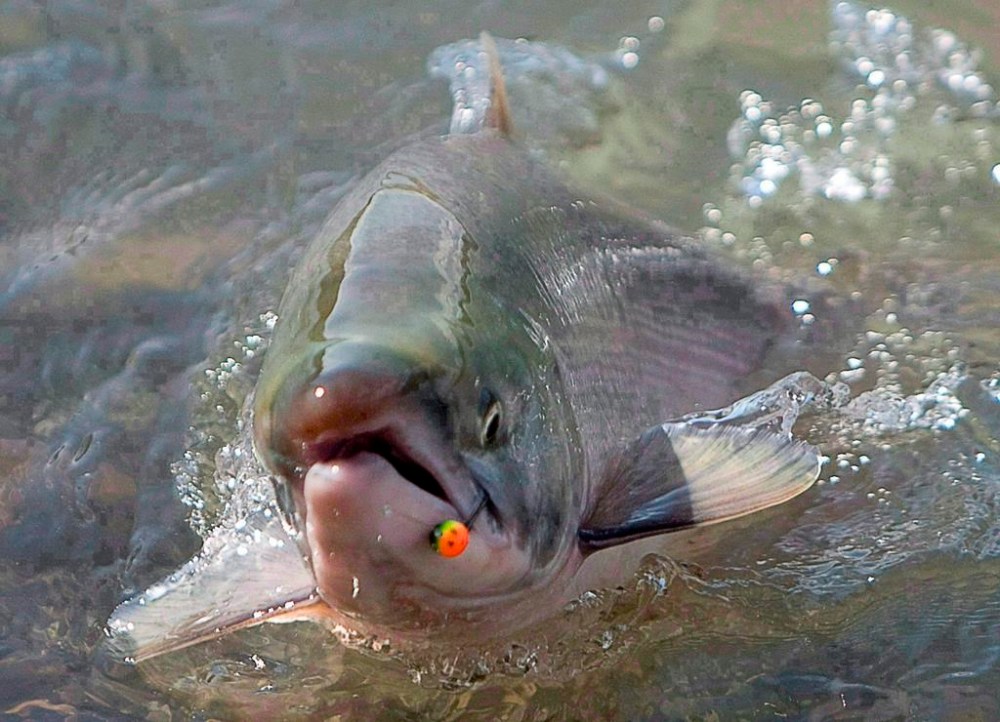
Hinch said these may be as simple as using smaller hooks, avoiding using nets to land fish and handling fish as little as possible.
“You can make those decisions as an angler, you know, make sure that when you are releasing, you’re doing it the best way possible,” said Hinch, associate dean and professor in the university’s department of forest and conservation science.
“I’m not sure how this will flesh out in the near term, but I certainly would like to see all our recommendations, in some fashion, become regulations,” he added.
Sportfisherman Rodney Hsu, who was involved in the research, said anglers shouldn’t view the study’s findings as concerning but rather as an opportunity “to practice better when they do catch and release.”
Higher survival rates mean better sustainability of fish populations, which is the foundation of a healthy sportfishery, he said.
“(It) means that there’s more fish to come in the next generations for anglers to catch,” said Hsu, a prominent online fishing personality who owns the B.C. sportfishing resource website Fishing With Rod.
The study found chinook salmon caught off the east coast of Vancouver Island that were released in good condition had short-term mortality rates between zero and eight per cent over the course of the study, while good-condition coho were less resilient with 17 per cent short-term mortality.
But different injuries, environmental conditions and fishing practices could affect survival significantly.
The research, which involved tagging and tracking about 1,600 salmon off B.C.’s coast, found injuries to eyes, fins and scales reduced survival rates for chinook by 15 to 20 per cent within 10 days of release.
Eye injuries were linked to a further 20 per cent mortality boost after 40 days.
“So (it) could be as high as 40 per cent mortality, depending on the context, depending on how the fish was injured,” Hinch said in an interview.
He said previous studies were shorter term, generally observing fish in holding pens for a few days and finding mortality of five to 10 per cent.
The new study shows certain types and sizes of fish don’t respond well to the practice, and catch-and-release is “not the panacea” for salmon’s woes, Hinch said.
Still, he said the findings allowed researchers to identify practical solutions to help boost survival rates while supporting the long-term sustainability of salmon populations struggling with the effects of climate change and habitat degradation.
The study found a “strong size effect” on survival, with smaller coho and chinook both suffering higher mortality rates than larger fish. Every one-centimetre decrease in length was associated with a six per cent increase in coho mortality about three days after release.
“If you have to make a decision of whether you’re going to keep the fish or not, and it’s legal to keep, and it’s got a serious eye injury, maybe you keep that one even though maybe it’s not quite as big as the one you were hoping to get,” Hinch said.
The researchers recommend that anglers use smaller hooks and avoid flashers — a shiny type of fish attractor — as well as treble and tandem-hook setups, all of which are linked to higher mortality.
The list of best practices also includes landing fish as quickly as possible and avoiding landing nets, even those marketed as “fish friendly,” Hinch said.
“Both chinook and coho, when those nets are used to bring them out of the water, into the boat, they still get their fins damaged. Their fins split, regardless of what the webbing material is made of,” he said. “And we showed pretty clearly that when you start damaging the fins … the poorer the survival outcomes were.”
If a net must be used, the report says anglers should ensure it’s loose, and salmon should remain in the water throughout the process to minimize exposure to air.
The study was largely funded through the B.C. Salmon Restoration and Innovation Fund, a joint initiative with Ottawa, while a steering committee involved the federal Fisheries Department and members of the Sport Fishing Institute of B.C.
Members of the sport fishing institute helped with some of the field work, and Hinch was set to present the paper at the group’s annual conference on Friday.
“They are a strong supporter of our recommendations,” said Hinch, adding the Fisheries Department has also expressed interest in adopting them.
Hinch said the study also revealed a link with climate change and warming waters, as salmon will start struggling in water temperatures of 18 C and higher.
“When you start to capture fish in those temperatures and you’re making them struggle … and then you’re exposing them to air, possibly, depending on your practices, that can have really strong negative outcomes,” he said. “The temperature is the facilitator that makes air exposure and handling even more lethal.”
The findings have led the researchers to suggest that anglers avoid catch-and-release altogether when water temperatures hit 18 C or warmer.
“It’s simple things … but we have to then enact them, and hopefully there’s enough goodwill and understanding among anglers,” Hinch said. “I’m pretty sure there is, because I’ve worked with a lot of them now, and they all want to do the right thing.”

Hsu said he hopes fellow anglers will take the suggestions to heart.
“This study was done by researchers who already have a fair amount of sportfishing background,” he said.
“They’re also anglers themselves … it’s a lot easier for anglers to digest than coming from, let’s say, the authority such as Fisheries and Oceans Canada.”
— With files from Chuck Chiang
This report by The Canadian Press was first published Nov. 29, 2024.