WEATHER ALERT

Writing her way forward

Graphic memoir builds fraught family archive on concessions, limitations

Advertisement

Advertise with us

In her sophomore graphic memoir All Our Ordinary Stories: A Multigenerational Family Odyssey, second-gen Canadian cartoonist Teresa Wong pieces together the history of her Chinese immigrant parents. With striking black-and-white sketches and simple prose, Wong documents the painstaking process of this assemblage, from encountering incomplete immigration documents to the elder Wongs’ reticence to discuss the events of their youth. As the author uncovers these memories and traumas, she reflects on how they have shaped her family, with sequential art that deftly reveals and bridges the lack of shared language and familial closeness.

Read this article for free:

or

Already have an account? Log in here »

To continue reading, please subscribe:

Subscribe and receive a limited-edition Free Press branded hat or tote.

Digital Subscription

One year of digital access for only $205*

  • Enjoy unlimited reading on winnipegfreepress.com
  • Read the E-Edition, our digital replica newspaper
  • Access News Break, our award-winning app
  • Play interactive puzzles

*First annual payment billed as $205.00 + GST for one year. This annual subscription will automatically renew at $233.00 + GST every 52 weeks (10% off the regular annual price of $259.35). Offer available to new and qualified returning subscribers only. Cancel any time.

To continue reading, please subscribe:

Add Free Press access to your Brandon Sun subscription for only an additional

$1 for the first 4 weeks*

  • Enjoy unlimited reading on winnipegfreepress.com
  • Read the E-Edition, our digital replica newspaper
  • Access News Break, our award-winning app
  • Play interactive puzzles
Start now

*Your next Brandon Sun subscription payment will increase by $1.00 and you will be charged $17.95 plus GST for four weeks. After four weeks, your payment will increase to $24.95 plus GST every four weeks.

Hey there, time traveller!
This article was published 30/11/2024 (591 days ago), so information in it may no longer be current.

In her sophomore graphic memoir All Our Ordinary Stories: A Multigenerational Family Odyssey, second-gen Canadian cartoonist Teresa Wong pieces together the history of her Chinese immigrant parents. With striking black-and-white sketches and simple prose, Wong documents the painstaking process of this assemblage, from encountering incomplete immigration documents to the elder Wongs’ reticence to discuss the events of their youth. As the author uncovers these memories and traumas, she reflects on how they have shaped her family, with sequential art that deftly reveals and bridges the lack of shared language and familial closeness.

As memoir writing and family history are often closely intertwined, Wong cheekily opens her story with a viral tweet that inquires: “are you the eldest daughter of an immigrant household or are you normal,” setting the tone for a candid look at her family’s narrative. The book’s events are prompted by the aftermath of a stroke suffered by Wong’s mother, and the rift that results from a frustrating series of conversations about her recovery. “After that night, we stopped talking about… anything that mattered at all.”

Feeling immense guilt about her lack of Cantonese fluency, Wong uses visual language to reflect the resulting distance between her and her mother; one panel containing each of them are positioned in the top left and bottom right corners of the page, with the vastness of the blank white space in between them speaking to their isolation.
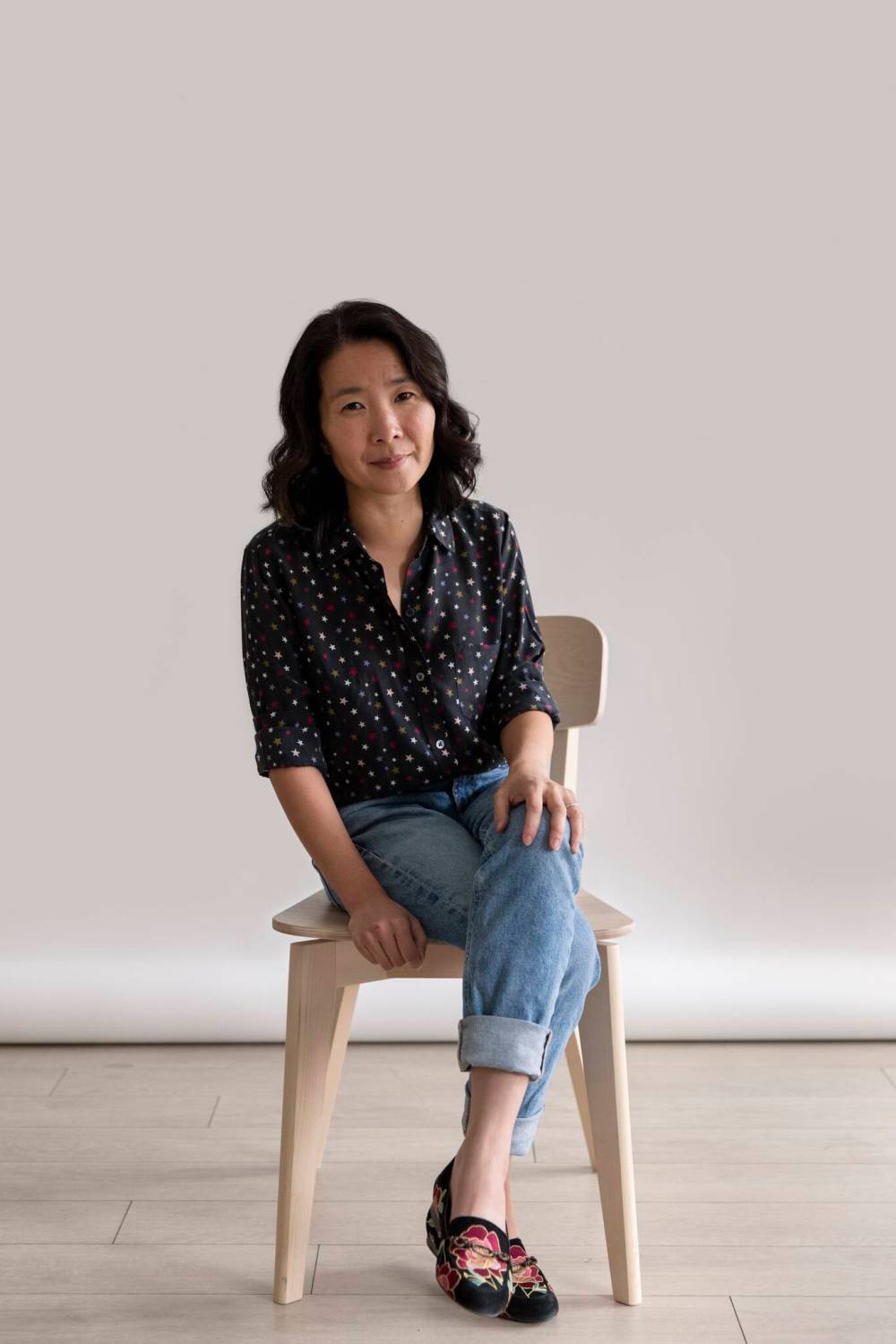
Kaitlin Moerman photo
                                Teresa Wong takes care to present her parents as people with full lives.

Kaitlin Moerman photo

Teresa Wong takes care to present her parents as people with full lives.

Throughout the book, Wong cleverly deploys the presence (and absence) of both language and physical space to illustrate the degree of closeness between herself and her family. Her father, having grown up in China with an absent father, also plans to move back there alone, to “be free” of his own family, which the author first overhears out of an open window. They are physically separated in a way that does not afford them a dialogue.

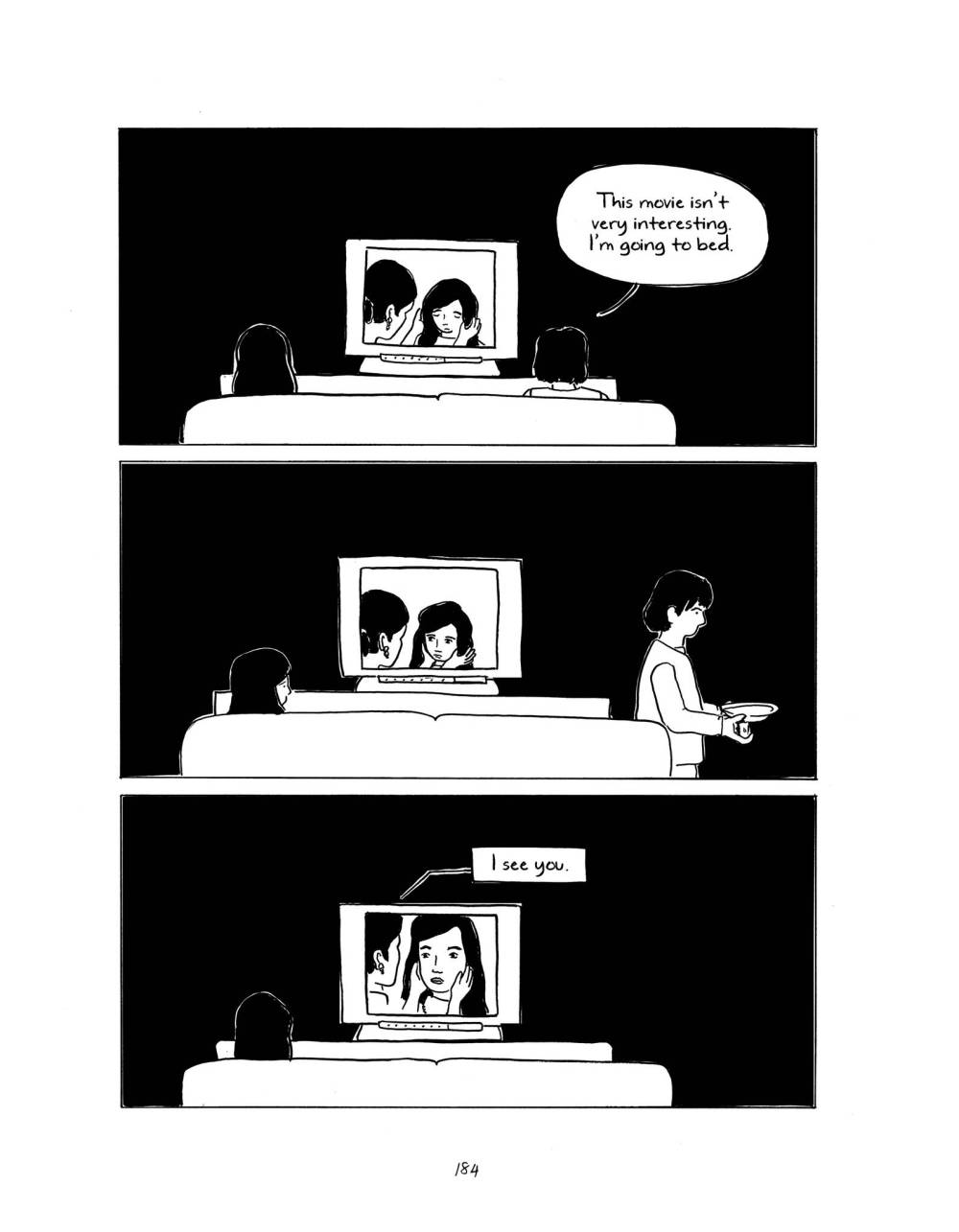
A later scene depicts mother and daughter watching The Joy Luck Club on the same couch, again isolated in separate panels. “It was the first time I had really seen myself in a movie,” Wong writes.

But as she is moved by a particularly emotional scene in which a character is finally validated by her mother, Wong’s own mother is disinterested, and walks away. This exchange is particularly heartbreaking for the author, given a childhood spent immersed in Western media, hoping to recreate the connections and heart-to-heart moments present in many a tv sitcom with her own parents.

Although quitting Saturday morning Chinese school had felt like freedom at the time, as an adult the author is now unable to fully parse the little information she can find about her family’s past. Wong later uses online articles to fill in the gaps concerning her parents’ separate escapes to Hong Kong during the Chinese Revolution, as well as to find information about her paternal great-grandfather, affording the reader important details about the Canadian government’s treatment of Chinese immigrants. These carefully recreated maps and articles, as well as harrowing firsthand accounts, brilliantly translate the physical and emotional vastness of the risks involved, and the lingering traumas that continue to permeate the Wong family years later.

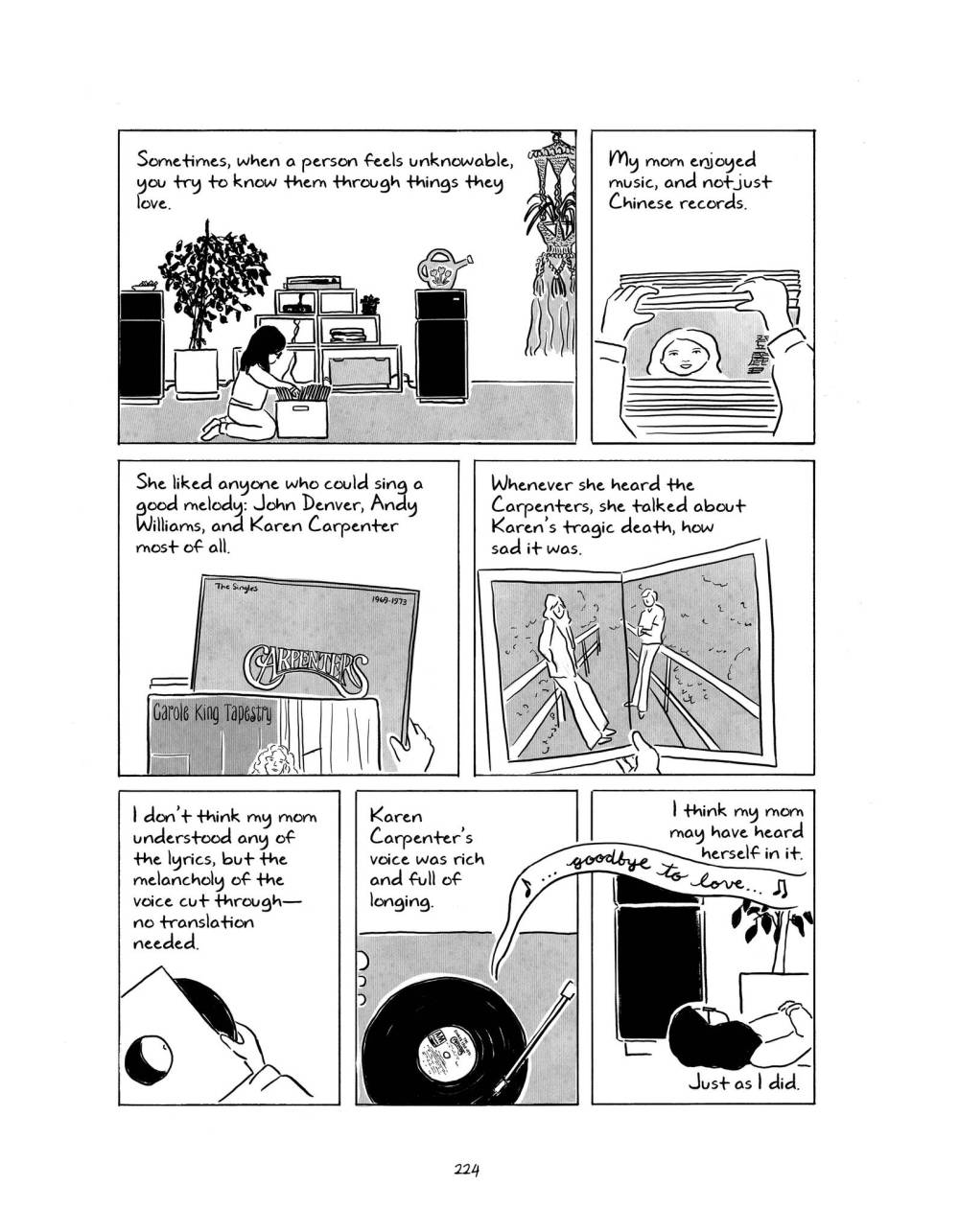
But the author also takes care to mention that “a person is more than their hardships,” presenting her parents as two people with full lives and their own personalities and interests. She especially connects with her mother’s vinyl records and her father’s paintings, musing on how her lineage is visible in his own “impulse to make art out of his experience.”
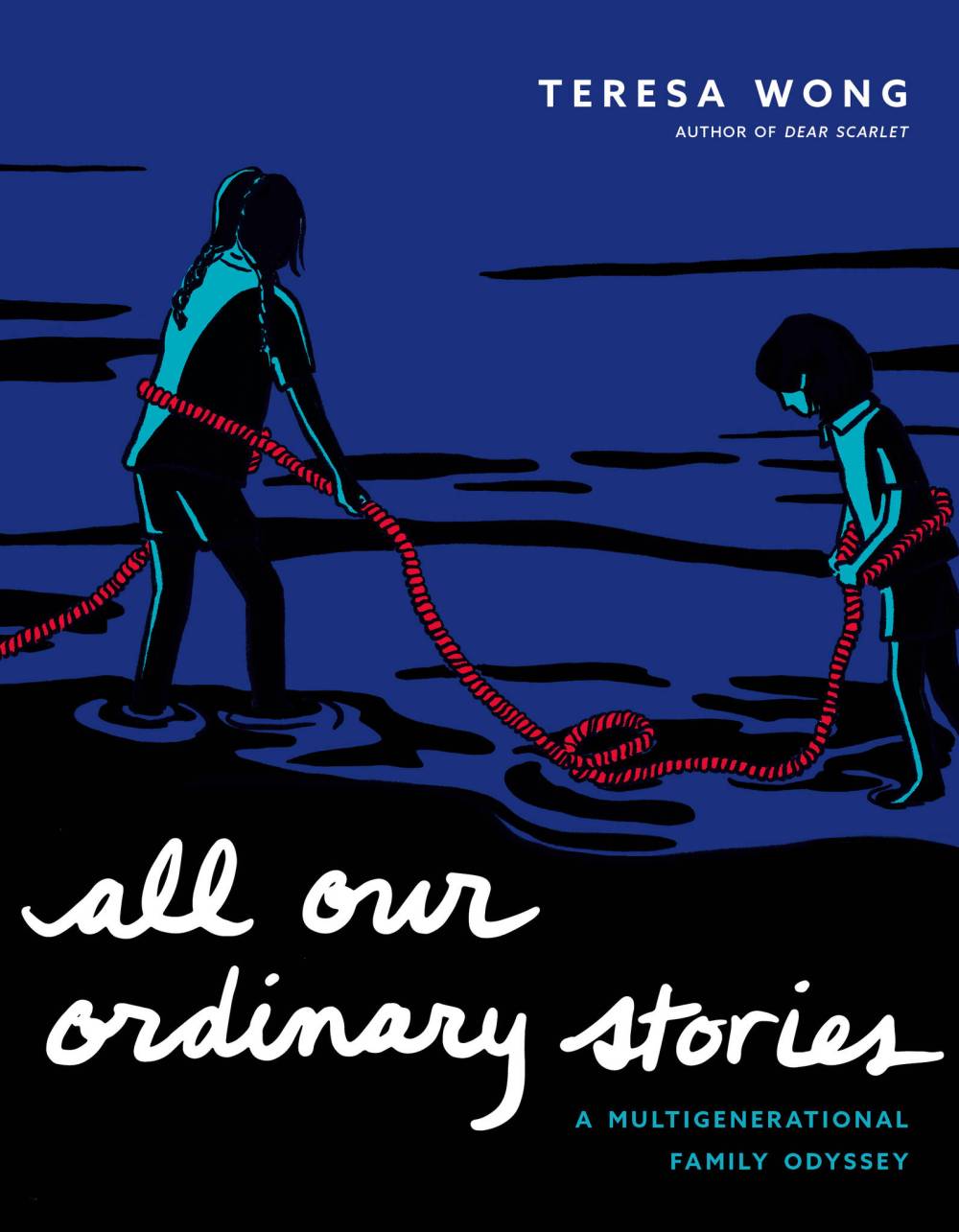
All Our Ordinary Stories

All Our Ordinary Stories

In producing a kind of family archive built on concessions and limitations, Wong, herself a new mother at the time, also admits that she might never fully know her parents’ story, but can ensure that her children will know hers.

Stories, ordinary or not, all require a language to tell them, and Wong’s skilled, vivid use of the comics medium to “write (her) own way forward” will resonate with readers.

Nyala Ali writes about race and gender in contemporary narratives.
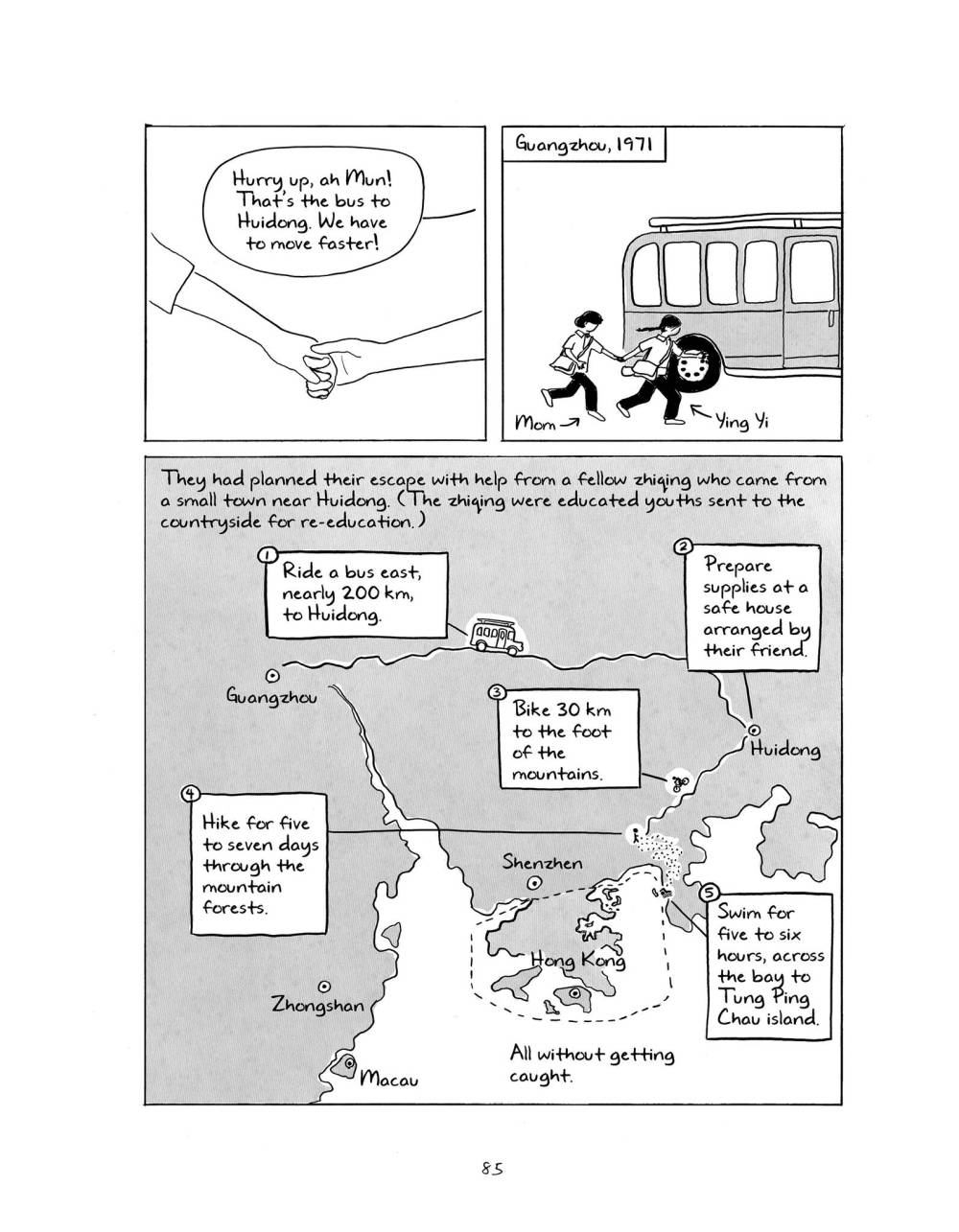
Wong uses online articles and maps to fill in the gaps concerning her parents’ separate escapes to Hong Kong during the Chinese Revolution.
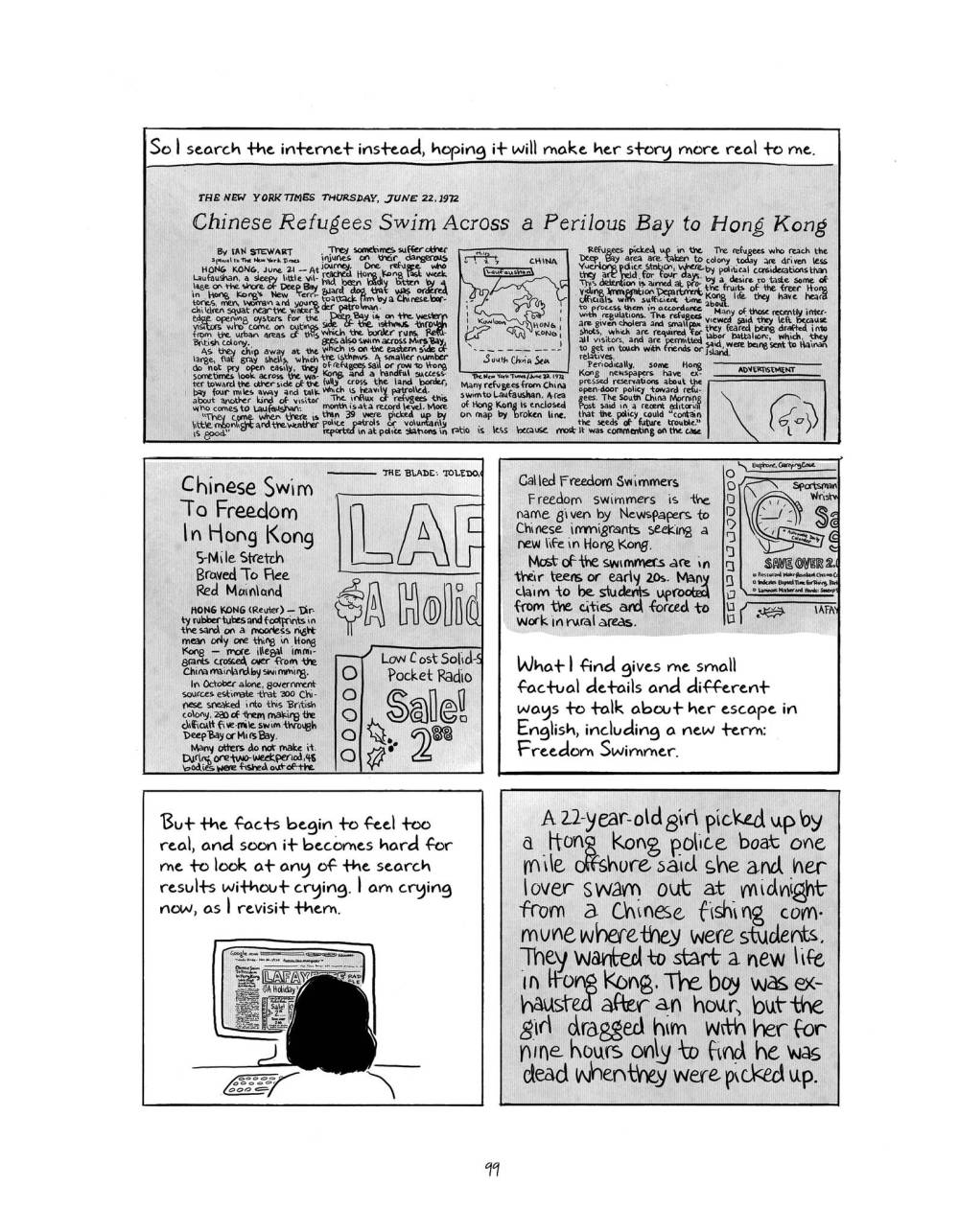
Wong uses online articles and maps to fill in the gaps concerning her parents’ separate escapes to Hong Kong during the Chinese Revolution.

With black-and-white sketches and simple prose, Wong documents the painstaking process of assembling her family history.
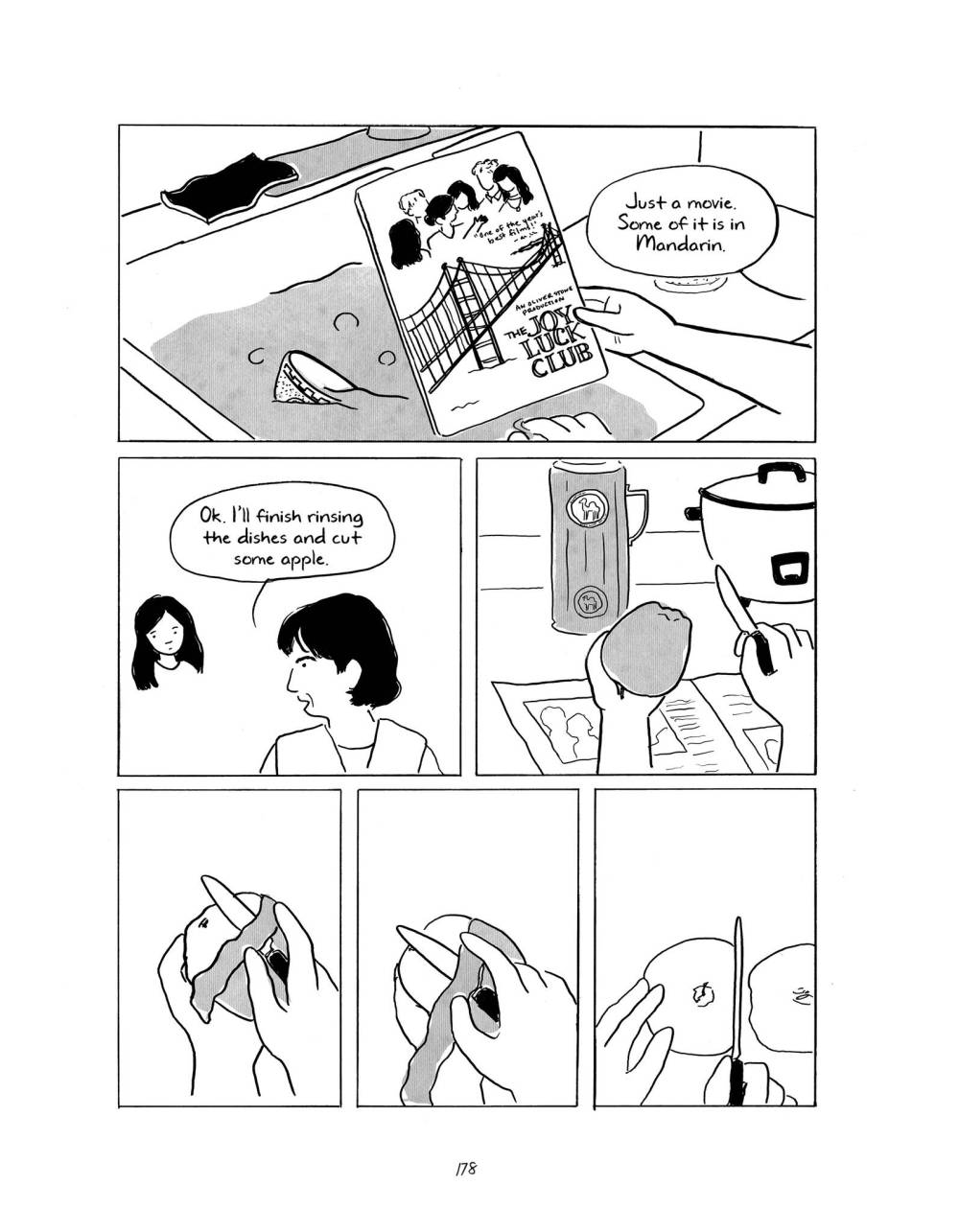
With black-and-white sketches and simple prose, Wong documents the painstaking process of assembling her family history.

Wong depicts watching The Joy Luck Club with her mother, before her mother grows disinterested and leaves.
Wong depicts watching The Joy Luck Club with her mother, before her mother grows disinterested and leaves.

Wong connects with her mother’s vinyl records and her father’s paintings.

Wong connects with her mother’s vinyl records and her father’s paintings.
Report Error Submit a Tip

More Stories

Hellebuyck, footy, AI, and more

0 minute read Thursday, Jul. 9, 2026

If it works in Ontario, why not in Manitoba?

James Wilt 5 minute read Preview

If it works in Ontario, why not in Manitoba?

James Wilt 5 minute read 2:00 AM CDT

Grid-scale battery storage has fundamentally changed the global energy landscape — and Manitoba needs to get on board.

Battery systems store large amounts of excess electricity for when it’s most needed. While they can be charged from any generation source, they are especially beneficial for integrating wind and solar power, which vary with weather and time of day. Batteries allow electrical grids to meet the need for firm, dispatchable and affordable capacity using renewable energy, rather than relying on coal, nuclear and fossil gas. They also provide numerous other benefits, including reducing overloading of transmission infrastructure and helping to regulate the grid’s frequency and voltage.

Average costs for grid-scale batteries plummeted by more than half between 2023 and 2025 and installations have skyrocketed in China, the U.S., Australia and Europe. Texas now has 16,500 megawatts (MW) of battery storage, while California has 15,200 MW. Closer to home, Ontario recently awarded 640 MW of contracts to three battery storage projects in a competitive auction, with batteries beating out fossil gas-fired power plants on cost every time. One of these projects will be built near Dryden, only four hours east of Winnipeg.

Each battery system will provide eight hours of capacity but will cost considerably less than Ontario’s previous battery procurements, which provide only four hours of capacity. With this latest auction, Ontario has now secured 3,600 MW of battery storage capacity, including the operational Oneida (250 MW), Hagersville (300 MW) and Napanee (250 MW) projects. Almost all have significant Indigenous participation, with the latest procurements boasting 50 per cent First Nations ownership.

Read
2:00 AM CDT

Would-be mayors respond to extreme heat

Marsha McLeod 3 minute read Preview

Would-be mayors respond to extreme heat

Marsha McLeod 3 minute read 7:00 AM CDT

With Winnipeg in the midst of an intense heat wave, the city has yet to introduce maximum heat legislation for rental housing.

In 2023, the Free Press and the Narwhal reported on calls by tenants and environmental advocates to enact a law that would require indoor temperatures in rental units not exceed 26 C. It would be similar to how Winnipeg landlords, under the city’s neighbourhood livability bylaw, must maintain a minimum daytime temperature of 21 C during cold weather.

On Sunday, the Free Press emailed all nine registered mayoral candidates asking for their policy plans to tackle the dangers of extreme heat, and specifically, whether they would support a change to the city’s bylaw to create heat protections for renters.

Eight candidates responded, and of them, six — Noah Redden, Don Woodstock, Mazher Alam, Christopher Clacio, Michael Vogiatzakis and Umar Hayat — said they would support (or support exploring) a bylaw amendment to establish a maximum indoor temperature threshold.

Read
7:00 AM CDT

A Winnipeg police cruiser was involved in an incident with a passenger car early Sunday morning on the northeast side of Cumberland St. and Balmoral Ave.

A video circulating on Facebook shows the damaged cruiser adjacent to a white passenger vehicle, both of which appear to have their airbags deployed. The Winnipeg police car appears to have crashed into a fence.

Winnipeg Police Service Const. Claude Chancy confirmed the incident on Sunday morning and said it occurred around 6:15 a.m. He said the Winnipeg Fire Paramedic Service arrived and checked out the passengers, adding that it did not appear anyone was transported to hospital. The officers were not injured. Cumberland St. was closed for roughly two hours afterward.

The service did not share information on the cause of the accident.

Confusion part of syllabus as MITT winds down operations

Morgan Modjeski 5 minute read Preview

Confusion part of syllabus as MITT winds down operations

Morgan Modjeski 5 minute read 2:49 PM CDT

More than 500 students are trying to complete their courses before the Manitoba Institute of Trades and Technology permanently closes.

Manpreet Singh, who is set to graduate from the electrical applications program in the fall, said finishing his studies is a confusing and anxiety-inducing process despite the promise it would go smoothly.

“Nobody has a clear image,” he said.

Officials said in January the post-secondary institute was no longer financially viable because of the federal government’s decision to cut the number of international students allowed to study in Canada. Nineteen of its programs are being absorbed by Red River College Polytech, which is taking over the institute’s campuses in south Winnipeg.

Read
2:49 PM CDT

Five ATV deaths renew mandatory safety course debate

Morgan Modjeski 4 minute read Preview

Five ATV deaths renew mandatory safety course debate

Morgan Modjeski 4 minute read Updated: Yesterday at 11:27 AM CDT

A high number of ATV fatalities in Manitoba has longtime riders wondering what measures can be taken to prevent deaths, including the possibility of mandatory safety courses.

So far this year, five riders have been killed in the province. The latest tragedy took place Thursday when a 59-year-old woman died in South Indian Lake, located about 770 kilometres north of Winnipeg. RCMP arrived to find her lying on the road, while her ATV was in the ditch.

Dave Lee, the president of the All-Terrain Vehicle Association of Manitoba, said one death is too many.

“Someone has lost their loved one,” he said. “It’s devastating for a family. The first question I always ask is: ‘Why did this happen?

Read
Updated: Yesterday at 11:27 AM CDT