Experts believe study of 700-year-old handwriting unveils leading Byzantine painter’s true identity

Advertisement

Advertise with us

THESSALONIKI, Greece (AP) — Crime-solving techniques applied to a medieval illuminated manuscript in Paris may have solved a centuries-old puzzle — the true identity of a leading Byzantine painter who injected humanity into the rigid sanctity of Orthodox religious art.

Read this article for free:


By clicking the button above, an account will be created and you will begin to receive some of our recommended newsletters. You may opt out of any newsletter by visiting your Email and Communication Preferences page or by clicking "unsubscribe" at the bottom of any email.

or

Already have an account? Log in here »

To continue reading, please subscribe:

Digital Subscription

One year of digital access for only $1.44 a week*

  • Enjoy unlimited reading on winnipegfreepress.com
  • Read the E-Edition, our digital replica newspaper
  • Access News Break, our award-winning app
  • Play interactive puzzles

*Billed as $5.77 plus GST every four weeks. After 52 weeks, price increases to the regular rate of $19.95 plus GST every four weeks. Offer available to new and qualified returning subscribers only. Cancel any time.

To continue reading, please subscribe:

Add Free Press access to your Brandon Sun subscription for only an additional

$1 for the first 4 weeks*

  • Enjoy unlimited reading on winnipegfreepress.com
  • Read the E-Edition, our digital replica newspaper
  • Access News Break, our award-winning app
  • Play interactive puzzles
Start now

*Your next Brandon Sun subscription payment will increase by $1.00 and you will be charged $17.95 plus GST for four weeks. After four weeks, your payment will increase to $24.95 plus GST every four weeks.

Hey there, time traveller!
This article was published 05/12/2024 (687 days ago), so information in it may no longer be current.

THESSALONIKI, Greece (AP) — Crime-solving techniques applied to a medieval illuminated manuscript in Paris may have solved a centuries-old puzzle — the true identity of a leading Byzantine painter who injected humanity into the rigid sanctity of Orthodox religious art.

A contemporary of Giotto, considered the father of Western painting, the artist conventionally known as Manuel Panselinos was equally influential in a totally different tradition that’s largely overlooked in the West.

But nothing is known of his life, and scholars now believe Panselinos was just a nickname that eventually supplanted the real name of the man for whom it was coined — likely Ioannis Astrapas, from the northern Greek city of Thessaloniki.

Christina Sotirakoglou a handwriting expert, observes Byzantine paintings based on photographs prints, at her office, in Thessaloniki, northern Greece, Saturday, Nov. 30, 2024. (AP Photo/Giannis Papanikos)

The art of Byzantium, that decorates churches across Greece, Serbia and other Orthodox countries, stands out for the stark formalism of its elongated, glowering saints, quasi-cubist mountains and doe-eyed Madonnas.

Work attributed to Panselinos, from the late 13th and early 14th centuries, is considered the finest produced in an empire that straddled Europe and Asia and endured from the fall of Rome until the capture of the imperial capital Constantinople by the Ottoman Turks in 1453.

Art historians had long suspected that the name — Greek for “full moon” — could have originated as a nickname for some member of the so-called Macedonian School of painting, based in Thessaloniki.

Recent research by a Greek monk and linguistics scholar linked “Panselinos” with Macedonian School painter Astrapas. Now court handwriting expert Christina Sotirakoglou has matched lettering on a manuscript tentatively attributed to Astrapas with characters on a church painting in northern Greece, long seen as Panselinos’ best work.

Father Cosmas Simonopetritis, a former senior administrator in Mount Athos, the semiautonomous monastic community where the Protato church stands, says Sotirakoglou’s and his own research “clearly prove” Panselinos’ real identity.

“Panselinos was a real person, and (the name) was just the nickname by which Ioannis Astrapas became known,” he told The Associated Press.

Constantinos Vafiadis, a professor of Byzantine art in Athens who was not involved in the studies, said he found merit in the nickname theory and Astrapas link, even though it appeared more than one painter had undertaken the Protato project.

“I agree with attributing part of the paintings to Ioannis Astrapas,” he said. “But again there remains much ground for future research into that person, because other Mount Athos monuments from the same period have not yet been sufficiently published.”

“Panselinos” — a role model for generations of painters — and his contemporaries are associated with a renaissance of kinds in Orthodox art that revived forms and techniques inherited from antiquity. Facial expressions acquired a deeper humanity, and greater attention was paid to proportion and depth of field in composition.

Father Cosmas said Astrapas was an “extremely gifted painter … with vast knowledge who harmonically combined the ancient, classical world with Orthodox Byzantine spirituality.”

“And that … makes his work unique worldwide,” he added.

Artists’ signatures were not common at the time, although some survive from members of the Astrapas family. There are none by “Panselinos.”

The trail started with earlier research linking Astrapas with the artist and scholar who wrote and illustrated Marcian Codex GR 516, an early 14th century Greek handwritten text treating subjects from astronomy to music theory. Among the painted illustrations was a full moon.

“For me … that was the main proof,” Father Cosmas said.

With a name found for the hand that produced the manuscript, the next step was to check its style against writing on the Protato painting, traditionally linked with “Panselinos.”

Christina Sotirakoglou a handwriting expert, prints Byzantine paintings based on photographs, at her office, in Thessaloniki, northern Greece, Saturday, Nov. 30, 2024. (AP Photo/Giannis Papanikos)

“Mrs Sotirakoglou, who is a handwriting expert, filled in that blank,” Father Cosmas said.

There was one problem: Women have for more than 1,000 years been banned from entering Mount Athos.

“I was forced to study the Protato paintings based on photographs,” Sotirakoglou, who works as a court consultant on identifying or authenticating handwriting in criminal cases, told the AP.

“(The work) was very difficult, because the writing on the wall paintings is in capital letters, and the painters subdued their personal handwriting to conform” with the traditional format, she said — rather like anonymous letter-writers’ attempts to disguise their true style. “The Marcian codex is written in very small lower-case letters.”

The first clue came from the Greek letter Phi, the English F.

“It’s a Phi that stands out, and is similar” in both the manuscript and the Protato painting, she said. “Matches also followed with other letters, T, with its proportions, which is bigger, covering the other letters and is topped with a curve, the proportions of the K.”

“But when the Phi was revealed, the code of the writing was broken and the job became much easier,” she added.

Father Cosmas said that during his administrative duties on Mount Athos he attended services at the Protato church on a daily basis.

“That’s where my desire was born … to explore the mystery around the name and the identity of Panselinos,” he said, adding that he thinks the artist “has now acquired his true identity.”

___

Paphitis reported from Athens, Greece.

Report Error Submit a Tip

The Free Press acknowledges the financial support it receives from members of the city’s faith community, which makes our coverage of religion possible.
More Stories

Don’t let good health reforms fade or fossilize

Alan Menkis 5 minute read 2:00 AM CDT

When Canada’s health ministers left Winnipeg on Oct. 16, they took with them a promise to keep talking. The federal health minister did not commit to long-term funding. She offered one-year extensions for programs that were about to run out, and asked officials to begin work on “the next 10 years.”

The provinces, in the words of Manitoba Health Minister Uzoma Asagwara, wanted to avoid “fiscal cliffs” and needed “predictable, stable, sustainable funding.”

Both sides have a point. And both are talking almost entirely about money — how much, for how long, under what formula.

Missing from the conversation is the question that decides whether any of it works — once the money flows, who must answer for what it does, or does not, achieve? We have been here before. In 2002, a Senate committee chaired by Michael Kirby warned that new federal money “must be used to buy change, not merely to support the system as it is presently structured.” It proposed an independent national health care commissioner, reporting every year to the public on how the system and the health of Canadians were faring.

Reynolds exerts ‘maximum effort’ to boost Winnipeg after quick meet with mayor

Gabrielle Piché 3 minute read Preview

Reynolds exerts ‘maximum effort’ to boost Winnipeg after quick meet with mayor

Gabrielle Piché 3 minute read Updated: Yesterday at 8:13 PM CDT

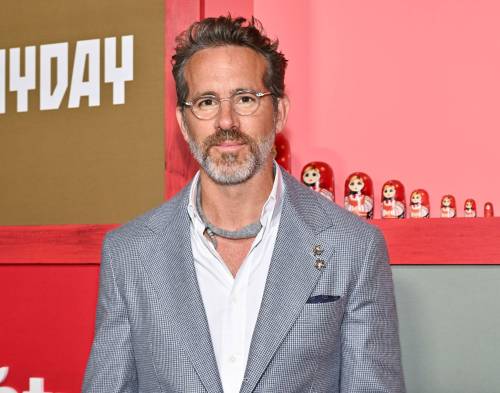
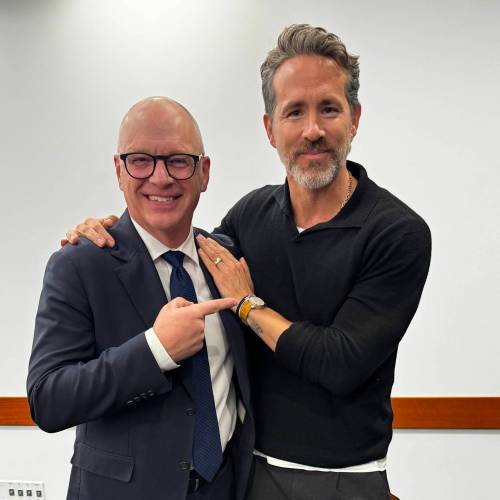
Ryan Reynolds wasn’t wearing his Deadpool suit, but that didn’t stop Mayor Scott Gillingham from wanting to talk about films with the Vancouver-born Hollywood movie star.

Reynolds, who appeared at IG Wealth Management's 100th anniversary celebration Wednesday at the RBC Convention Centre, took to social media afterward, sharing a photo of himself with Gillingham and trumpeting the province’s tax incentives.

“An incredible place to shoot,” the Instagram post read.

On Thursday, Gillingham said the actor, best known for portraying an irreverent, erratic anti-hero on the big screen, is a “really nice gentleman.”

Read
Updated: Yesterday at 8:13 PM CDT

Woman arrested for sporting goods theft spree

2 minute read Preview

Woman arrested for sporting goods theft spree

2 minute read Yesterday at 3:09 PM CDT

A 45-year-old woman has been arrested after police say suspects pulled off a series of thefts at a city sporting goods store and posted several stolen items for sale online.

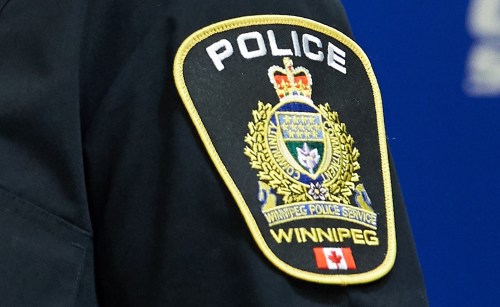
According to Winnipeg Police Service news release, on Wednesday just before 2 p.m. officers from the Property Crime Unit arrested a 45-year-old woman in relation to an organized retail theft investigation.

Police say earlier this month, investigators received information about a series of thefts from a sporting goods store on the 500 block of Sterling Lyon Parkway.

An investigation determined that between Sept. 28 and Oct. 15, suspects stole hunting and fishing equipment, electronics, clothing, and other merchandise valued at over $11,500.

Read
Yesterday at 3:09 PM CDT

Movie preview: Winnipeg-shot biopic on Arthur Rimbaud as daring as its subject

Randall King 4 minute read Preview

Movie preview: Winnipeg-shot biopic on Arthur Rimbaud as daring as its subject

Randall King 4 minute read Yesterday at 2:01 AM CDT

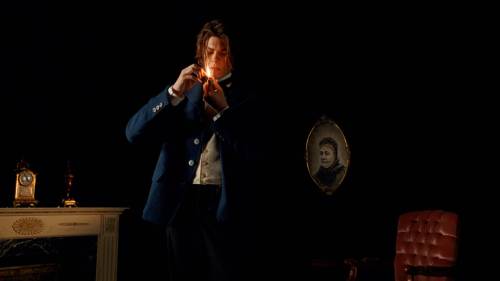
Simultaneously huge in its biographical breadth and intimate in its scale, Patrick Wang’s film A. Rimbaud is a portrait of the 19th-century poet Arthur Rimbaud, a grand, 175-minute biopic that eschews the genre’s convention with the adventurous spirit Rimbaud applied to the written word.

Read
Yesterday at 2:01 AM CDT

Experts believe study of 700-year-old handwriting unveils leading Byzantine painter’s true identity

Costas Kantouris And Nicholas Paphitis, The Associated Press 5 minute read Preview

Experts believe study of 700-year-old handwriting unveils leading Byzantine painter’s true identity

Costas Kantouris And Nicholas Paphitis, The Associated Press 5 minute read Thursday, Dec. 5, 2024

THESSALONIKI, Greece (AP) — Crime-solving techniques applied to a medieval illuminated manuscript in Paris may have solved a centuries-old puzzle — the true identity of a leading Byzantine painter who injected humanity into the rigid sanctity of Orthodox religious art.

A contemporary of Giotto, considered the father of Western painting, the artist conventionally known as Manuel Panselinos was equally influential in a totally different tradition that's largely overlooked in the West.

But nothing is known of his life, and scholars now believe Panselinos was just a nickname that eventually supplanted the real name of the man for whom it was coined — likely Ioannis Astrapas, from the northern Greek city of Thessaloniki.

The art of Byzantium, that decorates churches across Greece, Serbia and other Orthodox countries, stands out for the stark formalism of its elongated, glowering saints, quasi-cubist mountains and doe-eyed Madonnas.

Read
Thursday, Dec. 5, 2024

Today’s horoscope

Georgia Nicols 4 minute read Preview

Today’s horoscope

Georgia Nicols 4 minute read 2:00 AM CDT

MOON ALERT: Avoid shopping (except food and gas) and important decisions until after 3:30 p.m. today. After that, the moon moves from Pisces into Aries.

ARIES (March 21-April 19)

This is a passionate, powerful day. Romance is blessed. It’s a great day to socialize with romantic interests. In fact, it’s the best date day of the week! It’s also an excellent day for financial discussions about shared property, inheritances, taxes and debt.

TAURUS (April 20-May 20)

Read
2:00 AM CDT