

New Mexico’s oil income investments now surpass personal income tax revenue
Advertisement
Read this article for free:
or
Already have an account? Log in here »
To continue reading, please subscribe:
Monthly Digital Subscription
$0 for the first 4 weeks*
- Enjoy unlimited reading on winnipegfreepress.com
- Read the E-Edition, our digital replica newspaper
- Access News Break, our award-winning app
- Play interactive puzzles
*No charge for 4 weeks then price increases to the regular rate of $19.00 plus GST every four weeks. Offer available to new and qualified returning subscribers only. Cancel any time.
Monthly Digital Subscription
$4.75/week*
- Enjoy unlimited reading on winnipegfreepress.com
- Read the E-Edition, our digital replica newspaper
- Access News Break, our award-winning app
- Play interactive puzzles
*Billed as $19 plus GST every four weeks. Cancel any time.
To continue reading, please subscribe:
Add Free Press access to your Brandon Sun subscription for only an additional
$1 for the first 4 weeks*
*Your next subscription payment will increase by $1.00 and you will be charged $16.99 plus GST for four weeks. After four weeks, your payment will increase to $23.99 plus GST every four weeks.
Read unlimited articles for free today:
or
Already have an account? Log in here »
Hey there, time traveller!
This article was published 09/12/2024 (368 days ago), so information in it may no longer be current.
SANTA FE, N.M. (AP) — Efforts by New Mexico to save and invest portions of a financial windfall from local oil production are paying off as state government income on investments surpasses personal income tax collections for the first time, according to a new forecast Monday.
General fund income from the state’s two, multibillion-dollar permanent funds and interest on treasury accounts is expected to climb to $2.1 billion for the fiscal year between July 2024 and June 2025, surpassing $2 billion in revenue from personal income taxes.
The investment earnings are designed to ensure that critical programs — ranging from childcare subsidies to tuition-free college and trade school education — endure if oil income falters amid a possible transition to new sources of energy.
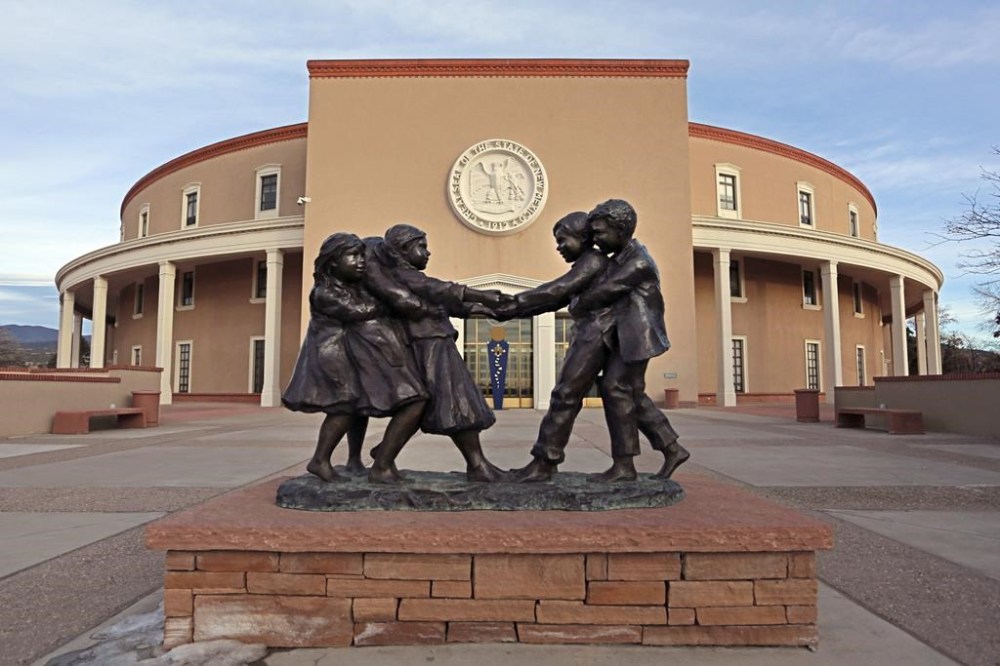
At the same time, legislators this year revised personal income tax brackets to lower taxes in the nation’s No. 2 state for oil production behind Texas.
“We’re not a poor state anymore,” said Democratic state Sen. George Muñoz of Gallup. “We’ve got things that we can win on — free education, childcare … low taxes for working families, for children. And that’s all because we’ve done a lot of the work to set this up for the future.”
The comments came at a legislative panel Monday where economists from four government agencies announced an income estimate for the coming year. The figures are the baseline for budget negotiations when the Democratic-led Legislature convenes in January.

State government income, which is closely linked to oil production in New Mexico, continues to grow, though at a slower pace, as legislators discuss new investments in social programs aimed at curbing crime and homelessness.
Economists estimate the state will bring in a record-setting $13.6 billion in general fund income for the fiscal year that runs from July 2025 to June 2026, a 2.6% increase over the current period.
This year’s income bump leaves room for an additional $892 million in state spending in the coming fiscal year, a 7% increase, according to the Legislature’s accountability and budgeting office. State income is forecast to exceed current bedrock annual spending obligations by $3.4 billion.
New Mexico legislators are pushing to open new savings accounts.
One proposal would set aside as much as $1 billion in a trust to underwrite spending on mental health and addiction treatment in response to public frustration with crime and homelessness. Legislators also are likely to revisit a stalled proposal to create a trust for Native American education that could expand Indigenous language instruction.