Takeaways from the AP’s reporting on nuclear bunkers
Advertisement
Read this article for free:
or
Already have an account? Log in here »
To continue reading, please subscribe:

Digital Subscription
One year of digital access for only $205*
- Enjoy unlimited reading on winnipegfreepress.com
- Read the E-Edition, our digital replica newspaper
- Access News Break, our award-winning app
- Play interactive puzzles
*First annual payment billed as $205.00 + GST for one year. This annual subscription will automatically renew at $233.00 + GST every 52 weeks (10% off the regular annual price of $259.35). Offer available to new and qualified returning subscribers only. Cancel any time.
To continue reading, please subscribe:
Add Free Press access to your Brandon Sun subscription for only an additional
$1 for the first 4 weeks*
- Enjoy unlimited reading on winnipegfreepress.com
- Read the E-Edition, our digital replica newspaper
- Access News Break, our award-winning app
- Play interactive puzzles
*Your next Brandon Sun subscription payment will increase by $1.00 and you will be charged $17.95 plus GST for four weeks. After four weeks, your payment will increase to $24.95 plus GST every four weeks.
Read unlimited articles for free today:
or
Already have an account? Log in here »
Hey there, time traveller!
This article was published 17/12/2024 (607 days ago), so information in it may no longer be current.
Global security leaders are warning that nuclear threats are growing as weapons spending has surged around the world. At the same time, private bunker sales are on the rise globally. Critics warn these bunkers create a false perception that a nuclear war is survivable. They argue that people planning to live through an atomic blast aren’t focusing on the real and current dangers posed by nuclear threats, and the critical need to stop the proliferation of weapons of mass destruction.
Meanwhile, government disaster experts say bunkers aren’t necessary. A Federal Emergency Management Agency’s 100-page guide on responding to a nuclear detonation focuses on having the public get inside and stay inside, ideally in a basement and away from outside walls for at least a day. Those existing spaces can provide protection from radioactive fallout, says FEMA.
Here are takeaways from the AP’s reporting on bunkers and the debate over the message building bunkers sends.
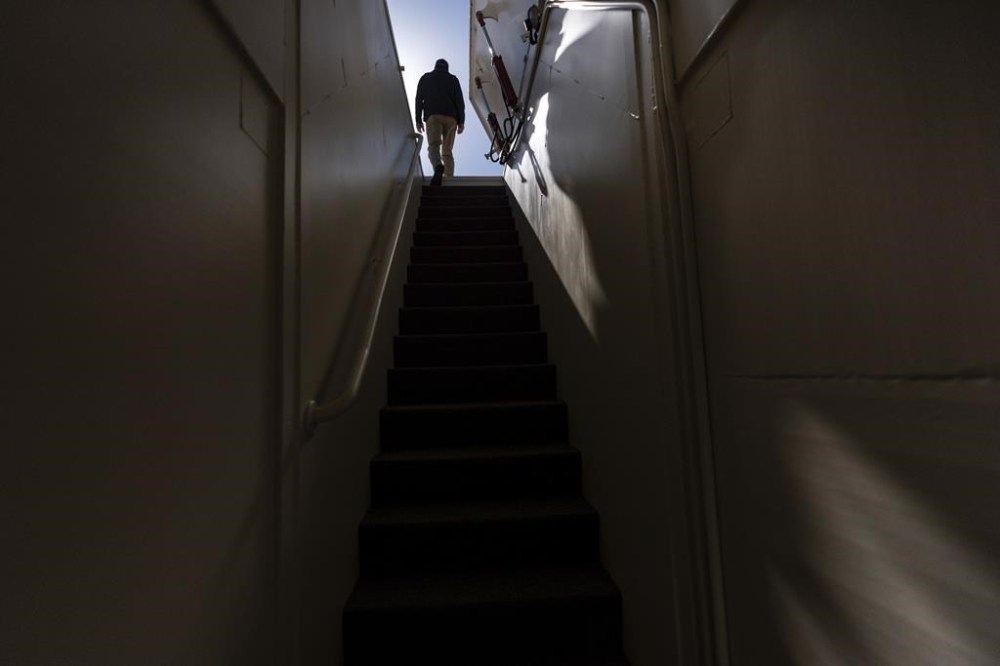
What is the market for bunkers in the United States?
The market for U.S. bomb and fallout shelters is forecast to grow from $137 million last year to $175 million by 2030, according to a market research report from BlueWeave Consulting. The report says major growth factors include “the rising threat of nuclear or terrorist attacks or civil unrest.”
“People are uneasy and they want a safe place to put their family. And they have this attitude that it’s better to have it and not need it then to need it and not have it,” said Atlas Survival Shelters CEO Ron Hubbard. He says his bunker factory, in Sulphur Springs, Texas, is the world’s largest. Hubbard said COVID lockdowns, Russia’s invasion of Ukraine and the outbreak of the Israel-Hamas war have driven sales.
What do government disaster preparedness experts say?
“Look, this fallout exposure is entirely preventable because it is something that happens after the detonation,” said Brooke Buddemeier a radiation safety specialist at Lawrence Livermore National Laboratory, where the U.S. government designs nuclear weapons. “There’s going to be a fairly obvious nuclear explosion event, a large cloud. So just getting inside, away from where those particles fall, can keep you and your family safe.”
After a deadly and deafening blast, a bright flash and a mushroom cloud, it will take about 15 minutes for the radioactive fallout to arrive for those a mile or more away from ground zero, said Michael Dillon, a scientist at Lawrence Livermore National Laboratory.
“It’s going to literally be sand falling on your head, and you’re going to want to get out of that situation. You want to go to your most robust building,” he said. In their models, they estimate people may need to stay inside for a day or two before evacuating.
What do nonproliferation advocates say?
Nonproliferation advocates bristle at the bunkers, shelters or any suggestion that a nuclear war is survivable.
“Bunkers are, in fact, not a tool to survive a nuclear war, but a tool to allow a population to psychologically endure the possibility of a nuclear war,” said Alicia Sanders-Zakre at the International Campaign to Abolish Nuclear Weapons.
Sanders-Zakre called radiation the “uniquely horrific aspect of nuclear weapons,” and noted that even surviving the fallout doesn’t prevent long-lasting, intergenerational health crises. “Ultimately, the only solution to protect populations from nuclear war is to eliminate nuclear weapons.”
Massachusetts Congressman James McGovern year after year introduces legislation pushing for nonproliferation.
“If we ever get to a point where there’s all out nuclear war, underground bunkers aren’t going to protect people,” he said. “Instead, we ought to be investing our resources and our energy trying to talk about a nuclear weapons freeze, initially.”

Next, he said, “we should work for the day when we get rid of all nuclear weapons.”
—-
The Associated Press receives support for nuclear security coverage from the Carnegie Corporation of New York and Outrider Foundation. The AP is solely responsible for all content.
—-
Additional AP coverage of the nuclear landscape: https://apnews.com/projects/the-new-nuclear-landscape/