Most US teens are abstaining from drinking, smoking and marijuana, survey says

Advertisement

Advertise with us

NEW YORK (AP) — Teen drug use hasn't rebounded from its drop during the early years of the COVID-19 pandemic, according to the results from a large annual national survey released Tuesday.

Read this article for free:


or

Already have an account? Log in here »

To continue reading, please subscribe:

Subscribe and receive a limited-edition Free Press branded hat or tote.

Digital Subscription

One year of digital access for only $205*

  • Enjoy unlimited reading on winnipegfreepress.com
  • Read the E-Edition, our digital replica newspaper
  • Access News Break, our award-winning app
  • Play interactive puzzles

*First annual payment billed as $205.00 + GST for one year. This annual subscription will automatically renew at $233.00 + GST every 52 weeks (10% off the regular annual price of $259.35). Offer available to new and qualified returning subscribers only. Cancel any time.

To continue reading, please subscribe:

Add Free Press access to your Brandon Sun subscription for only an additional

$1 for the first 4 weeks*

  • Enjoy unlimited reading on winnipegfreepress.com
  • Read the E-Edition, our digital replica newspaper
  • Access News Break, our award-winning app
  • Play interactive puzzles
Start now

*Your next Brandon Sun subscription payment will increase by $1.00 and you will be charged $17.95 plus GST for four weeks. After four weeks, your payment will increase to $24.95 plus GST every four weeks.

Hey there, time traveller!
This article was published 17/12/2024 (630 days ago), so information in it may no longer be current.

NEW YORK (AP) — Teen drug use hasn’t rebounded from its drop during the early years of the COVID-19 pandemic, according to the results from a large annual national survey released Tuesday.

About two-thirds of 12th graders this year said they hadn’t used alcohol, marijuana, cigarettes or e-cigarettes in the previous 30 days. That’s the largest proportion abstaining since the annual survey started measuring abstinence in 2017.

Among 10th graders, 80% said they hadn’t used any of those substances recently, another record. Among 8th graders, 90% didn’t use any of them, the same as was reported in the previous survey.
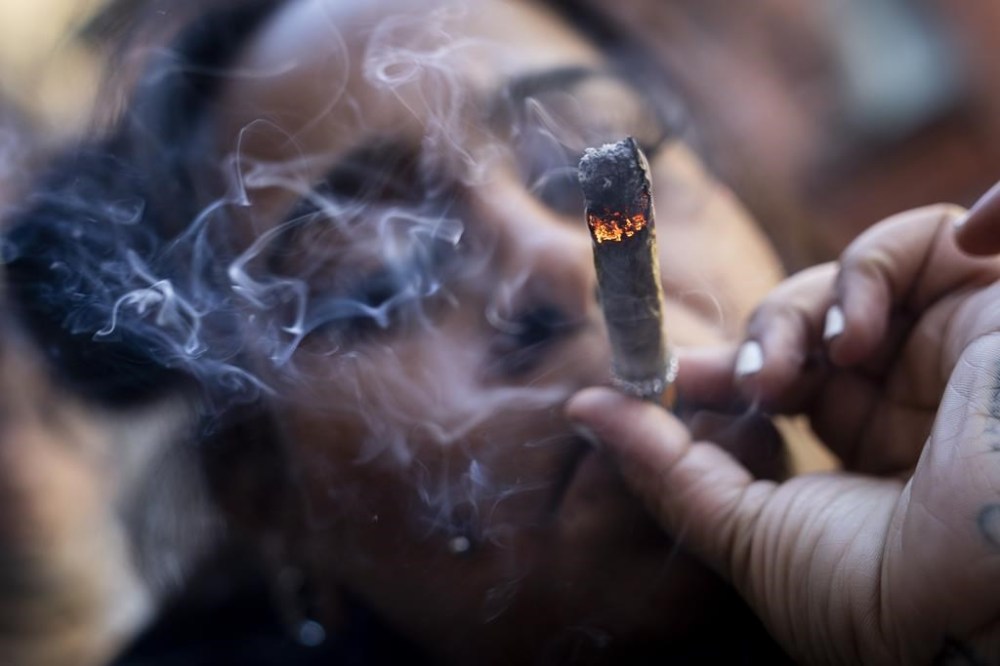
FILE - A person smokes cannabis outside the Smacked
FILE - A person smokes cannabis outside the Smacked "pop up" cannabis dispensary location, Tuesday, Jan. 24, 2023, in New York. (AP Photo/John Minchillo, File)

The only significant increase occurred in nicotine pouches. About 6% of 12th graders saying they’d used them in the previous year, up from about 3% in 2023.

Whether that has the makings of a new public health problem is unclear. The University of Michigan’s Richard Miech, who leads the survey, said: “It’s hard to know if we’re seeing the start of something, or not.”

The federally funded Monitoring the Future survey has been operating since 1975. This year’s findings are based on responses from about 24,000 students in grades 8, 10 and 12 in schools across the country. The survey is “one of the best, if not the best” source of national data for substance use by teens, said Noah Kreski, a Columbia University researcher who has studied teen drug use.

Early in the pandemic, students across the country were told not to go to schools and to avoid parties or other gatherings. They were at home, under parents’ supervision. Alcohol and drug use of all kinds dropped because experimentation tends to occur with friends, spurred by peer pressure, experts say.

As lockdowns ended, “I think everyone expected at least a partial rebound,” Miech said.

Even before the pandemic, there were longstanding declines in teen cigarette smoking, drinking and use of several types of drugs. Experts theorized that kids were staying home and communicating on smartphones rather than hanging out in groups, where they sometimes tried illicit substances.

But marijuana use wasn’t falling before the pandemic. And vaping was on the upswing. It was only during the pandemic that those two saw enduring declines, too.

Some experts wonder if the pandemic lockdowns had a deeper influence.

Miech noted that a lot of teens who experiment with e-cigarettes or drugs start in the 9th grade, sometimes because older adolescents are doing it. But the kids who were 9th graders during the lockdowns never picked up the habit, and never had the opportunity to turn into negative influencers of their younger classmates, he said.

“The pandemic stopped the cycle of new kids coming in and being recruited to drug use,” Miech said.

Mental health may also be a factor. There were increased reports of depression and anxiety in kids after the pandemic began. Depression is often associated with substance use, but some people with depression and anxiety are very wary of messing with drugs, said Dr. Duncan Clark, a University of Pittsburgh psychiatrist who researches substance use in kids.

“Some teens with anxiety are worried about the effects of substances. They may also be socially inhibited and have less opportunity to use drugs,” Clark said. “It’s a complicated relationship.”

___

The Associated Press Health and Science Department receives support from the Howard Hughes Medical Institute’s Science and Educational Media Group. The AP is solely responsible for all content.

Report Error Submit a Tip

More Stories

Education student designs lesson plans to take a bite out of food marketing

Maggie Macintosh 4 minute read Preview

Education student designs lesson plans to take a bite out of food marketing

Maggie Macintosh 4 minute read 5:22 PM CDT

Instead of apples, Emma Caronte is handing out lesson plans on local food history to Manitoba teachers this back-to-school season.

The undergraduate researcher spent her summer break creating a social studies unit that investigates food guide evolution, marketing tactics and how honey dill sauce became a pantry staple on the Prairies.

“I want students to develop a greater interest in food and what outside influences affect their choices and what we consider ‘healthy,’” said Caronte, a final-year education student at the University of Manitoba.

She is advertising her 112-page project as a user-friendly resource for classroom teachers and “a fun sub plan” targeted at Grade 6, 7, 8 and 9.

Read
5:22 PM CDT

‘It’s childish’: Americans in Canada react to Trump’s renaming of Lake Ontario

Sharif Hassan, The Canadian Press 5 minute read Preview

‘It’s childish’: Americans in Canada react to Trump’s renaming of Lake Ontario

Sharif Hassan, The Canadian Press 5 minute read Updated: Yesterday at 10:39 AM CDT

If you’re angered by U.S. President Donald Trump's renaming of Lake Ontario to “Lake America,” chances are that an American living in your neighbourhood might be just as outraged — if not more.

Many Americans who've made Canada their home are calling it an embarrassing, even "childish," stunt.

Ben Davis, a retired law professor, said Trump’s executive order to change the lake’s name is "so beneath the office of the United States president."

"And obviously it's another one of his distractions of the day, but it's just pitiful,” Davis said.

Read
Updated: Yesterday at 10:39 AM CDT

Manitoba doctor denies working to revive Carberry ER in response to recruitment lawsuit

Erik Pindera 4 minute read Preview

Manitoba doctor denies working to revive Carberry ER in response to recruitment lawsuit

Erik Pindera 4 minute read Yesterday at 9:40 AM CDT

A Manitoba doctor has denied he was working as a recruiter after an Ontario doctor accused him of misleading him about a position at the Carberry hospital.

Dr. Klevis Iliriani, who worked at the hospital in Carberry from May to August 2024, filed his statement of claim in Court of King’s Bench earlier this year.

Iliriani, who lives in an Ottawa suburb, has alleged recruiters negligently misrepresented the job at the Carberry hospital and breached the terms of his contract, which resulted in less pay than promised.

His court filing names defendants Dr. Dave Maharajh and Barry Banek as the recruiters.

Read
Yesterday at 9:40 AM CDT

Bombers close but not good enough

Ken Wiebe 8 minute read Preview

Bombers close but not good enough

Ken Wiebe 8 minute read 5:15 PM CDT

REGINA — The stage was set for the type of season-altering moment that can lift a franchise in a way that is tough to fully quantify, yet easy to identify.

A six-play, 66-yard drive during the final 39 seconds of regulation time was capped by Zach Collaros finding Dorian Singer in the corner of the end zone for an eight-yard touchdown strike with no time left on the clock, momentarily silencing the largest crowd to witness a football game inside Mosaic Stadium on Sunday night in the 61st edition of the Labour Day Classic.

But the converted major had only helped the Winnipeg Blue Bombers tie the contest to force overtime.

Eight plays and a penalty for a time-clock violation later, the Blue Bombers were left to lament what might have been in what became a 32-26 loss to the Saskatchewan Roughriders.

Read
5:15 PM CDT

Parts of River Heights hammered by storm

Melissa Martin 5 minute read Preview

Parts of River Heights hammered by storm

Melissa Martin 5 minute read 5:54 PM CDT

A powerful storm cut a swath of destruction through River Heights on Sunday, leaving much of the area without power.

Nobody was hurt in the storm.

By the time it subsided, parts of the quiet neighbourhood, especially Borebank and Lindsay streets between Grant and Taylor, had been ravaged: power lines downed, Manitoba Hydro poles toppled, trees splintered and crashed down on vehicles and homes.

In one case, a vehicle was flipped into a yard and sat under a partially downed tree. Shingles were stripped from roofs. Some residents described looking out during the storm and seeing power lines ablaze and the blue glow of electricity arcing over their backyards.

Read
5:54 PM CDT

US tourism groups want to win Canadian visitors back. A testy trade war isn’t helping

Rio Yamat, The Associated Press 7 minute read Preview

US tourism groups want to win Canadian visitors back. A testy trade war isn’t helping

Rio Yamat, The Associated Press 7 minute read Updated: Yesterday at 5:03 PM CDT

LAS VEGAS (AP) — Appeals from American tourism organizations seemed to be everywhere Josh Loewen looked over the last year. Billboards and banners proclaimed a state or city's love for Canada. Online and social media ads offered special deals for travelers from north of the border.

As a Vancouver resident and marketing executive himself, Loewen said he understands the conciliatory overtures. The number of Canadians traveling to the United States plunged after President Donald Trump returned to office with remarks about making Canada the 51st state. An acrimonious trade war between the two countries now is threatening to reinforce the informal boycott just as it appeared to be easing slightly.

"It’s such a big ask right now,” Loewen, 45, said of the U.S. tourism industry's attempts to woo Canadians like him back before a new president occupies the White House. “It’s just a wasted effort.”

Relations between the U.S. and Canadian governments have deteriorated sharply since their trade negotiations collapsed last month. Trump imposed import taxes of up to 50% on a range of Canadian products. Canada’s government responded in kind. Trump ordered the U.S. government to change the name of border-spanning Lake Ontario to “Lake America.” Canadian Prime Minister Mark Carney dismissed insults from members of Trump's Cabinet as childish and undignified.

Read
Updated: Yesterday at 5:03 PM CDT