B.C. repeals public drug use law after challenge and Ottawa’s similar changes

Advertisement

Advertise with us

VICTORIA - The British Columbia government has repealed a law it passed last year to restrict drug use in some public areas because successful court challenges prevented it from being brought into force.

Read this article for free:


or

Already have an account? Log in here »

To continue reading, please subscribe:

Subscribe and receive a limited-edition Free Press branded hat or tote.

Digital Subscription

One year of digital access for only $205*

  • Enjoy unlimited reading on winnipegfreepress.com
  • Read the E-Edition, our digital replica newspaper
  • Access News Break, our award-winning app
  • Play interactive puzzles

*First annual payment billed as $205.00 + GST for one year. This annual subscription will automatically renew at $233.00 + GST every 52 weeks (10% off the regular annual price of $259.35). Offer available to new and qualified returning subscribers only. Cancel any time.

To continue reading, please subscribe:

Add Free Press access to your Brandon Sun subscription for only an additional

$1 for the first 4 weeks*

  • Enjoy unlimited reading on winnipegfreepress.com
  • Read the E-Edition, our digital replica newspaper
  • Access News Break, our award-winning app
  • Play interactive puzzles
Start now

*Your next Brandon Sun subscription payment will increase by $1.00 and you will be charged $17.95 plus GST for four weeks. After four weeks, your payment will increase to $24.95 plus GST every four weeks.

Hey there, time traveller!
This article was published 19/12/2024 (657 days ago), so information in it may no longer be current.

VICTORIA – The British Columbia government has repealed a law it passed last year to restrict drug use in some public areas because successful court challenges prevented it from being brought into force.

Garry Begg, B.C.’s solicitor general and public safety minister, says in a statement the government has revoked the Restricting Public Consumption of Illegal Substances Act, that was passed in November 2023.

Nothing consequential will change on the ground after the federal government approved the B.C. government’s request in May to exempt public spaces from the province’s decriminalization pilot project, meaning police now have the authority to seize illegal drugs possessed in public, even without the provincial law.
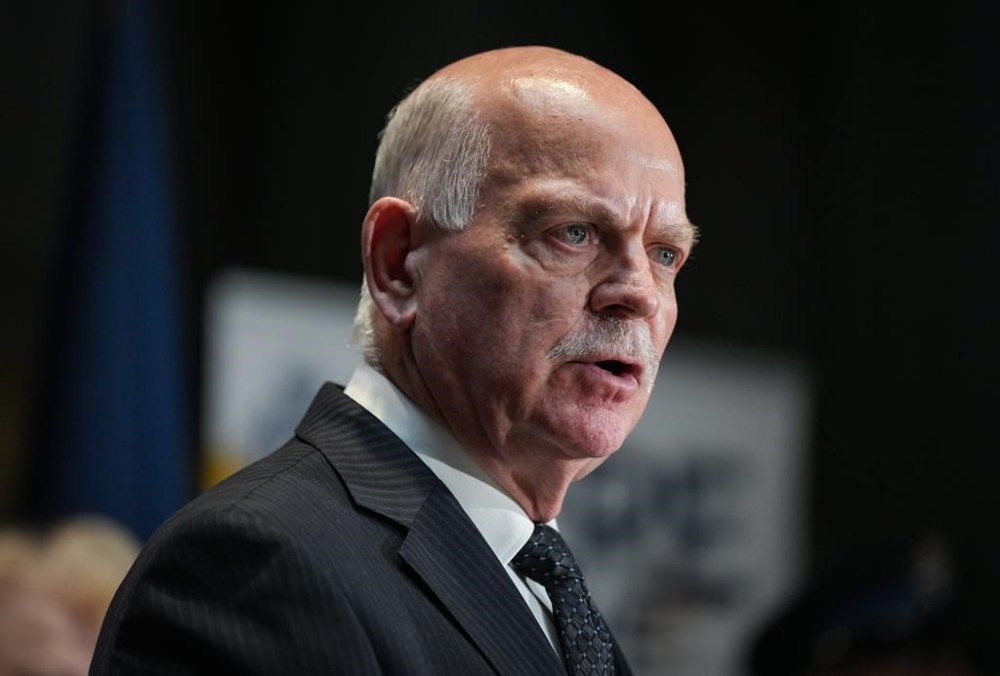
B.C. Minister of Public Safety and Solicitor General Garry Begg speaks during a news conference in Surrey, B.C., on Friday, November 29, 2024. THE CANADIAN PRESS/Darryl Dyck

B.C. Minister of Public Safety and Solicitor General Garry Begg speaks during a news conference in Surrey, B.C., on Friday, November 29, 2024. THE CANADIAN PRESS/Darryl Dyck

The law was tabled in the B.C. legislature to tighten rules around the use of illicit drugs in public places after widespread criticism from municipal leaders and citizens who said the drug consumption in community parks and other areas faced fewer restrictions than cigarette smoking.

But the Harm Reduction Nurses Association and other substance-use reform advocates launched a court challenge of the B.C. law and won, saying restricting drug use in public spaces would result in more drug users dying alone.

B.C.’s Court of Appeal upheld a three-month temporary injunction in March put in place by a lower court that stopped the law that was intended to restrict public drug use in certain areas.

But with the federal changes, police now have the discretion to consider taking action, warning the individual or referring the person, with consent, to services.

Possession of substances under 2.5 grams for personal use by adults, in private residences, addiction health facilities, places where people are lawfully sheltering and overdose prevention and drug-check sites remain decriminalized.

“These changes to the decriminalization pilot restrict the use of drugs in all of the places that had been intended to be covered by the act,” says Begg in a statement.

“Our government remains determined to turn the tide on the toxic-drug crisis and we are starting to see signs of progress. If people encounter drug use in inappropriate places, police are available to enforce the rules and help to connect individuals to support services.”

The BC Coroners Service released figures earlier this month that said 1,925 people had died of overdoses in the first 10 months of this year, which was down about nine per cent from the same period last year.

This report by The Canadian Press was first published Dec. 19, 2024.
Report Error Submit a Tip

More Stories

The election of our discontent: City at a crumbling crossroads, grumbling residents say in poll

Matthew Frank 7 minute read Preview

The election of our discontent: City at a crumbling crossroads, grumbling residents say in poll

Matthew Frank 7 minute read Updated: Yesterday at 3:16 PM CDT

There’s an undercurrent of unhappiness running through the Winnipeg electorate as the municipal election day approaches.

One-half of Winnipeggers believe the city is heading in the wrong direction, according to a new Abacus Data poll, with nearly one-third unsure if Winnipeg is regressing or progressing.

Only 21 per cent of residents believe the city is on the right track, the Free Press-commissioned poll found.

That discontentment extends to how the city spends its tax dollars, with four in 10 Winnipeggers believing they receive poor value for what they pay in property taxes.

Read
Updated: Yesterday at 3:16 PM CDT

Waiver wire pickup leads Jets to victory in Pittsburgh

Ken Wiebe 6 minute read Preview

Waiver wire pickup leads Jets to victory in Pittsburgh

Ken Wiebe 6 minute read Updated: Yesterday at 11:12 PM CDT

PITTSBURGH – Now that’s a positive first impression.

The Winnipeg Jets swept a two-game road trip, thanks in part to Clay (Mud) Stevenson making 30 saves in his debut with the team that claimed him off waivers one week earlier.

Stevenson was excellent in a 3-2 victory for the Jets over the Pittsburgh Penguins on Monday night at PPG Paints Arena.

“He obviously made some big big stops, right up to the end of the game there,” said Jets head coach Scott Arniel. “He was real solid and confident and looked comfortable. It was great to see a kid come in here like that, a new organization late in training camp. He came as advertised.”

Read
Updated: Yesterday at 11:12 PM CDT

Two hospitalized in Osborne Village assault

1 minute read Updated: Yesterday at 10:12 AM CDT

Two people are in hospital and another two are in police custody after a serious assault in Osborne Village early Monday morning.

Winnipeg Police Service spokesman Const. Pat Saydak said officers were called to the assault scene on Osborne Street near River Avenue just after midnight.

Two people were rushed to hospital, one in critical condition and the other in stable condition.

Two individuals, both adults, were arrested by police. There's no word yet on charges.

’Disgusting’ posters being investigated by police

Morgan Modjeski 4 minute read Updated: Yesterday at 1:32 PM CDT

The Winnipeg Police Service major crimes unit is investigating what some have labelled offensive and hateful posters on full-display at a Winnipeg home.

Manitoba Federation of Labour calls for independent review of Workers Compensation Board

Gabrielle Piché 5 minute read Preview

Manitoba Federation of Labour calls for independent review of Workers Compensation Board

Gabrielle Piché 5 minute read 9:54 PM CDT

A major labour association is calling for an independent Workers Compensation Board review as Manitoba leads the country in workplace injury rates.

Last year, 2.5 employees in every 100 reported a workplace injury serious enough to take time off, WCB tracking shows. The number is higher than any other province — just as it has been for the past three years, according to the Manitoba Federation of Labour.

(In 2025, the next highest time loss injury rate was in British Columbia: 2.04 people for every 100.)

“Our prevention work in Manitoba is failing Manitobans,” said Kevin Rebeck, president of the Manitoba Federation of Labour. “We need an independent review to help shine a light on, ‘What is happening on the prevention front of WCB?’”

Read
9:54 PM CDT

B.C. repeals public drug use law after challenge and Ottawa’s similar changes

Dirk Meissner, The Canadian Press 3 minute read Preview

B.C. repeals public drug use law after challenge and Ottawa’s similar changes

Dirk Meissner, The Canadian Press 3 minute read Thursday, Dec. 19, 2024

VICTORIA - The British Columbia government has repealed a law it passed last year to restrict drug use in some public areas because successful court challenges prevented it from being brought into force.

Garry Begg, B.C.'s solicitor general and public safety minister, says in a statement the government has revoked the Restricting Public Consumption of Illegal Substances Act, that was passed in November 2023.

Nothing consequential will change on the ground after the federal government approved the B.C. government's request in May to exempt public spaces from the province's decriminalization pilot project, meaning police now have the authority to seize illegal drugs possessed in public, even without the provincial law.

The law was tabled in the B.C. legislature to tighten rules around the use of illicit drugs in public places after widespread criticism from municipal leaders and citizens who said the drug consumption in community parks and other areas faced fewer restrictions than cigarette smoking.

Read
Thursday, Dec. 19, 2024