Making her mark

Life of lesser-known women’s rights pioneer in Manitoba chronicled in new account

Advertisement

Advertise with us

Manitobans with an interest in history are proud that our province was the first in Canada to grant women the vote, but if asked who led the women’s suffrage campaign here, most would say Nellie McClung. A minority might say it was a team effort. Few would name Lillian Beynon Thomas.

Read this article for free:

or

Already have an account? Log in here »

To continue reading, please subscribe:

Subscribe and receive a limited-edition Free Press branded hat or tote.

Digital Subscription

One year of digital access for only $205*

  • Enjoy unlimited reading on winnipegfreepress.com
  • Read the E-Edition, our digital replica newspaper
  • Access News Break, our award-winning app
  • Play interactive puzzles

*First annual payment billed as $205.00 + GST for one year. This annual subscription will automatically renew at $233.00 + GST every 52 weeks (10% off the regular annual price of $259.35). Offer available to new and qualified returning subscribers only. Cancel any time.

To continue reading, please subscribe:

Add Free Press access to your Brandon Sun subscription for only an additional

$1 for the first 4 weeks*

  • Enjoy unlimited reading on winnipegfreepress.com
  • Read the E-Edition, our digital replica newspaper
  • Access News Break, our award-winning app
  • Play interactive puzzles
Start now

*Your next Brandon Sun subscription payment will increase by $1.00 and you will be charged $17.95 plus GST for four weeks. After four weeks, your payment will increase to $24.95 plus GST every four weeks.

Hey there, time traveller!
This article was published 21/12/2024 (574 days ago), so information in it may no longer be current.

Manitobans with an interest in history are proud that our province was the first in Canada to grant women the vote, but if asked who led the women’s suffrage campaign here, most would say Nellie McClung. A minority might say it was a team effort. Few would name Lillian Beynon Thomas.

Law professor Robert Hawkins became interested in Thomas because of her determined efforts to have a dower act passed in Manitoba. After devoting several years to the dower campaign, Thomas realized it would never happen without women’s suffrage. So in 1913, she organized the Political Equality League to lead the fight.

Born in 1874, Thomas came from a relatively poor family homesteading near Hartney. After finishing high school, she taught in rural schools off and on for 13 years, saving enough money to further her education; in 1905, when only 11 per cent of university grads were women, Thomas graduated from Brandon University. The following year, having had enough of teaching, she landed a job with the Manitoba Free Press.
Free Press files
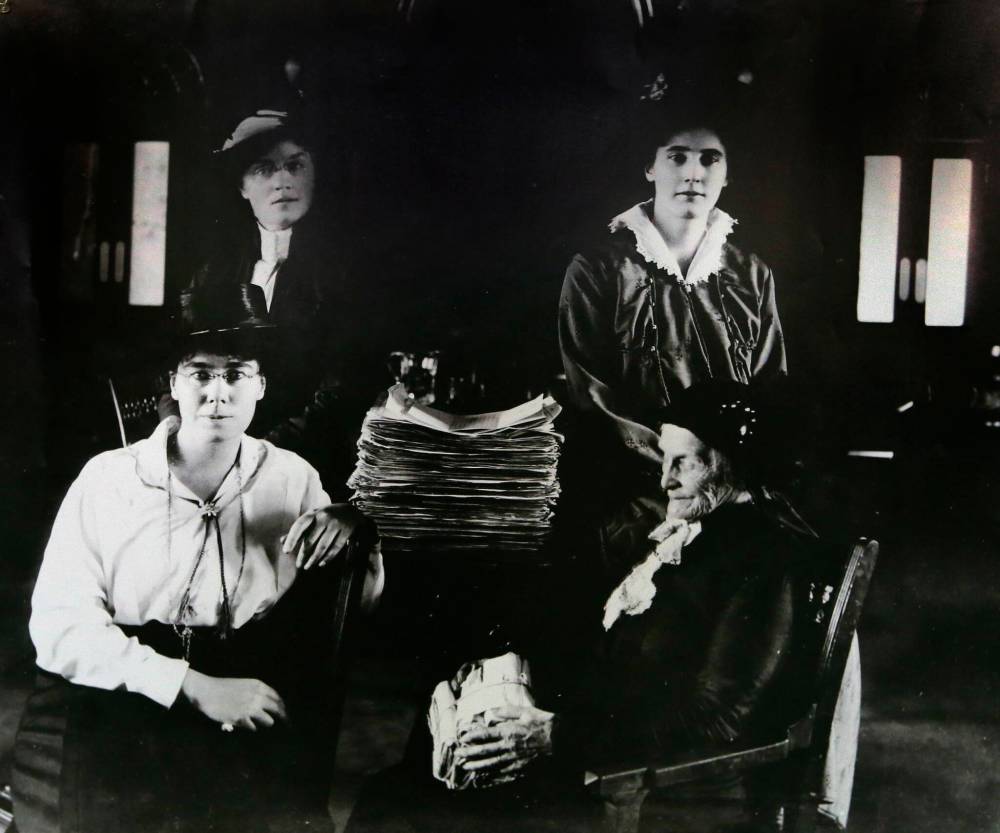
                                Clockwise, from top left: Lillian Beynon Thomas, Winona Dixon, Dr. Mary Crawford and Amelia Burritt presented the final petition for women’s suffrage on Dec. 23, 1915 to the Manitoba Legislature. The amendment to the Manitoba Elections Act allowing women to vote, the first such legislation in Canada, was passed on Jan. 28, 1916.

Free Press files

Clockwise, from top left: Lillian Beynon Thomas, Winona Dixon, Dr. Mary Crawford and Amelia Burritt presented the final petition for women’s suffrage on Dec. 23, 1915 to the Manitoba Legislature. The amendment to the Manitoba Elections Act allowing women to vote, the first such legislation in Canada, was passed on Jan. 28, 1916.

For the next 11 years, Thomas edited the women’s page of a widely distributed weekly, The Prairie Farmer, and for five years wrote a daily column in the Free Press as well.

Thomas already knew a great deal about the hard lives of Prairie women, and she learned even more from letters to the women’s page. As well as fighting for a dower act, she helped establish Women’s Homemaker Clubs in Saskatchewan and became a mentor to Violet McNaughton, who led the suffrage fight there.

In Manitoba she was involved in establishing a women’s branch of the Manitoba Grain Growers’ Association and supported other groups such as the Women’s Christian Temperance Union which, along with the Icelandic Women’s Suffrage Association, had petitioned for women’s suffrage since the 1890s. She was a friend of J.S. Woodsworth and MLA Fred Dixon, both pacifists, and she was involved in the All People’s Mission’s educational work.

Hawkins has determinedly scoured archives for details of Thomas’s life before she founded the Political Equality League in 1913, but, as to her part in achieving the vote, there’s little new information here. Catherine Cleverdon, author of The Woman’s Suffrage Movement in Canada, questioned many of the participants, including Thomas, her sister, Francis Beynon and Nellie McClung.

Still, Hawkins makes a good case that Thomas’s role in achieving the vote here was pivotal. In addition to playing a key role in organizing speakers, petitions and pamphlets, the staging of A Women’s Parliament at the Walker Theatre in 1914 was her idea.

In wake of that sold-out performance, which featured McClung and Thomas improvising as premier and leader of the opposition, the Manitoba Liberals finally endorsed women’s suffrage. Then, in 1915, Conservative premier Rodmond Roblin was forced to resign over corruption charges, and the Liberals took over.

But once again there was a challenge, and this one was clearly solved by Thomas. The original Liberal suffrage bill did not include women’s eligibility to run for office. Learning of this, Thomas threatened that the new government would be denounced at an imminent Manitoba Grain Growers’ convention. The Liberal premier, Tobias Norris, gave in, refusing to speak to Thomas for years.

A few years later, Thomas succeeded in having a dower act passed in Manitoba. It was the last act of her political activism; meanwhile McClung, her life-long friend, went on to serve in the Alberta legislature and to support the Person’s Case which made women eligible for the senate.
She Won the Vote for Women

She Won the Vote for Women

In 1917 the Free Press fired Beynon’s husband, Alfred Vernon Thomas, for his pacifism, and the couple moved to New York. When they returned in the 1920s, Lillian devoted her time to writing short stories and plays, quite successfully, but from what we know she never dipped her foot in the political arena again.

Readers may leave this book wanting to know less about the plots of her short stories and more about her personality and values, such as the origin of her own pacifism; however, it is clear Hawkins has probed all available sources.

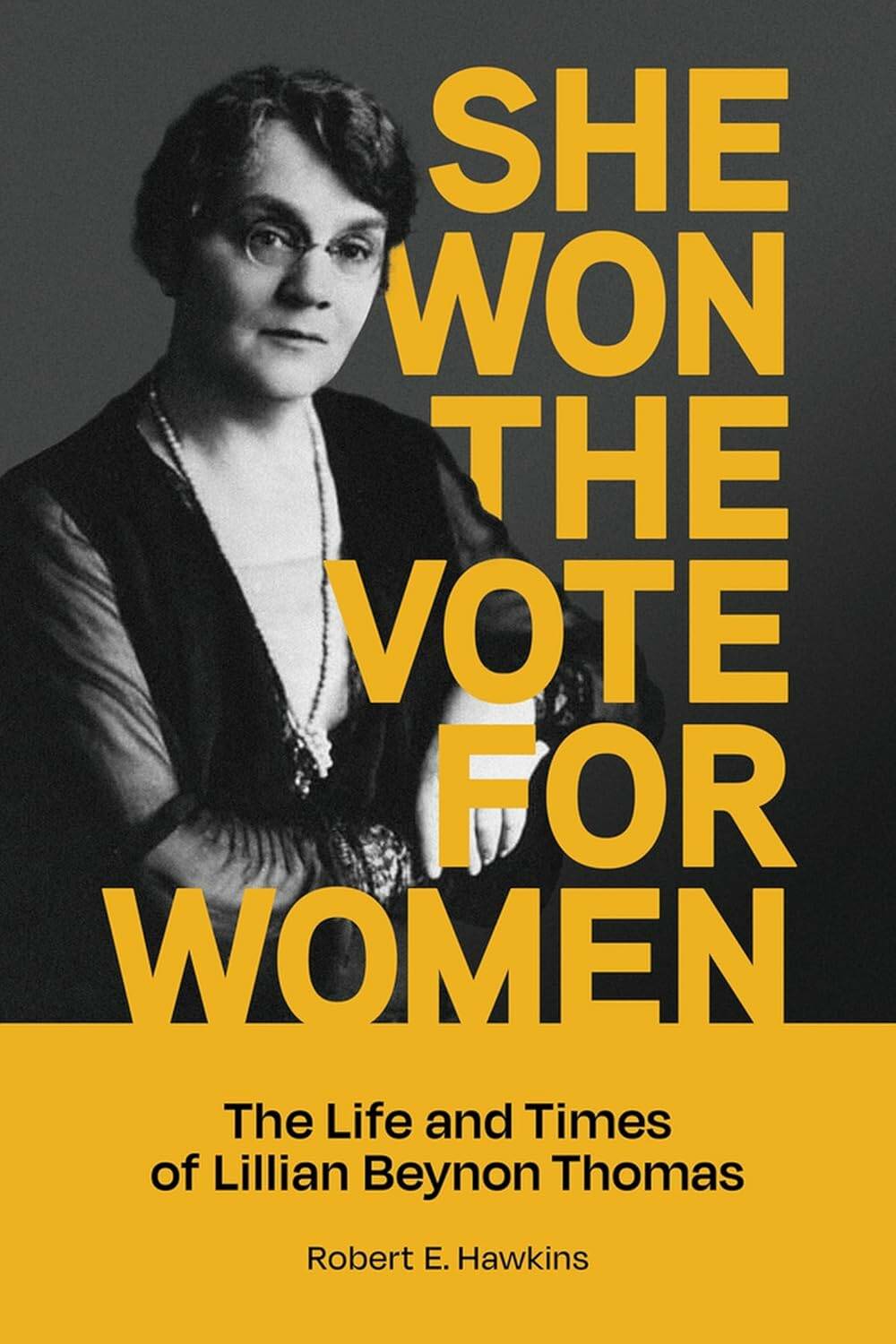
Beynon’s death in 1961 was not mentioned in the Winnipeg Free Press, but an article in the Winnipeg Tribune, where her husband worked after his stint with the New York Times, was headlined “She Won the Vote for Women.”

Faith Johnston wrote a biography of Dorise Nielsen, the first woman from Western Canada to serve in Parliament.


Report Error Submit a Tip

More Stories

City tries to find the right balance in regulating personal e-vehicles

Zoe Pierce and Joyanne Pursaga 10 minute read Preview

City tries to find the right balance in regulating personal e-vehicles

Zoe Pierce and Joyanne Pursaga 10 minute read 6:00 AM CDT

Patty Wiens was already a cycling enthusiast when she got an electric bicycle in early 2023, but she didn’t realize how much it would transform the way she got around Winnipeg.

She started riding throughout winter and stopped relying on her vehicle. Eventually, she sold her car.

“It’s not a replacement for a bike,” she said. “It’s a replacement for a car.”

Wiens, who has been dubbed the “Bike Mayor of Winnipeg” by a global cycling advocacy organization, said her e-bike is a cheaper and more environmentally friendly way to get around the city, especially as the cost of living mounts.

Read
6:00 AM CDT

Outreach centre rife with drug use, needles, but daycare, community members say safety concerns go unheard

Scott Billeck 7 minute read Preview

Outreach centre rife with drug use, needles, but daycare, community members say safety concerns go unheard

Scott Billeck 7 minute read 5:43 PM CDT

Children at an Osborne Village daycare are routinely exposed to discarded needles, human feces and drug use, prompting growing safety concerns from parents, residents and business owners.

The concerns centre on Augustine Centre at River Avenue and Osborne Street, where SPLASH Child Care shares the building with Oak Table, a drop-in operated by 1JustCity that provides meals, wellness and addiction supports, along with programs that help people build skills, and secure housing and employment.

The daycare looks after 132 children, from just a few months old to age 12.

Lesley Massey, executive director of the daycare, said parents fear for their children’s safety.

Read
5:43 PM CDT

‘Weather whiplash’ leaves Winnipeg businesses sore

Nicole Buffie 3 minute read Preview

‘Weather whiplash’ leaves Winnipeg businesses sore

Nicole Buffie 3 minute read 7:29 PM CDT

A spring and summer of intense weather has wreaked havoc on southern Manitoba, slamming it with torrential rain, tornadoes, intense heat and, now, wildfire smoke.

The Beer Can, a popular summer patio located next to the Granite Curling Club, had to close early Thursday due to a thunderstorm. Prior to that, customers had to deal with a blanket of smoke that rolled into town from wildfires raging in Ontario.

“We’re just keeping (staff) on standby and adapting to the weather as the days come,” said supervisor Kisis Angeconeb.

Winnipeg has seen its share of “weather whiplash” — the phenomenon of violent swings between extreme conditions in a short period of time.

Read
7:29 PM CDT

Nine years for man who kidnapped delivery driver

Erik Pindera 5 minute read Preview

Nine years for man who kidnapped delivery driver

Erik Pindera 5 minute read Yesterday at 2:01 AM CDT

A delivery driver was kidnapped after the break-up of a business partnership involving “grey-market vapes” that were sold at Winnipeg convenience stores, a Manitoba judge has been told.

The Winnipeg Police Service said last week that investigators recently arrested a third suspect in the Oct. 11, 2024 incident, in which three men are accused of kidnapping the 22-year-old driver and holding him at gunpoint for hours as they stole merchandise from a storage facility.

One of the men arrested, 43-year-old Jonathon Ranger, pleaded guilty earlier this year to forcible confinement and two offences related to the stolen gun that was found when he was arrested in December 2024.

In June, he was sentenced to nine years in prison, minus time served, based on a joint recommendation from the Crown and defence as part of a plea bargain.

Read
Yesterday at 2:01 AM CDT

Legion celebrates 100 years with surge in memberships

Tiago Resko 3 minute read Preview

Legion celebrates 100 years with surge in memberships

Tiago Resko 3 minute read 5:35 PM CDT

The Royal Canadian Legion has experienced a surge in membership just in time for its centennial.

“It’s quite a feat — not many organizations last for 100 years, and the Legion seems to have still managed to hang in there for 100 years,” said John Edwards at Legion 119 on McDermot Avenue.

The Legion formed in Winnipeg in 1925 when a group of veterans met at the Marlborough Hotel to unify their advocacy organizations.

On July 17, 1926, the Free Press reported the group had been incorporated through an act of Parliament as the Canadian Legion of the British Empire Service League, giving legal effect to the work the veterans had started.

Read
5:35 PM CDT

First Nations’ concerns overshadowed by talk of major projects

Niigaan Sinclair 5 minute read Preview

First Nations’ concerns overshadowed by talk of major projects

Niigaan Sinclair 5 minute read 6:23 PM CDT

The contrast could not have been more stark in Ottawa — unceded Algonquin territory — this week.

On one side, hundreds of chiefs and their proxies met at the annual summer meeting of the Assembly of First Nations to debate resolutions focused on issues — primarily crises — in their communities.

Of the 53 policy resolutions and two emergency resolutions proposed by the chiefs, pressing topics such as child welfare, housing, drinking water, poverty, Alberta separatism, citizenship, and online attacks from deniers of the atrocities of residential schools were all on the agenda.

On the other side, over seven cabinet ministers from the federal government showed up basically to argue the case for the fast-tracking of “major projects.”

Read
6:23 PM CDT