Japan to maximize nuclear power in clean-energy push as electricity demand grows

Advertisement

Advertise with us

TOKYO (AP) — A government-commissioned panel of experts on Wednesday largely supported Japan's new energy policy for the next few years that calls for bolstering renewables up to half of electricity needs by 2040 while maximizing the use of nuclear power as the country seeks to accommodate the growing power demand in the era of AI while meeting decarbonization targets.

Read this article for free:


or

Already have an account? Log in here »

To continue reading, please subscribe:

Subscribe and receive a limited-edition Free Press branded hat or tote.

Digital Subscription

One year of digital access for only $205*

  • Enjoy unlimited reading on winnipegfreepress.com
  • Read the E-Edition, our digital replica newspaper
  • Access News Break, our award-winning app
  • Play interactive puzzles

*First annual payment billed as $205.00 + GST for one year. This annual subscription will automatically renew at $233.00 + GST every 52 weeks (10% off the regular annual price of $259.35). Offer available to new and qualified returning subscribers only. Cancel any time.

To continue reading, please subscribe:

Add Free Press access to your Brandon Sun subscription for only an additional

$1 for the first 4 weeks*

  • Enjoy unlimited reading on winnipegfreepress.com
  • Read the E-Edition, our digital replica newspaper
  • Access News Break, our award-winning app
  • Play interactive puzzles
Start now

*Your next Brandon Sun subscription payment will increase by $1.00 and you will be charged $17.95 plus GST for four weeks. After four weeks, your payment will increase to $24.95 plus GST every four weeks.

Hey there, time traveller!
This article was published 25/12/2024 (655 days ago), so information in it may no longer be current.

TOKYO (AP) — A government-commissioned panel of experts on Wednesday largely supported Japan’s new energy policy for the next few years that calls for bolstering renewables up to half of electricity needs by 2040 while maximizing the use of nuclear power as the country seeks to accommodate the growing power demand in the era of AI while meeting decarbonization targets.

The Industry Ministry presented the draft plan for final review by the panel of 16 mostly pro-nuclear members from business, academia and civil groups. It calls for maximizing the use of nuclear energy, reversing a phaseout policy adopted after the meltdown crisis at the Fukushima Daiichi power plant in 2011 that led to extensive displacement of residents and lingering anti-nuclear sentiment.

The plan is due to receive Cabinet approval by March after a period of consultation and will then replace the current energy policy, which dates from 2021. The new proposal says nuclear energy should account for 20% of Japan’s energy supply in 2040, up from just 8.5% last year, while expanding renewables to 40-50% from 22.9% and reducing coal-fired power to 30-40% from nearly 70% last year.

The current plan set a 20-22% target for nuclear energy, 36-38% for renewables and 41% for fossil fuel, for 2030.

Demand for low-carbon energy, such as renewables and nuclear, is growing because of the demand from data centers using AI and semiconductor factories around the country.

Industry Minister Yoji Muto, who attended Wednesday’s panel meeting, said Japan must strengthen its energy security by not relying too much on a single source.

“How we can secure decarbonized energy determines Japan’s future growth,” Muto said. “It’s time to stop discussing a choice between renewable energy and nuclear power. We should maximize the use of both renewables and nuclear.”

Japan has set a goal of achieving net zero emissions of climate-warming gases by 2050, and a 73% reduction by 2040 compared to 2013 levels.

The draft energy plan places renewables as the main power source and calls for development of next-generation energy source, such as solar batteries and portable solar panels.

It outlines a number of risk scenarios, including a possibility of less-than-expected investment and cost reduction in renewables. However, some experts said the plan lacked a feasibility outlook for 2040 or a roadmap for the phaseout of fossil fuels.

The plan also calls for acceleration of the restarts of reactors that meet the post-Fukushima safety standards, and proposes construction of next-generation reactors — at plants where existing reactors are being decommissioned.

Still, to achieve the 20% target, all 33 workable reactors in Japan must be back online, with only 14 back in service after the Fukushima disaster. Given the current pace of safety checks by the nuclear regulation authority, experts say meeting the target would be difficult.

Despite criticisms and skepticism about its feasibility, Japan still sticks to its pursuit of developing advanced reactors and a struggling spent fuel reprocessing program to achieve a complete nuclear fuel cycle.

Report Error Submit a Tip

More Stories

Japan to maximize nuclear power in clean-energy push as electricity demand grows

Mari Yamaguchi, The Associated Press 3 minute read Wednesday, Dec. 25, 2024

TOKYO (AP) — A government-commissioned panel of experts on Wednesday largely supported Japan's new energy policy for the next few years that calls for bolstering renewables up to half of electricity needs by 2040 while maximizing the use of nuclear power as the country seeks to accommodate the growing power demand in the era of AI while meeting decarbonization targets.

The Industry Ministry presented the draft plan for final review by the panel of 16 mostly pro-nuclear members from business, academia and civil groups. It calls for maximizing the use of nuclear energy, reversing a phaseout policy adopted after the meltdown crisis at the Fukushima Daiichi power plant in 2011 that led to extensive displacement of residents and lingering anti-nuclear sentiment.

The plan is due to receive Cabinet approval by March after a period of consultation and will then replace the current energy policy, which dates from 2021. The new proposal says nuclear energy should account for 20% of Japan’s energy supply in 2040, up from just 8.5% last year, while expanding renewables to 40-50% from 22.9% and reducing coal-fired power to 30-40% from nearly 70% last year.

The current plan set a 20-22% target for nuclear energy, 36-38% for renewables and 41% for fossil fuel, for 2030.

Chopped trees will leave a ‘blight’ on Windsor Park

Kelly-Anne Riess 3 minute read Preview

Chopped trees will leave a ‘blight’ on Windsor Park

Kelly-Anne Riess 3 minute read Yesterday at 8:04 PM CDT

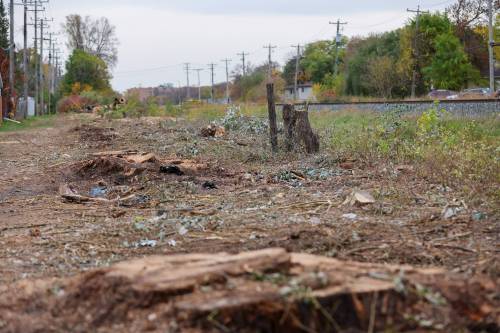
Robert Gordon has watched the trees grow along a popular Windsor Park walking path for nearly six decades.

Now, as Manitoba Hydro cuts them down to protect nearby power lines, he says a familiar part of his childhood neighbourhood is disappearing.

Although he no longer lives in the area, Gordon regularly returns to walk or cycle along the tree-lined path, which runs parallel to Archibald Street.

He was concerned when he recently spotted crews clearing vegetation near the entrance to the path, but initially assumed they were removing brush. When he returned, he discovered the clearing had extended farther along the corridor.

Read
Yesterday at 8:04 PM CDT

Landlords will face fines for breaching confidentiality

Carol Sanders 4 minute read Preview

Landlords will face fines for breaching confidentiality

Carol Sanders 4 minute read Yesterday at 5:04 PM CDT

The province is amending legislation to allow landlords to be penalized if they breach the confidentiality of tenants who break their lease by obtaining a domestic violence certificate.

“Hopefully, now there’s going to be measures in place so that if this happens again, and God forbid it happens again to anyone else, that there would be penalties imposed on landlords who do that,” said one victim whose concerns were published on the front page of the Free Press last month.

Under current legislation, landlords must ensure that any information received from those tenants regarding the termination of the tenancy is kept confidential, but there are no penalties for landlords who violate that section of the act. After hearing from victims put at risk when landlords broke the law by violating their confidentiality, the government announced Monday that it is amending the Residential Tenancies Act to allow for penalties.

The young woman who spoke to the Free Press showed that her landlord copied her alleged abuser in email correspondence that included her personal email address and the domestic violence certificate she obtained in 2025 to end a tenancy agreement early and leave an abusive relationship.

Read
Yesterday at 5:04 PM CDT

Bit of creepy consultation could go a long way

Maureen Scurfield 5 minute read Yesterday at 2:01 AM CDT

DEAR MISS LONELYHEARTS: Halloween has always been my favourite time of year. I do my house up with lots of spooky lighting and characters on the lawn with eerie sounds booming out.

But last year I got seriously hassled by some people in the neighbourhood who thought it was too creepy. How do I get them on board this year? I don’t want to fight with them again.

— Want to Be Good Neighbour, River Heights

Dear Good Neighbour: Go to your close neighbours and explain what you want to do with your yard for Halloween this year, and also provide them with a firm time by which the celebrating will wrap up and things can quiet down.

Jets’ game flies south against Ducks

Mike McIntyre 7 minute read Preview

Jets’ game flies south against Ducks

Mike McIntyre 7 minute read Yesterday at 10:38 PM CDT

The Winnipeg Jets sure looked like a team that was running on fumes Friday night.

Playing for the fifth time in eight days, the club suffered its first regulation loss of the young season — a lacklustre 5-1 showing against the Anaheim Ducks at Canada Life Centre.

While we won’t question the effort, the execution was a different story. Sloppy plays, missed passes, porous defensive-zone coverage and iffy goaltending made this a tough watch for the 13,693 fans in attendance.

“Just some mental things that happened. Obviously some physical things as well,” said head coach Scott Arniel.

Read
Yesterday at 10:38 PM CDT

Is this the season of secession?

David McLaughlin 5 minute read Preview

Is this the season of secession?

David McLaughlin 5 minute read 2:01 AM CDT

Canada has entered its season of secession. Like El Nino, the currents of grievance can blow hot and cold. Today, they are hot. But how hot for how long? The odds of Alberta and now Quebec separating from Canada are not high, but they are never zero.

After a year of waving the flag in a surge of national patriotism to confront Donald Trump’s attacks on Canada — economic and verbal — it is both jarring and frustrating for most Canadians to be reminded of the pervasive and persistent tensions that come with governing our federation.

When we need new national purpose to confront big economic sovereignty and security challenges from outside, that purpose is undermined and diminished by having to confront homegrown grievances.

We’ve seen and seen off two separation referendums in Quebec. Now we have a newly elected separatist party coming to power. In Alberta, voters will soon decide whether the independence road is one they want to travel.

Read
2:01 AM CDT