‘It isn’t a future thing.’ Climate change is taking a toll on Canada’s lighthouses
Advertisement
Read this article for free:
or
Already have an account? Log in here »
To continue reading, please subscribe:

Digital Subscription
One year of digital access for only $205*
- Enjoy unlimited reading on winnipegfreepress.com
- Read the E-Edition, our digital replica newspaper
- Access News Break, our award-winning app
- Play interactive puzzles
*First annual payment billed as $205.00 + GST for one year. This annual subscription will automatically renew at $233.00 + GST every 52 weeks (10% off the regular annual price of $259.35). Offer available to new and qualified returning subscribers only. Cancel any time.
To continue reading, please subscribe:
Add Free Press access to your Brandon Sun subscription for only an additional
$1 for the first 4 weeks*
- Enjoy unlimited reading on winnipegfreepress.com
- Read the E-Edition, our digital replica newspaper
- Access News Break, our award-winning app
- Play interactive puzzles
*Your next Brandon Sun subscription payment will increase by $1.00 and you will be charged $17.95 plus GST for four weeks. After four weeks, your payment will increase to $24.95 plus GST every four weeks.
Read unlimited articles for free today:
or
Already have an account? Log in here »
Hey there, time traveller!
This article was published 31/12/2024 (623 days ago), so information in it may no longer be current.
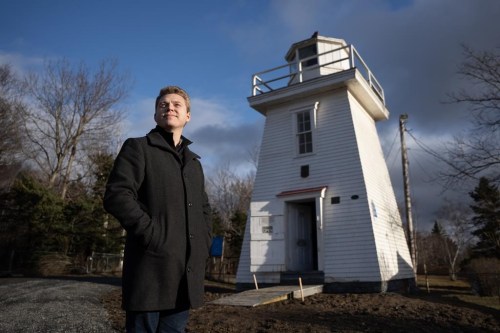
HALIFAX – For more than 150 years, the stout and tidy Walton Harbour lighthouse in Nova Scotia has stood watch from a cliff overlooking the upper Bay of Fundy.
But in recent years, coastal erosion left the historic wooden tower perilously close to the cliff’s edge, raising concerns that the community could lose a tourist draw and a link to its past.
“In the past 10 years or so, the erosion has increased in speed,” says John Ogilvie, vice-president of the Walton Area Development Association. “On both sides, the cliff was coming inwards …. We needed to find a way to protect a hugely important asset to our community.”
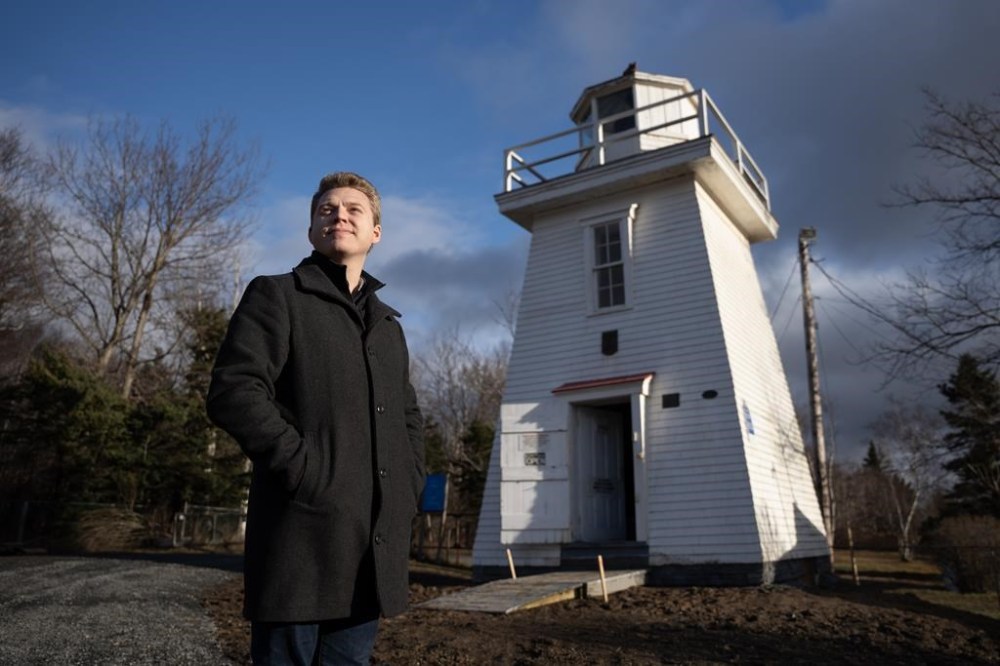
In November, the municipality set aside $100,000 to drag the lighthouse about 45 metres inland to safety. The costly move illustrates the real impact of climate change in a part of the country where the coastline is steadily retreating, sometimes at an alarming rate.
“Climate change isn’t a future thing,” says Ogilvie, who is also the municipality’s climate action co-ordinator. “It’s here and we’re facing it down now …. And that can mean putting up big money to change the way we do things.”
With 13,000 kilometres of coastline, Nova Scotia faces significant risks as storms intensify and seas rise. “We’re seeing more storms and they’re are getting stronger,” Ogilivie says. “We seeing that with the damage from hurricanes and the wild extremes in our weather.”
Research scientist Tim Webster, an expert on coastal issues, says data he has collected during the past 20 years show the province’s shoreline is moving inland, on average, about 30 centimetres, or one foot, every year.
“But that’s a little misleading because it’s an episodic phenomenon,” says Webster, who leads the geomatics research group at the Nova Scotia Community College campus in Middleton, N.S. “We could have years go by where we don’t have any erosion, and then you get a couple of big storms and all of a sudden you’ve eroded a few metres.”
He, too, says there’s mounting evidence suggesting storms are becoming more intense and more frequent.
Nova Scotia and P.E.I. were battered by Hurricane Juan in 2003 and then lashed by post-Tropical Storm Dorian in 2019, but post-Tropical Storm Fiona in 2022 reached a new level of destruction, proving to be the costliest extreme weather event ever recorded in Atlantic Canada.
The storm surge recorded for Juan was 1.75 metres above regular tide levels along Nova Scotia’s north shore, and Dorian wasn’t far behind at 1.5 metres, Webster says. But Fiona was a beast, pushing tide gauges up by 2.4 metres.
“That was our wake-up call, suggesting this is what storms are going to be like in the future as the ocean is warming and as the climate is changing,” Webster said in an interview.
“If Fiona was to happen every three or four years, it would not take long (for Nova Scotia’s coastal erosion) to start moving in faster than one foot a year.”
Meanwhile, researchers at the University of Prince Edward Island released a study last year that confirmed Fiona’s storm surge on the Island’s northwest shore was so high it disabled tide gauges. The extreme water level was not recorded.
The study noted that previous research had found the average rate of coastline change — measured for the entire Island between 1968 and 2010 — was 28 centimetres per year. And subsequent research found the rate had increased to 40 centimetres annually between 2000 and 2010.
On the West Coast, the Canadian Coast Guard decided in July to permanently remove light keepers from two lighthouses along the southwest coast of Vancouver Island after a study found that some buildings at Carmanah Point and Pachena Point were unsafe because of unstable soil conditions.
“The priority is to ensure the safety of the light keepers, who will be moved out of the buildings before the winter weather creates additional challenges,” the coast guard said in a statement.
“The land underneath the … light stations is not stable enough (and) … increases the risk of a slope failure in the event of a large earthquake.”
At the Canadian Centre for Climate Change and Adaptation in P.E.I., researchers have determined that 17 of the Island’s 61 lighthouses and range lights are threatened by coastal erosion.
Lighthouses at East Point, Cape Bear, Rustico and Cape Egmont have already been moved, while shoreline protection has been added near the light stations at Point Prim, Beach Point, Souris and West Point.
Aside from lighthouses, the centre has identified more than 1,000 Island homes and cottages that are particularly vulnerable.
The P.E.I. study also noted a further complication from climate change: During the winter, reduced ice coverage around the Island has left shorelines unprotected from big waves stirred up by storms.
That remains a persistent problem in Annandale, P.E.I., where erosion had for years undermined the soil near the town’s historic lighthouse, leaving one side hanging over the edge of the Broughton River, which empties into the town’s harbour.
“All the storms you get in the fall and afterwards, and the high tides and storm surges, it just pounds at (the shore),” says local resident Greg Norton, whose ancestors operated the tall, narrow lighthouse for generations.
“She went through a couple hurricanes and we thought for sure she would be gone …. I’d say we lose a foot (of the riverbank) here every year.”
The 19-metre wooden lighthouse, built in 1901, was moved about 30 metres inland to Norton’s property in 2020. For the past two years, his family has been operating the building as an Airbnb rental property.
In Walton, N.S., the town’s rescued lighthouse is now opened every summer to offer stunning views of the Bay of Fundy’s world-record tides. Its white clapboard sides and red-capped lantern room present a postcard-perfect image of life in the Maritimes.
Ogilvie says visitors to the only original lighthouse in the county can still smell the kerosene that was used in its original flat-wick lamps.
“People should see the moving of the lighthouse as something that was necessary because the erosion was right there,” he says. “We really need to work as communities and together as a province and a country to really address an issue that is here and now.”
This report by The Canadian Press was first published Dec. 31, 2024.