Political uncertainty could derail major carbon capture project: experts
Advertisement
Read this article for free:
or
Already have an account? Log in here »
To continue reading, please subscribe:

Digital Subscription
One year of digital access for only $205*
- Enjoy unlimited reading on winnipegfreepress.com
- Read the E-Edition, our digital replica newspaper
- Access News Break, our award-winning app
- Play interactive puzzles
*First annual payment billed as $205.00 + GST for one year. This annual subscription will automatically renew at $233.00 + GST every 52 weeks (10% off the regular annual price of $259.35). Offer available to new and qualified returning subscribers only. Cancel any time.
To continue reading, please subscribe:
Add Free Press access to your Brandon Sun subscription for only an additional
$1 for the first 4 weeks*
- Enjoy unlimited reading on winnipegfreepress.com
- Read the E-Edition, our digital replica newspaper
- Access News Break, our award-winning app
- Play interactive puzzles
*Your next Brandon Sun subscription payment will increase by $1.00 and you will be charged $17.95 plus GST for four weeks. After four weeks, your payment will increase to $24.95 plus GST every four weeks.
Read unlimited articles for free today:
or
Already have an account? Log in here »
Hey there, time traveller!
This article was published 09/01/2025 (606 days ago), so information in it may no longer be current.
CALGARY – The fate of Canada’s largest proposed carbon capture and storage project is even more uncertain after Prime Minister Justin Trudeau’s resignation announcement this week amplified existing unknowns around the future of energy and climate policy in Canada, experts say.
The $16.5-billion high-profile project in question would capture harmful carbon dioxide emissions from the oilsands, Canada’s heaviest-emitting sector.
It would be built by the Pathways Alliance, a consortium whose members include some of Canada’s largest energy companies.
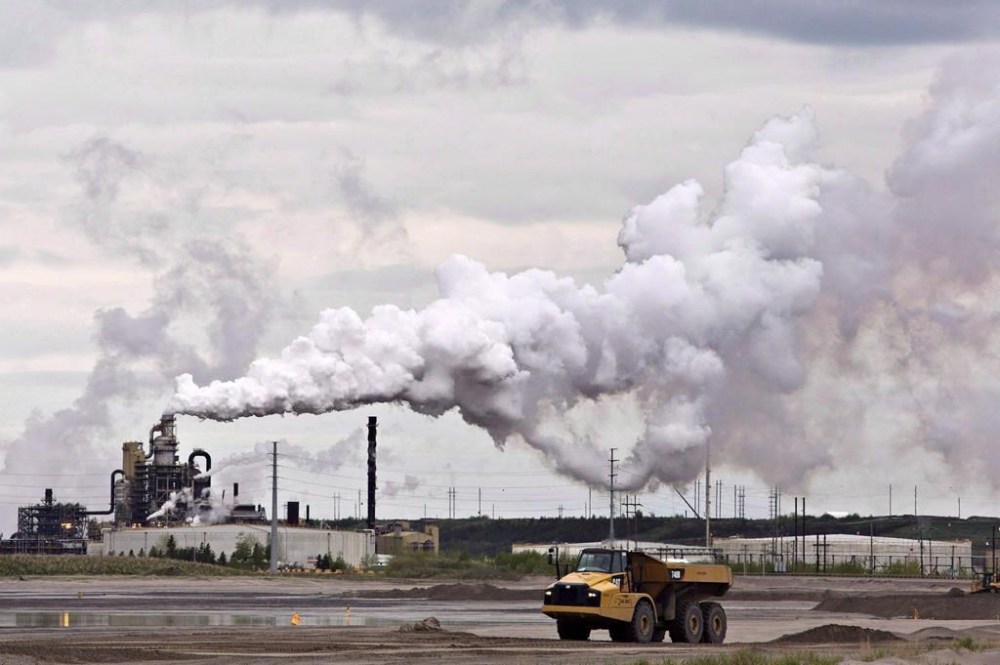
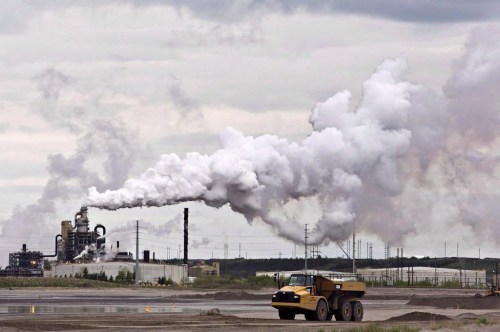
A dump truck works near the Syncrude oil sands extraction facility near the city of Fort McMurray, Alberta on Sunday June 1, 2014. THE CANADIAN PRESS/Jason Franson
But industry watchers say the project’s future is cloudy due to current political turmoil and the likelihood that a new federal government will be elected this year.
“I can’t imagine a huge project like that could really move forward in a time like right now,” said Michael Bernstein, executive director of the non-profit group Clean Prosperity.
“When you’re looking at a project that has at least a 15-year time horizon, you want as much certainty as possible. And there’s just more uncertainty than I can remember in my whole time doing this work right now.”
The Pathways Alliance is made up of six oilsands companies that have jointly committed to achieving net-zero greenhouse gas emissions from oilsands production by 2050.
Their proposed project, the centrepiece of that commitment, would capture carbon dioxide emissions from more than 20 oilsands facilities in northern Alberta and transport them 400 kilometres away by pipeline to a terminal in the Cold Lake area, where they would be stored in an underground hub to prevent them from entering the atmosphere.
The project would be one of the largest carbon capture and storage projects in the world, if it came to fruition. But while the companies first proposed the joint project in 2022, they have not yet made the final investment decision required to proceed.
Pathways has spent much of the time since then lobbying for federal and provincial support.
A spokeswoman for the Pathways Alliance declined to comment Monday when asked about the current Canadian political situation.
Scott Crockatt — spokesperson for the Business Council of Alberta, a group whose membership includes major oilsands companies — said while an extended period of political uncertainty poses challenges for businesses overall, the Alberta companies that have proposed decarbonization projects in recent years remain committed to that goal.
“Most businesses who were looking at decarbonization projects and other types of sustainability projects were doing it for sincere business reasons, like generating value and reducing long-term risk,” Crockatt said.
“So I actually don’t think that underlying motivation is going to change with political cycles.”
But the oil industry has also repeatedly said that investing in carbon capture, which remains a hugely expensive technology, cannot happen without significant levels of government support.
The federal Liberal government, which has publicly called on the oil industry to move faster on its emissions-reduction promises, created an investment tax credit for carbon capture and storage projects in an effort to get companies to move ahead.
The Liberal government has also promised a mechanism to backstop the price of carbon in order to give certainty to companies considering investing in emissions-reducing technology. But while the federal Canada Growth Fund has been in talks with the Pathways Alliance on this topic, details of a project-specific agreement have yet to be hammered out.
The Canada Growth Fund did not reply to a request for comment.
Heather Exner-Pirot, special advisor on energy to the Business Council of Canada, said the problem for Pathways is that with polls showing the Conservatives are likely to win an upcoming federal election, it’s unclear how far a Pierre Poilievre government would go to financially support the group’s flagship project.
While Poilievre has been clear on his desire to do away with the consumer carbon tax, he has not said what will he do about Canada’s industrial carbon pricing system and will likely have less of a climate-oriented agenda than the present Liberal government.
“It doesn’t sound, from everything they (the Conservatives) have been saying, like they would support what you would need to do to get Pathways Alliance over the hump in the time frame we’ve been looking at,” Exner-Pirot said.
“They don’t seem to be very keen on it. It’s just very expensive.”
Andrew Botterill — energy, resources and industrials partner at Deloitte Canada — said any future weakening of the industrial carbon pricing system or emissions allowances would damage the business case to invest in decarbonization technology. That’s why a looming election on the horizon could delay or prevent final investment decisions, he said.
“Companies are looking for long-term certainty and an understanding on what the market’s going to look like for the next 10 years, and 20 years and 30 years,” Botterill said.
“When they see things on the horizon that are uncertain I think it slows the big capital spends.”
The current federal emissions reduction plan — which calls for Canada to cut its emissions by 40 to 45 per cent below 2005 levels by 2030 and to reach net-zero emissions by 2050 — envisions national carbon capture and storage capacity more than tripling by 2030.
The Pathways Alliance itself had originally set 2030 as the date it hoped its project would be sequestering carbon.

But Clean Prosperity’s Bernstein said it’s very difficult to see how that time frame could be met at this point.
“These projects take the better part of a decade to complete, and we just don’t have that time available,” he said. He added getting the Pathways project off the ground was always going to require the companies, the province of Alberta and the federal government to co-operate and compromise — and those goals seem farther away than ever.
“What we know at this point right now is there is no deal that works for all the parties,” he said.
“It’s too bad that we don’t have one today, and that we lack clarity on whether there will ever be one.”
This report by The Canadian Press was first published Jan. 9, 2025.
Advertisement Advertise With Us
Advertisement Advertise With Us