Ecotour grizzlies less likely to encounter conflict with humans, B.C. study suggests
Advertisement
Read this article for free:
or
Already have an account? Log in here »
To continue reading, please subscribe:

Digital Subscription
One year of digital access for only $205*
- Enjoy unlimited reading on winnipegfreepress.com
- Read the E-Edition, our digital replica newspaper
- Access News Break, our award-winning app
- Play interactive puzzles
*First annual payment billed as $205.00 + GST for one year. This annual subscription will automatically renew at $233.00 + GST every 52 weeks (10% off the regular annual price of $259.35). Offer available to new and qualified returning subscribers only. Cancel any time.
To continue reading, please subscribe:
Add Free Press access to your Brandon Sun subscription for only an additional
$1 for the first 4 weeks*
- Enjoy unlimited reading on winnipegfreepress.com
- Read the E-Edition, our digital replica newspaper
- Access News Break, our award-winning app
- Play interactive puzzles
*Your next Brandon Sun subscription payment will increase by $1.00 and you will be charged $17.95 plus GST for four weeks. After four weeks, your payment will increase to $24.95 plus GST every four weeks.
Read unlimited articles for free today:
or
Already have an account? Log in here »
Hey there, time traveller!
This article was published 14/01/2025 (620 days ago), so information in it may no longer be current.
Grizzly bears that visited ecotourism areas along a river on the province’s central coast were less likely than others to encounter conflict with people in communities downstream, a new study by British Columbia-based researchers has found.
Jason Moody with the Nuxalk Nation’s fisheries and wildlife program said the research shows ecotourism done right is not a driving factor in conflict between bears and humans.
“The findings were pretty clear that if you’re viewing bears in the right way … (it) does not predispose them to bear-human conflicts later on,” said Moody, who contributed to the study and runs an ecotour operation based in Bella Coola.
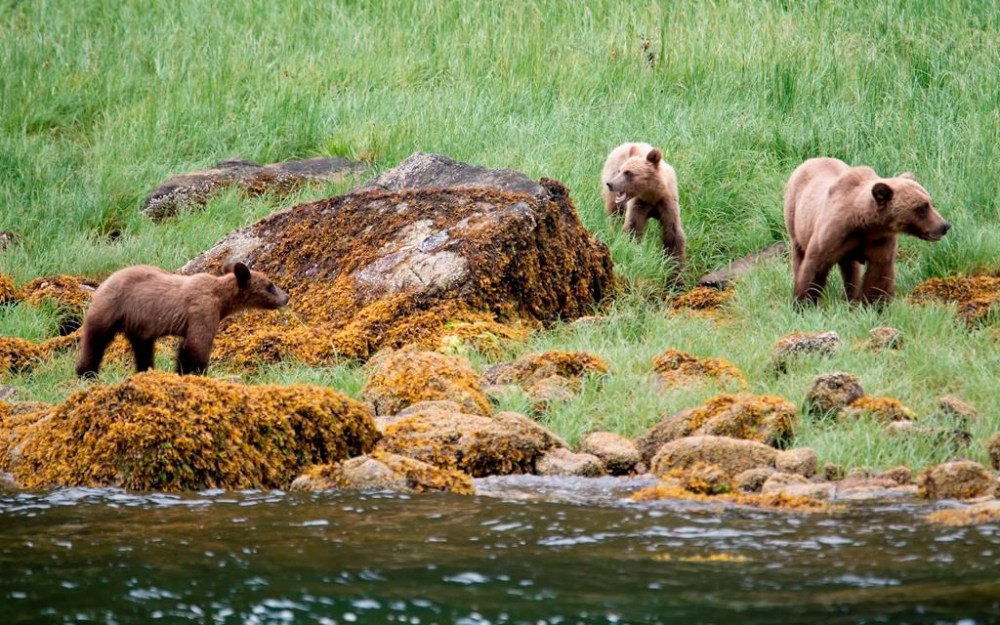
Stories, songs and dances passed down through generations show the Nuxalk and other First Nations along B.C.’s coast have long coexisted with bears, he said.
“It goes back centuries if not thousands of years, relationship with the bears, and we really identify with them in this part of the Great Bear Rainforest.”
But Moody said human activity, particularly in combination with poor salmon runs, has increasingly pushed grizzly bears into conflict with people.
The study published Tuesday in the Canadian Journal of Zoology emerged from the question of whether bears that visited ecotourism areas might be accustomed to people and predisposed to conflict, lead author Kate Field said in an interview.
Some studies have linked tourist-related behavioural changes in wildlife, such as tolerance to humans, with increased “boldness,” she said.
But Field said the B.C.-based study reached a different conclusion in the context of ecotourism in the Bella Coola Valley.
It found grizzlies that visited ecotourism areas along the Atnarko River, which feeds into the Bella Coola River, were less likelythan other bears to encounter conflict with people in communities about 40 to 60 kilometres downstream, near the coast.
The study used hair sampling to identify 118 grizzlies along theriver, with Field describing its banks as “DNA libraries” for cataloguing bear movement.
“Each strand of fur is a breadcrumb on a bear trail,” said Field, a doctoral candidate at the University of Victoria.
The researchers gathered samples during late summer and fall salmon runs from 2019 to 2021 and identified 34 bears that visited the ecotourism area at least once.
They compared the samples against “conflict samples” from captured or euthanized bears collected by the B.C. Conservation Officer Service and found just one of those bears went on to have conflict with people in the Bella Coola Valley.
The other 29 bears that came into conflict with people were not detected at hair sampling sites in ecotourism areas along the Atnarko River, the study found.
“So this pattern suggests that ecotour bears are not commonly encountering conflict, at least in this specific context,” Field said.
The raw data alone suggested that a match was rare. But it didn’t consider the possible explanation that the population of grizzlies that did not visit the ecotourism area was much larger than the population of bears that did.
Field said the researchers used a probability approach to ask how large the population of “non-ecotour” bears in the area would have to be in order to observe the same level and probability of conflict by chance.
They found the non-ecotour bear population would have to be 674 — close to double the highest possible population estimate, the study says.
The bears detected at ecotourism sites were therefore less likely than predicted by chance to encounter conflict with humans downstream, the paper concluded.
The study points to “other human-caused drivers of conflict” between people and bears, such as fruit trees and salmon-cleaning stations that attract hungry grizzlies.
Moody said the Nuxalk Nation works to reduce conflict through measures such as installing electric fencing around salmon-processing sites during harvest season.
But the overall availability of salmon in a given year is also a major factor contributing to conflict between bears and humans, and Moody said that’s one of many motivations behind the nation’s work to restore and protect salmon runs.
Grizzlies go after garbage, compost and other food associated with humans when there’s not enough food available to them in the wild, Moody said.
“What we’ve been seeing is a trend, which (is) when you have good pink (salmon) runs, the conflict in the communities in this valley, throughout private properties as well, go down, just completely, almost completely disappear,” he said.

“The bears have no reason to take any risks and cross people’s yards or highways, the fish have filled up all the small creeks and the tributaries, and the bears are able to stay in some of the forest cover that’s still left for them without taking any risks.”
Field also pointed to an earlier B.C.-based study that found killings of grizzlies by conservation officers or in conflict with private citizens were 20 per cent higher for each 50 per cent decrease in annual salmon biomass.
“If salmon aren’t available to bears, they might go searching for food elsewhere. So it really underlies the importance of safeguarding salmon,” she said.
The study says ecotourism occurs in areas of high spawning activity along the Atnarko River, and researchers speculate the bears can access the salmon they need without needing to venture into downstream communities in search of food.
This report by The Canadian Press was first published Jan. 14, 2025.