How TikTok grew from a fun app for teens into a potential national security threat
Advertisement
Read this article for free:
or
Already have an account? Log in here »
To continue reading, please subscribe:
Digital Subscription
One year of digital access for only $1.44 a week*
- Enjoy unlimited reading on winnipegfreepress.com
- Read the E-Edition, our digital replica newspaper
- Access News Break, our award-winning app
- Play interactive puzzles
*Billed as $5.77 plus GST every four weeks. After 52 weeks, price increases to the regular rate of $19.95 plus GST every four weeks. Offer available to new and qualified returning subscribers only. Cancel any time.
To continue reading, please subscribe:
Add Free Press access to your Brandon Sun subscription for only an additional
$1 for the first 4 weeks*
- Enjoy unlimited reading on winnipegfreepress.com
- Read the E-Edition, our digital replica newspaper
- Access News Break, our award-winning app
- Play interactive puzzles
*Your next Brandon Sun subscription payment will increase by $1.00 and you will be charged $17.95 plus GST for four weeks. After four weeks, your payment will increase to $24.95 plus GST every four weeks.
Read unlimited articles for free today:
or
Already have an account? Log in here »
Hey there, time traveller!
This article was published 17/01/2025 (645 days ago), so information in it may no longer be current.
SAN FRANCISCO (AP) — If it feels like TikTok has been around forever, that’s probably because it has, at least if you’re measuring via internet time. What’s now in question is whether it will be around much longer and, if so, in what form?
Starting in 2017, when the Chinese social video app merged with its competitor Musical.ly, TikTok has grown from a niche teen app into a global trendsetter. While, of course, also emerging as a potential national security threat, according to U.S. officials.
On April 24, President Joe Biden signed legislation requiring TikTok parent ByteDance to sell to a U.S. owner within a year or to shut down. TikTok and its China-based parent company, ByteDance, filed a lawsuit against the U.S., claiming the security concerns were overblown and the law should be struck down because it violates the First Amendment.
The Supreme Court on Friday unanimously upheld the federal law banning TikTok beginning Jan. 19 unless it’s sold by ByteDance.
Here’s how TikTok came to this juncture:
March 2012
ByteDance is founded in China by entrepreneur Zhang Yimin. Its first hit product is Toutiao, a personalized news aggregator for Chinese users.
July 2014
Startup Musical.ly, later known for an eponymous app used to post short lipsyncing music videos, is founded in China by entrepreneur Alex Zhu.
July 2015
Musical.ly hits #1 in the Apple App Store, following a design change that made the company’s logo visible when users shared their videos.
2016
ByteDance launches Douyin, a video sharing app for Chinese users. Its popularity inspires the company to spin off a version for foreign audiences called TikTok.
November 2017
ByteDance acquires Musical.ly for $1 billion. Nine months later, ByteDance merges it with TikTok.
Powered by an algorithm that encourages binge-watching, users begin to share a wide variety of video on the app, including dance moves, kitchen food preparation and various “challenges” to perform, record and post acts that range from serious to satirical.
February 2019
Rapper Lil Nas X releases the country-trap song “Old Town Road” on TikTok, where it goes viral and pushes the song to a record 17 weeks in the #1 spot on the Billboard Hot 100 chart. The phenomenon kicks off a wave of TikTok videos from musical artists who suddenly see TikTok as a critical way to reach fans.
TikTok settles federal charges of violating U.S. child-privacy laws and agrees to pay a $5.7 million fine.
September 2019
The Washington Post reports that while images of Hong Kong democracy protests and police crackdowns are common on most social media sites, they are strangely absent on TikTok. The same story notes that TikTok posts with the #trump2020 tag received more than 70 million views.
The company insists that TikTok content moderation, conducted in the U.S., is not responsible and says the app is a place for entertainment, not politics.
The Guardian reports on internal documents that reportedly detail how TikTok instructs its moderators to delete or limit the reach of videos touching on topics sensitive to China such as the 1989 Tiananmen Square protests and subsequent massacre, Tibetan independence or the sanctioned religious group Falun Gong.
October 2019
U.S. politicians begin to raise alarms about TikTok’s influence, calling for a federal investigations of its Musical.ly acquisition and a national security probe into TikTok and other Chinese-owned apps. That investigation begins in November, according to news reports.
December 2019
The Pentagon recommends that all U.S. military personnel delete TikTok from all phones, personal and government-issued. Some services ban the app on military owned phones. In January, the Pentagon bans the app from all military phones.
TikTok becomes the second-most downloaded app in the world, according to data from analytics firm SensorTower.
May 2020
Privacy groups file a complaint alleging TikTok is still violating U.S. child-protection laws and flouting a 2019 settlement agreement. The company “takes the issue of safely seriously” and continues to improve safeguards, it says.
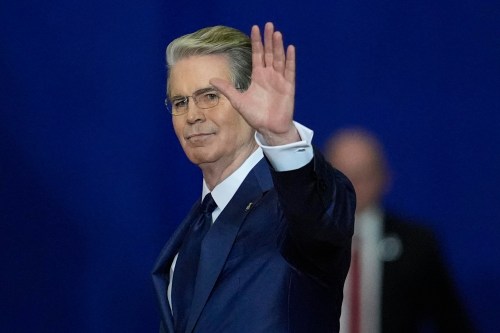
TikTok hires former Disney executive Kevin Mayer as its chief executive officer in an apparent attempt to improve its U.S. relations. Mayer resigns three months later.
July 2020
India bans TikTok and dozens of other Chinese apps in response to a border clash with China.
President Donald Trump says he is considering banning TikTok as retaliation for China’s alleged mishandling of the COVID-19 pandemic.
August 2020
Trump issues a sweeping but vague executive order banning American companies from any “transaction” with ByteDance and its subsidiaries, including TikTok. Several days later, he issues a second order demanding that ByteDance divest itself of TikTok’s U.S. operations within 90 days.
Microsoft confirms it is exploring acquisition of TikTok. The deal never materializes; neither does a similar overture from Oracle and Walmart. TikTok, meanwhile, sues the Trump administration for alleged violation of due process in its executive orders.
November 2020
Joe Biden is elected president. He doesn’t offer new policy on TikTok and won’t take office until January, but Trump’s plans to force a sale of TikTok start to unravel anyway. The Trump administration extends the deadlines it had imposed on ByteDance and TikTok and eventually lets them slide altogether.
February 2021
Newly sworn-in President Joe Biden postpones the legal cases involving Trump’s plan to ban TikTok, effectively bringing them to a halt.
September 2021
TikTok announces it has more than a billion monthly active users.
December 2021
A Wall Street Journal report finds TikTok algorithms can flood teens with a torrent of harmful material such as videos recommending extreme dieting, a form of eating disorder.
February 2022
TikTok announces new rules to deter the spread of harmful material such as viral hoaxes and promotion of eating disorders.
April 2022
“The Unofficial Bridgerton Musical,” a project created by two fans of the Netflix show as a TikTok project, wins the Grammy for Best Musical Theater Album.
TikTok becomes the most downloaded app in the world, beating out Instagram, according to SensorTower data.
June 2022
BuzzFeed reports that China-based ByteDance employees have repeatedly accessed the nonpublic information of TikTok users, based on leaked recordings from more than 80 internal TikTok meetings. TikTok responds with a vague comment touting its commitment to security that doesn’t directly address the BuzzFeed report.
TikTok also announces it has migrated its user data to U.S. servers managed by the U.S. tech firm Oracle. But that doesn’t prevent fresh alarm among U.S. officials about the risk of Chinese authorities accessing U.S. user data.
December 2022
FBI Director Christopher Wray raises national security concerns about TikTok, warning that Chinese officials could manipulate the app’s recommendation algorithm for influence operations.
ByteDance also said it fired four employees who accessed data on journalists from Buzzfeed News and The Financial Times while attempting to track down leaks of confidential materials about the company.
February 2023
The White House gives federal agencies 30 days to ensure TikTok is deleted from all government-issued mobile devices. Both the FBI and the Federal Communications Commission warn that ByteDance could share TikTok user data with China’s authoritarian government.
March 2023
Legislators grill TikTok CEO Shou Zi Chew at a six-hour congressional hearing where Chew, a native of Singapore, attempts to push back on assertions that TikTok and ByteDance are tools of the Chinese government.
January 2024
TikTok said it was restricting a tool some researchers use to analyze popular videos on the platform.
March 2024
A bill to ban TikTok or force its sale to a U.S. company gathers steam in Congress. TikTok brings dozens of its creators to Washington to tell lawmakers to back off, while emphasizing changes the company has made to protect user data. TikTok also annoys legislators by sending notifications to users urging them to “speak up now” or risk seeing TikTok banned; users then flood congressional offices with calls.
The House of Representatives passes the TikTok ban-or-sell bill.
April 2024
The Senate follows suit, sending the bill to President Biden, who signs it.
May 2024
TikTok and its Chinese parent company ByteDance sue the U.S. federal government to challenge a law that would force the sale of ByteDance’s stake or face a ban, saying that the law is unconstitutional.
June 2024
Former President Donald Trump joins TikTok and begins posting campaign-related content.
July 2024
Vice President Kamala Harris joins TikTok and also begins posting campaign-related material.
Dec. 6, 2024
A federal appeals court panel unanimously upheld a law that could lead to a ban on TikTok, handing a resounding defeat to the popular social media platform as it fights for its survival in the U.S. The panel of judges rebuffed the company’s challenge of the statute, which it argued had ran afoul of the First Amendment.
Dec. 27, 2024
President-elect Donald Trump asked the Supreme Court to pause the potential TikTok ban from going into effect until his administration can pursue a “political resolution” to the issue.
Jan. 17, 2025
The Supreme Court unanimously upheld the federal law banning TikTok beginning unless it’s sold by its China-based parent company, holding that the risk to national security posed by its ties to China overcomes concerns about limiting speech by the app. A ban is set to into effect on Jan. 19, 2025.