China launches an antitrust probe into Google. Here’s what it means
Advertisement
Read this article for free:
or
Already have an account? Log in here »
To continue reading, please subscribe:
Digital Subscription
One year of digital access for only $1.44 a week*
- Enjoy unlimited reading on winnipegfreepress.com
- Read the E-Edition, our digital replica newspaper
- Access News Break, our award-winning app
- Play interactive puzzles
*Billed as $5.77 plus GST every four weeks. After 52 weeks, price increases to the regular rate of $19.95 plus GST every four weeks. Offer available to new and qualified returning subscribers only. Cancel any time.
To continue reading, please subscribe:
Add Free Press access to your Brandon Sun subscription for only an additional
$1 for the first 4 weeks*
- Enjoy unlimited reading on winnipegfreepress.com
- Read the E-Edition, our digital replica newspaper
- Access News Break, our award-winning app
- Play interactive puzzles
*Your next Brandon Sun subscription payment will increase by $1.00 and you will be charged $17.95 plus GST for four weeks. After four weeks, your payment will increase to $24.95 plus GST every four weeks.
Read unlimited articles for free today:
or
Already have an account? Log in here »
Hey there, time traveller!
This article was published 04/02/2025 (630 days ago), so information in it may no longer be current.
HONG KONG (AP) — The Chinese government’s move to open an antitrust probe into Google is the latest development in a long and tangled relationship that goes back to the early 2000s.
The investigation was one of a flurry of Chinese retaliatory measures announced Tuesday in response to a 10% tariff imposed by U.S. President Donald Trump on imports from China.
Others included tariffs on American liquified natural gas and other products, and the placing of two other American firms on an unreliable entity list that could bar them from investing in China.
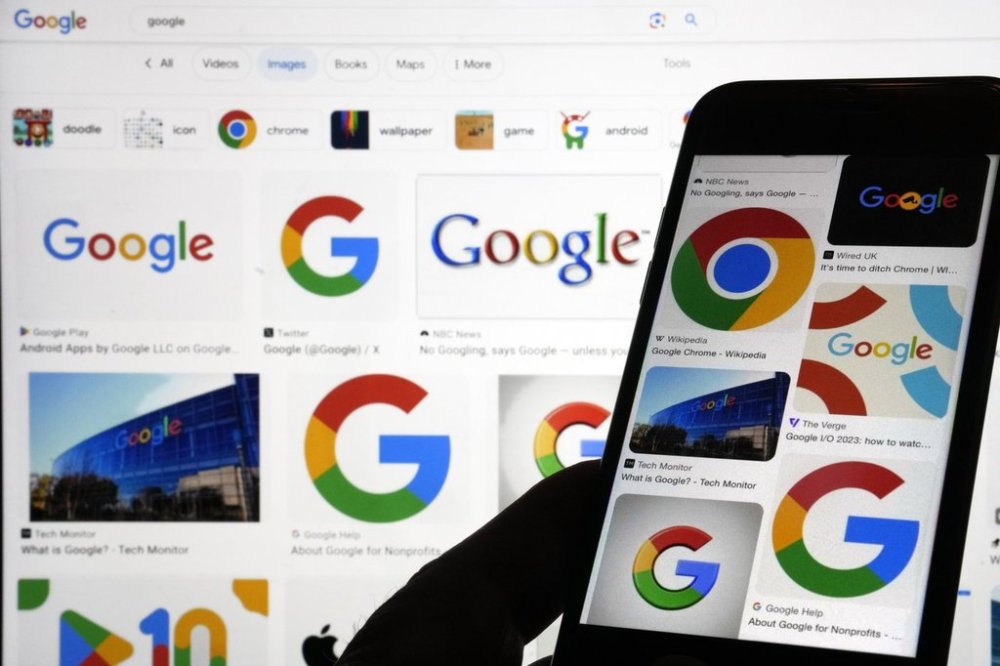
Here is a look at Google’s history in China and what the antitrust probe could mean for the company:
What is Google’s relationship with China?
Google launched the Chinese-language search engine google.cn in 2006. It was censored to comply with Beijing’s laws, and in 2009, was a major search engine in China with about 36% market share.
In 2010, in response to a cyberattack and an increasing unwillingness to comply with censorship rules, Google said it was no longer willing to block search results and shut down its Chinese search engine, redirecting users to its Hong Kong site instead.
Beijing later blocked Google services under its Great Firewall censorship system, including the email service Gmail, as well as the Chrome browser and search engine, making them inaccessible to users in mainland China.
China typically blocks most Western internet platforms, such as Google, as well as social media platforms including Facebook and Instagram.
Does Google still operate in China?
Although Google services are not accessible in China, the company still maintains a presence in the country, primarily focused on sales and engineering for its advertising business. It also has employees working on services including Google Cloud and customer solutions.
Google maintains offices in Beijing, Shanghai and Shenzhen.
Why is China investigating Google?
China’s State Administration for Market Regulation said Tuesday it was investigating Google on suspicion of violating antitrust laws.
While regulators did not provide further details, the announcement came minutes after the new U.S. tariffs came into effect.
What does this mean for Google?
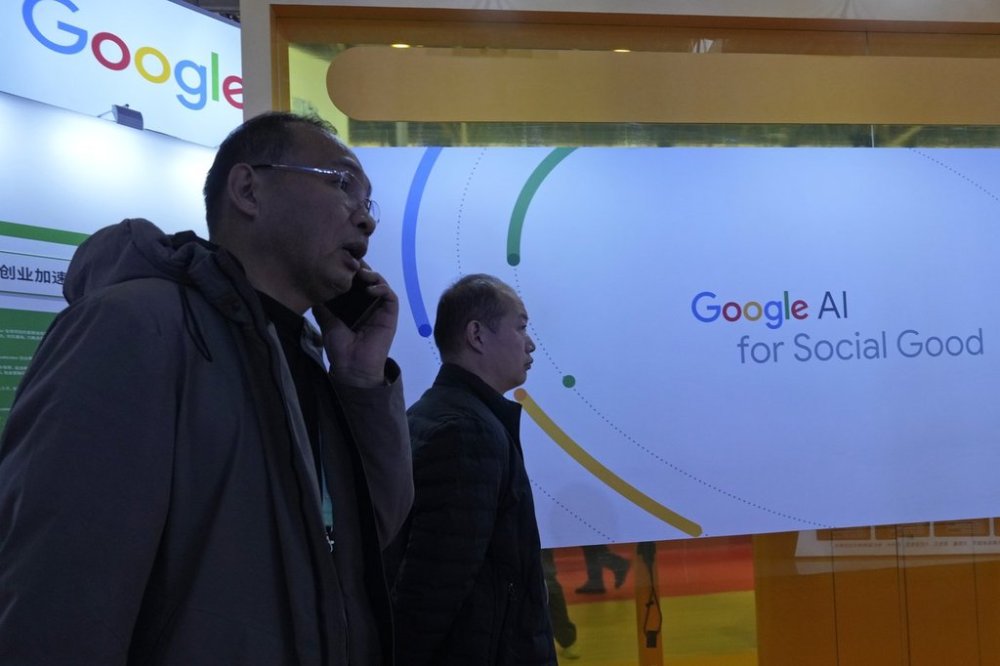
With few details on what exactly Google is being investigated for, the impact on its operations is unclear, although its immediate status is unlikely to be affected by the probe, which could takes months.
Google did not immediately comment on the investigation.
Some experts believe that the antitrust investigation is likely to center around Google’s Android operating system for smartphones and to be used as a bargaining chip in the U.S.-China trade war.
John Gong, an antitrust expert at the University of International Business and Economics, said that Chinese smartphone makers have long complained about Google’s market practices.
Virtually all brands apart from Apple and Huawei pay licensing fees to Google to use the Android system on their devices.
“Now, this time, Google is put on the chopping board. But I think it’s still an investigation, right? It hasn’t reached a decision yet,” said Gong, adding, “I think it’s very much negotiable.”
Huawei developed its own HarmonyOS operating system after it was placed on the U.S. entity list — foreign individuals, companies and organizations deemed a national security concern — in 2019, which prevented it from doing business with U.S. firms including Google.
Google has been accused of violating antitrust law in other countries, including those in the European Union, South Korea, Russia, India and Turkey, for allegedly abusing its market dominance.
___
Associated Press writer Ken Moritsugu in Beijing contributed to this report.