

Book Review: In ‘You Didn’t Hear This From Me,’ Kelsey McKinney wants you to reconsider gossip
Advertisement
Read this article for free:
or
Already have an account? Log in here »
To continue reading, please subscribe:
Monthly Digital Subscription
$1 per week for 24 weeks*
- Enjoy unlimited reading on winnipegfreepress.com
- Read the E-Edition, our digital replica newspaper
- Access News Break, our award-winning app
- Play interactive puzzles
*Billed as $4.00 plus GST every four weeks. After 24 weeks, price increases to the regular rate of $19.95 plus GST every four weeks. Offer available to new and qualified returning subscribers only. Cancel any time.
Monthly Digital Subscription
$4.99/week*
- Enjoy unlimited reading on winnipegfreepress.com
- Read the E-Edition, our digital replica newspaper
- Access News Break, our award-winning app
- Play interactive puzzles
*Billed as $19.95 plus GST every four weeks. Cancel any time.
To continue reading, please subscribe:
Add Free Press access to your Brandon Sun subscription for only an additional
$1 for the first 4 weeks*
*Your next subscription payment will increase by $1.00 and you will be charged $16.99 plus GST for four weeks. After four weeks, your payment will increase to $23.99 plus GST every four weeks.
Read unlimited articles for free today:
or
Already have an account? Log in here »
Hey there, time traveller!
This article was published 10/02/2025 (412 days ago), so information in it may no longer be current.
Kelsey McKinney bookends her new collection of essays on gossip with a word from Emily Dickinson: “Tell all the truth but tell it slant.”
As the co-creator of the runaway hit podcast “Normal Gossip,” McKinney was well aware of gossip’s need for a PR makeover. But what started as a project to liberate the act from its designation as sin, villainized and demeaned as “women’s talk,” turned into something much more slippery.
In interrogating the longstanding contradictions of gossip, Dickinson’s line proves instructive: Which parts are true, which parts are slant, and who gets to do the telling?
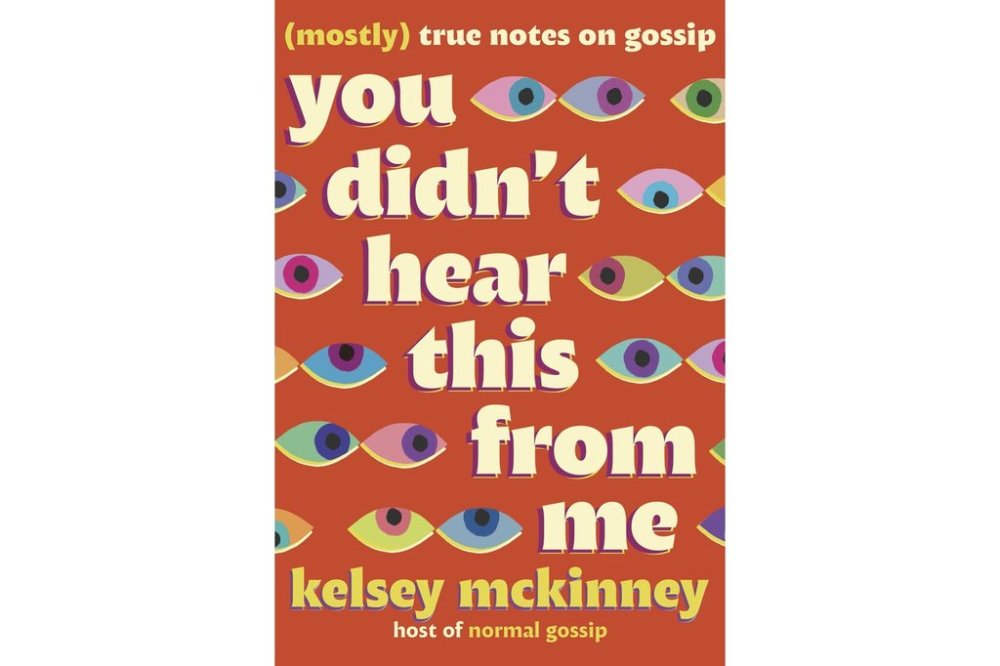
“You Didn’t Hear This From Me: (Mostly) True Notes on Gossip” is a whirlwind inquiry into one of society’s oldest practices. McKinney writes about gossip with an intellectual rigor that borders on reverence, explaining how a raunchy Doja Cat lyric exemplifies the theory of mind and how the notorious burn book from “Mean Girls” actually helped teenagers avoid a predatorial teacher.
In each essay, McKinney unpacks new facets of gossip with a colorful cast of sources, ranging from the Apostle Paul, ChatGPT, philosopher John Stuart Mill, celebrity gossip account DeuxMoi and Town Tattle, an about-town magazine that was “essentially the Roaring Twenties’ Gossip Girl.”
McKinney, both a reporter and critic, is perhaps best known for her role as podcast host. On each episode of “Normal Gossip,” before she passed the baton to new host Rachelle Hampton late last year, McKinney would relay “an anonymous morsel of gossip from the real world.” After introducing each guest, she would ask them a simple question: What is your relationship with gossip?
It’s a question that lies underneath each of McKinney’s essays. From teenagers who use gossip as a way to beat down school rivals to women who warn coworkers to avoid office creeps, McKinney paints a complicated portrait of how gossip’s virtues and vices are directly intertwined with power and who wields it.
Perhaps some confusion about gossip comes from the fact that it is itself difficult to define. Often conflated as slander or libel or even hate speech, gossip’s definition is nebulous, existing according to McKinney “in a kind of transitory, imaginary space between events and their codifying.” It’s this tentative quality that makes gossip a prime “tool for the less privileged” and an annoyance for those in authority.
In seeking to at least approach a definition, McKinney argues that gossip is distinguished not by its tone but rather by its point of view. The orators who relayed ancient tales like “The Epic of Gilgamesh” and the group chat dishing about who’s dating who have something in common: Their tales are always second-hand, meaning every juicy detail is an interpolation of the truth. And yet it’s the slant itself that makes gossip so delectable, and dangerous.
___
AP book reviews: https://apnews.com/hub/book-reviews