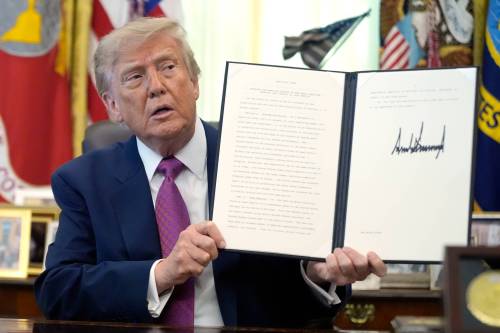
Egg prices could jump 41% this year, USDA says, as Trump’s bird flu plan is unveiled

Advertisement

Advertise with us

WASHINGTON (AP) — The U.S. Agriculture Department predicts record egg prices could soar more than 40% in 2025, as the Trump administration offered the first new details Wednesday about its plan to battle bird flu and ease costs.

Read this article for free:


or

Already have an account? Log in here »

To continue reading, please subscribe:

Subscribe and receive a limited-edition Free Press branded hat or tote.

Digital Subscription

One year of digital access for only $205*

  • Enjoy unlimited reading on winnipegfreepress.com
  • Read the E-Edition, our digital replica newspaper
  • Access News Break, our award-winning app
  • Play interactive puzzles

*First annual payment billed as $205.00 + GST for one year. This annual subscription will automatically renew at $233.00 + GST every 52 weeks (10% off the regular annual price of $259.35). Offer available to new and qualified returning subscribers only. Cancel any time.

To continue reading, please subscribe:

Add Free Press access to your Brandon Sun subscription for only an additional

$1 for the first 4 weeks*

  • Enjoy unlimited reading on winnipegfreepress.com
  • Read the E-Edition, our digital replica newspaper
  • Access News Break, our award-winning app
  • Play interactive puzzles
Start now

*Your next Brandon Sun subscription payment will increase by $1.00 and you will be charged $17.95 plus GST for four weeks. After four weeks, your payment will increase to $24.95 plus GST every four weeks.

Hey there, time traveller!
This article was published 26/02/2025 (550 days ago), so information in it may no longer be current.

WASHINGTON (AP) — The U.S. Agriculture Department predicts record egg prices could soar more than 40% in 2025, as the Trump administration offered the first new details Wednesday about its plan to battle bird flu and ease costs.

With an emphasis on farms tightening their measures to prevent bird flu’s spread, Agriculture Secretary Brooke Rollins said the USDA will invest another $1 billion on top of the roughly $2 billion it has already spent since the outbreak began in 2022.

The main reason egg prices have climbed — hitting an all-time average high of $4.95 per dozen this month — is that more than 166 million birds have been slaughtered to limit the virus’ spread when cases are found. Most were egg-laying chickens. Just since the start of the year, more than 30 million egg layers have been killed.
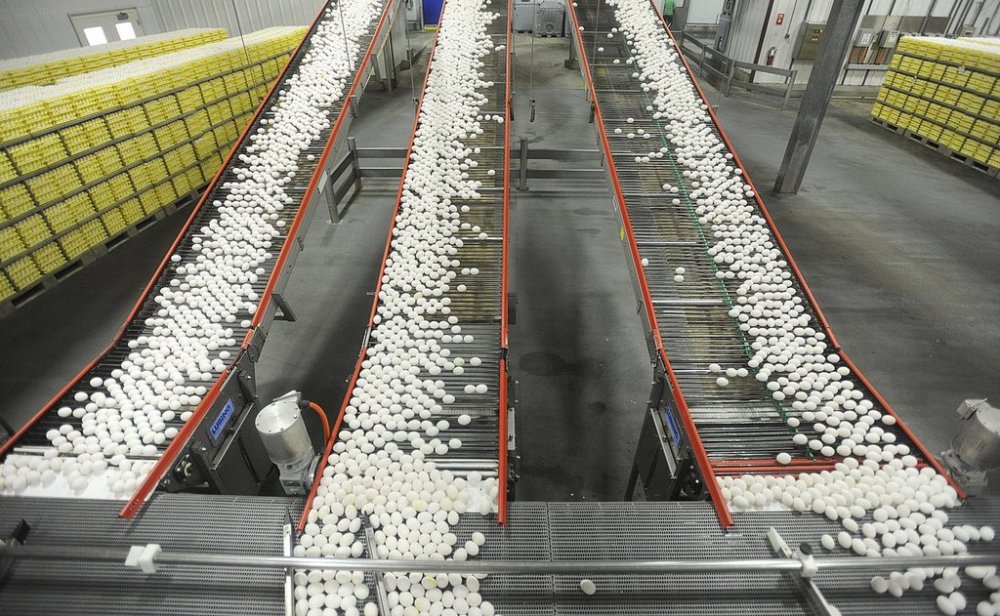
FILE - In this July 28, 2012 file photo, chicken eggs are transported by conveyor belt from the production side to the packaging side at a farm in Cortland, Ind. (Aaron Piper/The Tribune via AP, File)

What more can farmers do to stop bird flu?

Egg and poultry farmers have already been working since the bird flu outbreak of 2015 to protect their birds by making workers change clothes and shower before entering barns, using separate sets of tools, and sanitizing any vehicles that enter farms. The challenge is that wild birds easily spread the virus.

The USDA is working on identifying the most effective measures farmers can take and helping spot any weaknesses in their plans.

The department has already done biosecurity reviews on about 150 farms and only one had an outbreak afterward, the USDA said, so officials believe more can be done to protect birds and they are going to make those reviews available to more farms. Any farm that has an outbreak now has to undergo a biosecurity audit. And the government will help pay up to 75% of the needed biosecurity improvements.

Egg prices will get much worse this year

The USDA now predicts the cost of eggs will go up 41.1% this year. Just last month, the increase was predicted to be 20%.

And the average prices conceal just how bad the situation is, with consumers paying more than a dollar per egg — over $12 a dozen — in some places.

Prices have more than doubled since before the outbreak began, costing consumers at least $1.4 billion last year, according to an estimate by agricultural economists at the University of Arkansas. Restaurants like Denny’s and Waffle House started adding surcharges to egg dishes.

Egg prices also normally increase every spring heading into Easter when demand is high.

Will the Trump plan bring down prices?

Rollins acknowledged that it will take some time before consumers see an effect at the checkout counter. It takes infected farms months to dispose of the carcasses, sanitize their farms and raise new birds. But she expressed optimism that the plan will help prices.

“It’s going to take a while to get through, I think in the next month or two, but hopefully by summer,” Rollins said.

CoBank analyst Brian Earnest said he appreciates the Trump administration’s fresh look at the problem, but “I don’t see a whole lot here that is a big change here from the current plan of action.”

Major trade groups in the egg, chicken, turkey and dairy industries largely praised the plan. American Egg Board President Emily Metz said she is encouraged the administration wants to find the best response through a combination of biosecurity and exploring vaccine development.
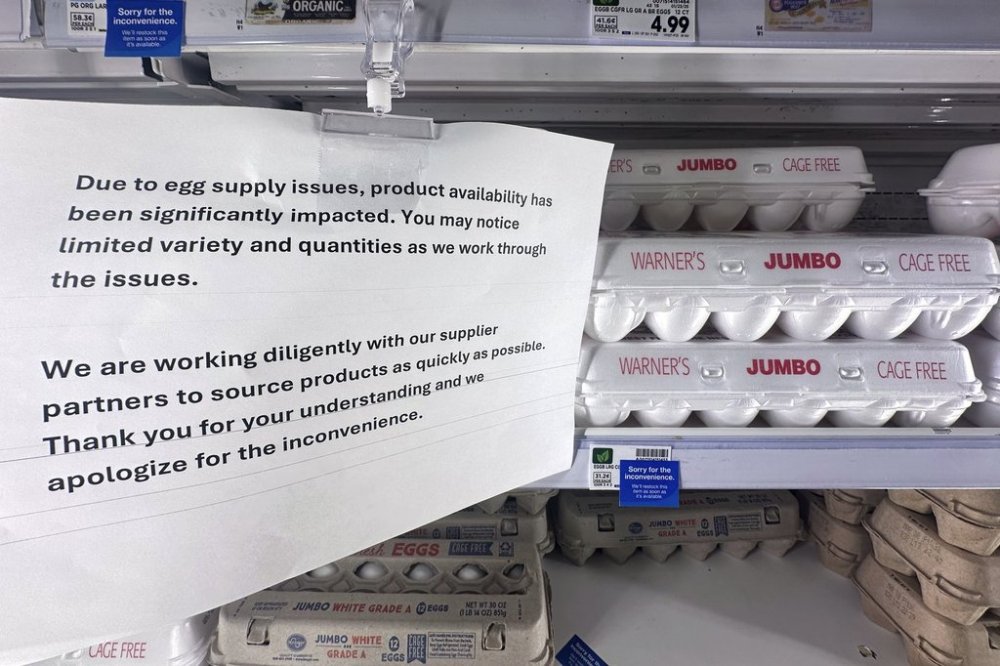
A sign is shown with egg cartons for sale at a grocery store Friday, Feb. 14, 2025 in Grosse Pointe Woods, Mich. (AP Photo/Paul Sancya)

Will DOGE layoffs affect the bird flu fight?

Rollins said she believes the USDA has enough staff to respond to bird flu even after all the cuts to the federal workforce at the direction of Elon Musk’s Department of Government Efficiency.

“Will we have the resources needed to address the plan I just laid out? We are convinced that we will,” she said, “as we realign and evaluate where USDA has been spending money, where our employees are spending their time.”

Democratic U.S. Sen. Amy Klobuchar said the new plan is an important step, but USDA needs to confirm it rehired everyone involved in the bird flu response who was mistakenly fired.

Where’s the money going?

The plan calls for $500 million investment to help farmers bolster biosecurity measures, $400 million in additional aid for farmers whose flocks have been impacted by avian flu, $100 million to research and potentially develop vaccines and therapeutics for U.S. chicken flocks and explore rolling back what the administration sees as restrictive animal welfare rules in some states like California’s cage-free requirement approved by voters.

The USDA has already paid farmers roughly $1.2 billion for the birds they had to slaughter. The additional aid will continue going to those payments and help farmers bring in new flocks more quickly.

The administration is in talks to import about 70-100 million eggs from abroad in the coming months, Rollins said. But there were 7.57 billion table eggs produced last month, so those imports don’t appear likely to make a significant difference in the market.

Trump administration officials have suggested that vaccines might help reduce the number of birds that have to be slaughtered when there is an outbreak. However, no vaccines have been fully approved for widespread use in poultry, and the industry has said the current prototypes aren’t practical because they require individual shots for each bird. Plus, vaccinated birds could jeopardize exports.

___

Funk reported from Omaha, Nebraska. Aamer Madhani in Washington contributed.

Report Error Submit a Tip

More Stories

Summer Reading Challenge concludes with more musings from young readers

8 minute read Preview

Summer Reading Challenge concludes with more musings from young readers

8 minute read 6:00 AM CDT

Another Free Press Summer Reading Challenge for Kids is in the books, but before we turn the page completely, there are a few more reviews written by our young readers to share.

Participating readers were tasked to write down their thoughts about any of the books on the Summer Reading Challenge’s three reading lists; with a range of formats (novels, graphic novels, books with pictures), themes and reading levels to choose from, budding reviewers of all ages were eager to share their opinion.

Those registered for the challenge received reading resources and activities throughout the summer, from word searches or puzzles based on the content of the books to a set of discussion questions and, in one instance, a special video from an author.

There were also more creative activities meant to engage readers’ critical thinking skills, all of which were free to access for anyone who signed up for the challenge.

Read
6:00 AM CDT

Of frogs, roses, kings and a Great Lake

Editorial 4 minute read Preview

Of frogs, roses, kings and a Great Lake

Editorial 4 minute read 2:01 AM CDT

A rose by any other name would smell as sweet, as the saying goes. Basically, if you change something’s name, you don’t actually change the nature of the thing.

That being said, if even 15 years ago an American president had called an entire news conference to announce he was renaming one of the Great Lakes by writing on a map with a red pen and issuing an executive order purporting to rename Lake Ontario as “Lake America,” all and sundry would question his mental health.

Maybe, after witnessing so much from Donald Trump, we’ve all just been hardened off and the foolish is now expected daily. Perhaps it’s the political equivalent of the fable of the boiling frog.

As the fable goes, drop a frog into a pot of boiling water and it will jump right out. But put the frog in room temperature water and bring the pot to a boil, the frog will stay until its death. (It’s unlikely the frog would actually wait.)

Read
2:01 AM CDT

Winnipeg man among those missing in Nepal flash flood

Free Press staff 2 minute read Preview

Winnipeg man among those missing in Nepal flash flood

Free Press staff 2 minute read 10:06 AM CDT

A Winnipeg man on a pilgrimage in Nepal is among nearly 2,000 people missing after a deadly flash flood devastated a popular tourist region along the Himalayan border earlier this week.

Mohit Kaushik, 49, was travelling with a tour group taking part in the Kailash Manasarovar Yatra, a sacred, days-long pilgrimage to Mount Kailash and Lake Manasarovar in neighbouring Tibet, according to social media posts.

“Our friend and neighbour, Mohit Kaushik, a resident of Winnipeg, Canada, has been out of contact since yesterday while travelling from Timure during his pilgrimage to Kailash Mansarovar,” Swikriti Pokhrel wrote in a social media post. “If you have seen him or find his name on any hospital list, please let us know. Thank you.”

Kaushik has not been heard from since Wednesday, when a glacier collapse in the nearby Himalayas triggered catastrophic flooding and landslides, sending a torrent of ice, rock and debris roughly 100 kilometres downstream.

Read
10:06 AM CDT

At the city’s busiest fire and paramedic hall, first responders face a relentless workload

Scott Billeck 24 minute read Preview

At the city’s busiest fire and paramedic hall, first responders face a relentless workload

Scott Billeck 24 minute read Yesterday at 6:00 AM CDT

As a soft rain begins to fall between the concrete walls of “Hope Alley,” little feels further away than the place’s namesake.

Winnipeg Fire Paramedic Service crews have been called to the narrow downtown passage, named by Al Wiebe, a formerly homeless man turned advocate. People regularly pass through here, moving between the shelters, drop-ins and resource centres clustered around Main Street between Logan and Higgins avenues.

Against a wall, as the sky switches into night mode, a man sits bleeding from his nose, seemingly unaware of how he ended up with blood running down his T-shirt.

His situation has already set Winnipeg’s emergency response network in motion.

Read
Yesterday at 6:00 AM CDT

Province announces phys-ed curriculum overhaul

Maggie Macintosh 6 minute read Preview

Province announces phys-ed curriculum overhaul

Maggie Macintosh 6 minute read Thursday, Aug. 27, 2026

Manitoba is overhauling phys-ed class and requiring all high school students to regularly work up a sweat on school grounds to graduate.

Premier Wab Kinew announced on Thursday that a new curriculum is being piloted across the kindergarten to Grade 12 system this fall.

Changes to phys-ed and health education — which apply to all grades, but Grade 11 and 12 students, in particular — will ensure these mandatory subjects are delivered entirely in-person, starting in the 2028-29 school year.

The policy is called “Every Body, Every Day.”

Read
Thursday, Aug. 27, 2026

Manitoba Hydro’s strategy: Deny, deny, deny

Tim Sale 5 minute read Preview

Manitoba Hydro’s strategy: Deny, deny, deny

Tim Sale 5 minute read Yesterday at 2:00 AM CDT

Here’s a good story…

A man walks into your office and says, “Have I got a deal for you! I want $3 billion (plus perhaps a bit more) to build you something that you might use three or even four times a year, for maybe 30-60 hours each time. Sign here.”

You might respond… “and I’ve got a lovely bridge for sale…”

That is exactly what Manitoba Hydro wants — $3 billion or more, plus the fossil fuel bonus for peak load events that happen a few times each year. They assure us that the gas turbines will only be used very occasionally. At the same time, they tell us that we are headed for a crisis of energy supply by 2030.

Read
Yesterday at 2:00 AM CDT