

The world’s most famous sled dog race is longer than ever. Here’s a look at Iditarod, by the numbers
Advertisement
Read this article for free:
or
Already have an account? Log in here »
To continue reading, please subscribe:
Monthly Digital Subscription
$1 per week for 24 weeks*
- Enjoy unlimited reading on winnipegfreepress.com
- Read the E-Edition, our digital replica newspaper
- Access News Break, our award-winning app
- Play interactive puzzles
*Billed as $4.00 plus GST every four weeks. After 24 weeks, price increases to the regular rate of $19.95 plus GST every four weeks. Offer available to new and qualified returning subscribers only. Cancel any time.
Monthly Digital Subscription
$4.99/week*
- Enjoy unlimited reading on winnipegfreepress.com
- Read the E-Edition, our digital replica newspaper
- Access News Break, our award-winning app
- Play interactive puzzles
*Billed as $19.95 plus GST every four weeks. Cancel any time.
To continue reading, please subscribe:
Add Free Press access to your Brandon Sun subscription for only an additional
$1 for the first 4 weeks*
*Your next subscription payment will increase by $1.00 and you will be charged $16.99 plus GST for four weeks. After four weeks, your payment will increase to $23.99 plus GST every four weeks.
Read unlimited articles for free today:
or
Already have an account? Log in here »
Hey there, time traveller!
This article was published 28/02/2025 (393 days ago), so information in it may no longer be current.
ANCHORAGE, Alaska (AP) — The world’s most famous sled dog race is longer this year than ever before.
Thanks to a lack of snow, this year’s edition of the Iditarod Trail Sled Dog Race needed a new route across the Alaska wilderness. The course change adds more than 100 miles (161 kilometers), so teams of dogs will have to pull their mushers over 1,100 miles (1,770 kilometers) to the finish line.
The number of mushers participating this year is down from previous years, and tied with 2023 as an all-time low. This year is the fourth time the starting line has moved to Fairbanks due to barren ground near Anchorage or elsewhere on the trail.
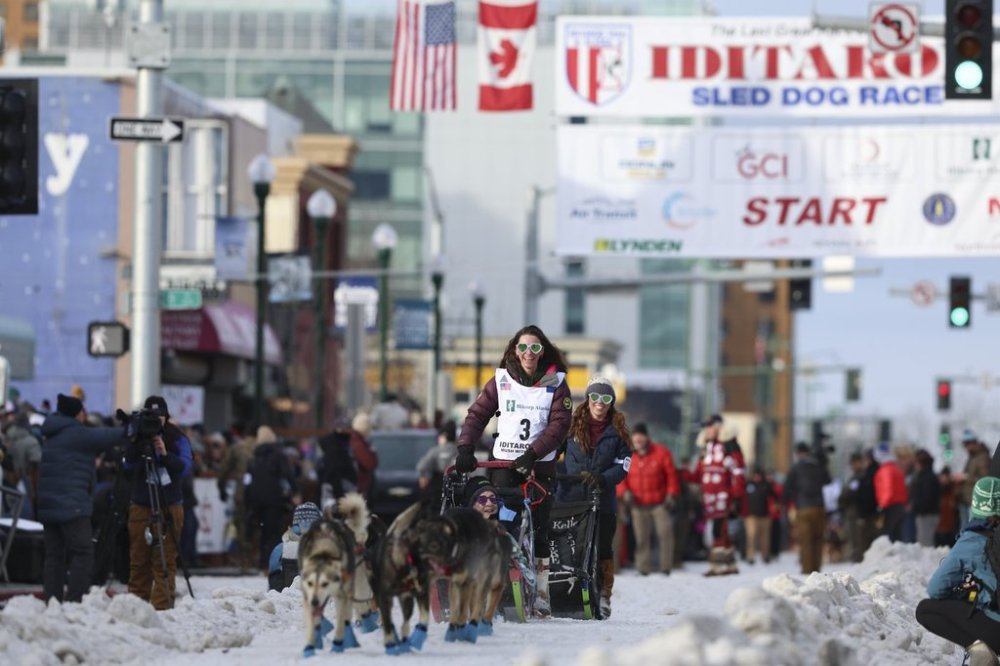
Here’s a by-the-numbers look at the grueling event, which begins with a ceremonial start in Anchorage on Saturday, followed by the start of the race in Fairbanks on Monday. The winning team is expected in the Gold Rush town of Nome about 10 days later.
33
Only 33 mushers will start this year’s race, tied with 2023 for the smallest field ever.
The largest field ever was 96 mushers in 2008.
This drop in participants raises concerns about the viability of the iconic race, which has suffered from inflation, pressure from animal rights groups and climate change.
53
The first Iditarod was held in 1973, making this year’s race the 53rd.
The inaugural event had 34 mushers start the race, only one more than the smallest fields in 2023 and 2025.
Sled dogs were once the main form of transportation in Alaska. Dog teams hauled freight, brought people to other villages and even provided transport for the Alaska Territorial Guard, or the famed Eskimo Scouts, which patrolled the western coast against Japanese attack in World War II.
Dog teams were supplanted by snowmobiles in the 1960s, but interest was growing to honor Alaska’s traditions as the 100th anniversary of its purchase by the U.S. from Russia neared in 1967.
Dorothy Page and Joe Redington Sr. conceived the idea of a long-distance race to honor the Iditarod Trail, a freight-and-mail route from Seward to Nome, which eventually led to the first Iditarod.
This year the Iditarod will honor another famous route: the 1925 Serum Run, in which sled dog teams saved Nome from a deadly diphtheria outbreak.
396 to 528
That’s a lot of dogs.
Each musher must have at least a dozen dogs to start the race, but throughout the course, they can have up to 16, meaning there could be up to 528 canines on the trail.
It won’t be that crowded in Anchorage, however. Mushers are limited to eight dogs each for the ceremonial start, or a total of 264 tail-waggers.
1,128
The Iditarod is typically called a 1,000-mile (1,609-kilometer) race as mushers and their dogs battle the most challenging elements an Alaska winter can throw at them.
However, that mileage has always been approximate.
Organizers alternate between different routes most years to allow more villages in rural Alaska to serve as checkpoints. In odd-numbered years, the race goes 998 miles (1,606 kilometers) along the southern route. In even-numbered years, the race’s mileage drops to 975 miles (1,569 kilometers) on the northern route.
This year’s event will set a record for the longest Iditarod: 1,128 miles (1,815 kilometers). Organizers had to reroute competitors around a stretch of trail without snow.

A lack of snow this winter in the state’s largest city also has curtailed the ceremonial start. Usually the teams course through 11 miles (17.7 kilometers) of Anchorage streets. This year, it’s less than 2 miles (3.2 kilometers).
100,000
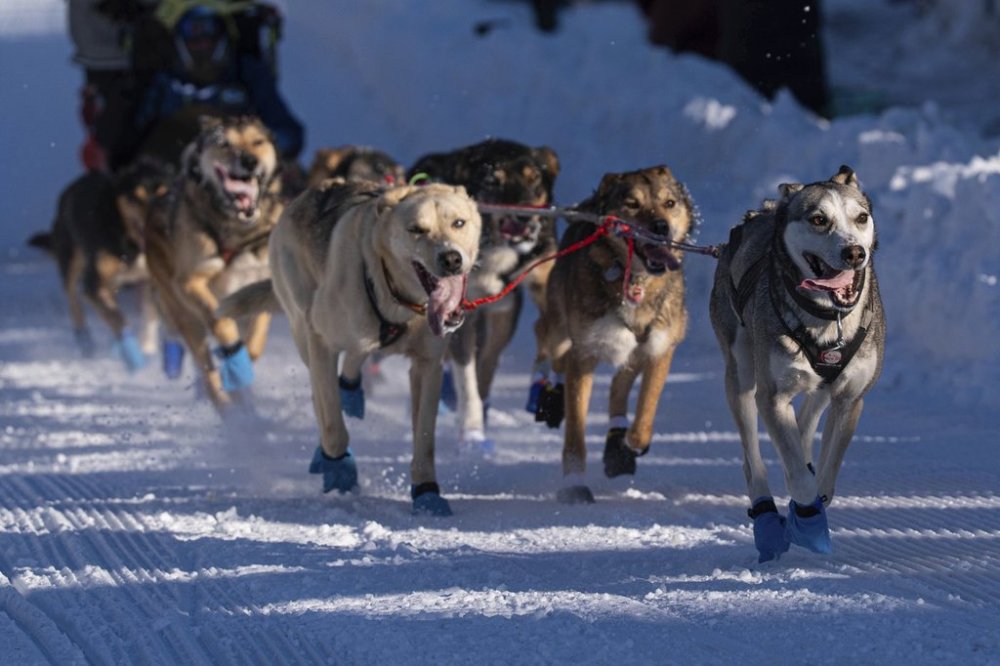
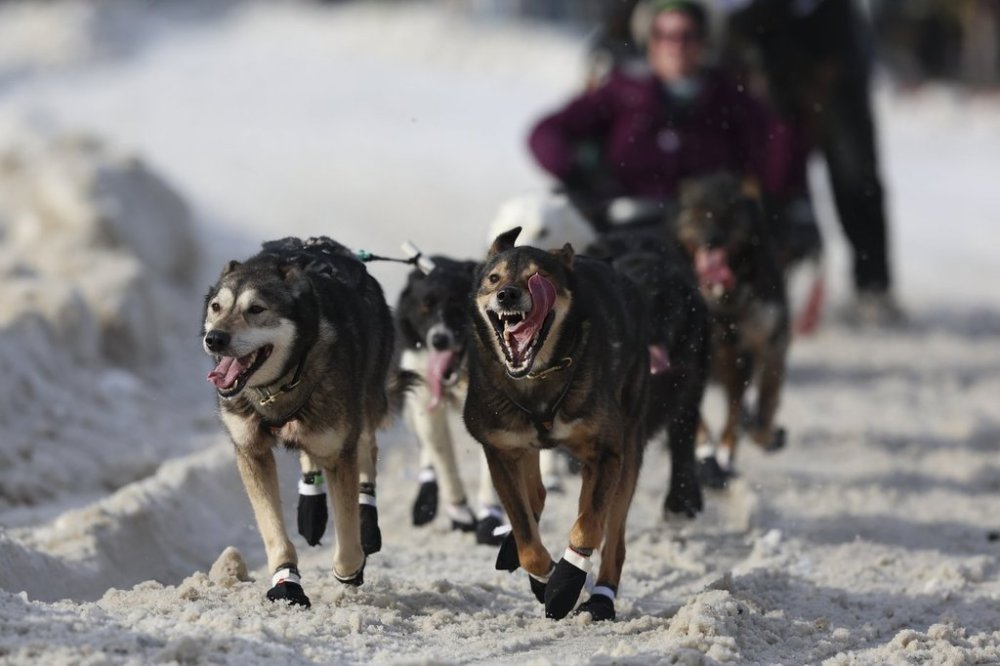
The Iditarod’s four-legged athletes will go through a total of about 100,000 booties during the race. They help protect the dogs’ paws from snow, ice and frigid temperatures.
180,000
Mushers pack supplies they will need during the race but can’t carry. The supplies, including about 180,000 pounds (81,647 kilograms) of dog food, are delivered to checkpoints ahead of the race.