Kennedy and influencers bash seed oils, baffling nutrition scientists
Advertisement
Read this article for free:
or
Already have an account? Log in here »
To continue reading, please subscribe:

Digital Subscription
One year of digital access for only $205*
- Enjoy unlimited reading on winnipegfreepress.com
- Read the E-Edition, our digital replica newspaper
- Access News Break, our award-winning app
- Play interactive puzzles
*First annual payment billed as $205.00 + GST for one year. This annual subscription will automatically renew at $233.00 + GST every 52 weeks (10% off the regular annual price of $259.35). Offer available to new and qualified returning subscribers only. Cancel any time.
To continue reading, please subscribe:
Add Free Press access to your Brandon Sun subscription for only an additional
$1 for the first 4 weeks*
- Enjoy unlimited reading on winnipegfreepress.com
- Read the E-Edition, our digital replica newspaper
- Access News Break, our award-winning app
- Play interactive puzzles
*Your next Brandon Sun subscription payment will increase by $1.00 and you will be charged $17.95 plus GST for four weeks. After four weeks, your payment will increase to $24.95 plus GST every four weeks.
Read unlimited articles for free today:
or
Already have an account? Log in here »
Hey there, time traveller!
This article was published 07/03/2025 (543 days ago), so information in it may no longer be current.
Until recently, most Americans had never heard the term “seed oils,” even though they’ve likely cooked with and consumed them for decades.
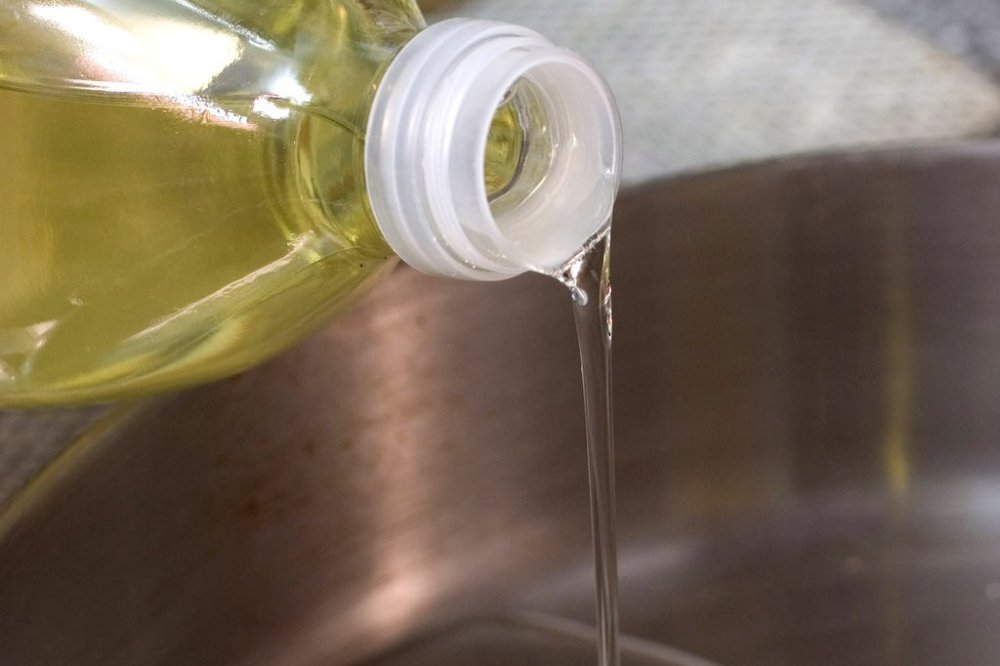
It’s the catchy description coined by internet influencers, wellness gurus and some politicians to refer to common cooking oils — think canola, soybean and corn oil — that have long been staples in many home kitchens.
Those fiery critics refer to the top refined vegetable oils as “the hateful eight” and claim that they’re fueling inflammation and high rates of chronic diseases like obesity and diabetes.
Robert F. Kennedy Jr., the new health secretary, has said Americans are being “unknowingly poisoned” by seed oils and has called for fast-food restaurants to return to using beef tallow, or rendered animal fat, in their fryers instead.
In response to consumer concerns, some food-makers have stripped seed oils from their products. Restaurants like the salad chain Sweetgreen have removed them from their menus. Many Americans say they now avoid seed oils, according to a recent survey from the International Food Information Council, an industry trade group.
The seed oil discussion has exasperated nutrition scientists, who say decades of research confirms the health benefits of consuming such oils, especially in place of alternatives such as butter or lard.
“I don’t know where it came from that seed oils are bad,” said Martha Belury, an Ohio State University food science professor.
In a Senate hearing Thursday, Dr. Marty Makary, nominated to lead the U.S. Food and Drug Administration, called for a closer review of the products.
“I think seed oils are a good example of where we could benefit from a consolidation of the scientific evidence,” he said.
What are seed oils?
Simply put, they are oils extracted from plant seeds. They include eight commonly targeted by critics: canola, corn, cottonseed, grapeseed, soybean, sunflower, safflower and rice bran.
Seed oils are typically made by pressing or crushing the seeds and then processing them further with chemicals and heat to remove elements that can leave the oil cloudy or with an unpleasant taste or odor.
The result of such refining is a neutral-tasting oil that is inexpensive, shelf-stable and able to be heated at a high temperature without smoking, said Eric Decker, a food science professor at the University of Massachusetts Amherst.
By contrast, olive oil and avocado oil are considered fruit oils. They’re often cold-pressed, which retains many of the plant-based compounds that benefit health — but also makes the oils more expensive and prone to smoking at high heat.
Seed oils are composed mostly of unsaturated fatty acids, including monounsaturated and polyunsaturated fat. Most seed oils are high in one type of fatty acid, omega-6, and low in another type, omega-3. Those fatty acids are essential for human health, but our bodies don’t make them on their own, so we must get them from foods.
What are the claims about seed oils and health?
Critics of seed oils make a range of claims that many scientists say are not borne out by research.
Some critics contend that the way the oils are produced leaves behind toxic byproducts of a chemical called hexane. Hexane is considered hazardous in a gas form, but Decker said the hexane used as a liquid solvent to extract the oil is evaporated off and that the residue that remains “is very low and would not present a risk.”
Another common claim is that the seed oils’ high omega-6 and low omega-3 composition causes an imbalance that may increase the risk of chronic conditions by boosting inflammation in the body.
Belury, who has studied fatty acids for three decades, says that claim is based on an oversimplification and misunderstanding of the science. Studies have shown that increased intake of linoleic acid, the most common omega-6, does not significantly affect concentrations of inflammatory markers in the blood, she said.
“Scientists who study omega-6 and omega-3 think we need both,” Belury said. “Seed oils do not increase acute or chronic inflammation markers.”
In addition, research from the American Heart Association and others has consistently shown that plant-based oils reduce so-called bad cholesterol, lowering the risk of heart disease and stroke, especially compared with sources high in saturated fat.
That’s found in new research from Brigham and Women’s Hospital scientists as well. A study of more than 200,000 adults over more than 30 years released Thursday found that people who ate the highest amounts of butter had a 15% higher risk of dying than those who ate the least. People who ate the most plant-based oils — including seed oils — had a 16% lower risk than those who ate the least.
Dr. Daniel Wang, who led the research, said new modeling data suggests that swapping less than a tablespoon a day of butter for equal calories of plant-based oils could lower premature deaths from cancer and overall mortality by 17%. Such a small daily change could result in “a substantial benefit,” Wang said.
Seed oil consumption has risen
Groups like the Seed Oil Free Alliance, which charges firms to certify their products are free of the oils, note that seed oil consumption in the U.S. has soared in recent decades and that they provide empty calories that “displace other, more nutritious foods.”
Corey Nelson, cofounder of the group, said that just as consumers can buy low-sodium and low-sugar versions of foods, they should be able to choose products that contain no seed oils, if they wish.
Food scientists agree that consumption of seed oils has increased, but they say that’s because they’re widely used in fried and fast foods and ultraprocessed foods, which make up nearly three-quarters of the U.S. food supply. Those foods, which have been linked to a host of health problems, also include high levels of refined grains, added sugars and sodium. There’s no evidence that the seed oils themselves are responsible for poor health outcomes, experts said.
Consumers concerned about seed oils should eat fewer ultraprocessed foods. They should seek medical advice to personalize their consumption of the oils, with people using a variety of oils depending on their health status, Decker said.
Research shows olive oil is the healthiest choice, so people should use it “as their cooking style and pocketbook allows,” he noted. At the same time, they can boost consumption of healthy omega-3s by eating more fish like tuna and salmon.
Both proponents and detractors of seed oils agree on one thing: More nutrition research is needed to explore nuances and resolve long-simmering issues.
In the meantime, scientists said a return to beef tallow, with its high levels of saturated fat, isn’t the answer.
“There is no evidence to indicate that beef tallow is healthier than seed oils,” Decker wrote in an email. “Remember, tallow is also processed to purify the fat.”
___
The Associated Press Health and Science Department receives support from the Howard Hughes Medical Institute’s Science and Educational Media Group and the Robert Wood Johnson Foundation. The AP is solely responsible for all content.