What to know about Greenpeace after the Dakota Access protest case decision
Advertisement
Read this article for free:
or
Already have an account? Log in here »
To continue reading, please subscribe:

Digital Subscription
One year of digital access for only $205*
- Enjoy unlimited reading on winnipegfreepress.com
- Read the E-Edition, our digital replica newspaper
- Access News Break, our award-winning app
- Play interactive puzzles
*First annual payment billed as $205.00 + GST for one year. This annual subscription will automatically renew at $233.00 + GST every 52 weeks (10% off the regular annual price of $259.35). Offer available to new and qualified returning subscribers only. Cancel any time.
To continue reading, please subscribe:
Add Free Press access to your Brandon Sun subscription for only an additional
$1 for the first 4 weeks*
- Enjoy unlimited reading on winnipegfreepress.com
- Read the E-Edition, our digital replica newspaper
- Access News Break, our award-winning app
- Play interactive puzzles
*Your next Brandon Sun subscription payment will increase by $1.00 and you will be charged $17.95 plus GST for four weeks. After four weeks, your payment will increase to $24.95 plus GST every four weeks.
Read unlimited articles for free today:
or
Already have an account? Log in here »
Hey there, time traveller!
This article was published 19/03/2025 (556 days ago), so information in it may no longer be current.
A North Dakota jury on Wednesday found Greenpeace must pay hundreds of millions of dollars to a pipeline company in connection with protests against the Dakota Access oil pipeline.
The jury found Greenpeace liable for defamation and other claims and awarded Dallas-based Energy Transfer and subsidiary Dakota Access more than $650 million in damages.
The lawsuit accused Netherlands-based Greenpeace International, Greenpeace USA and funding arm Greenpeace Fund Inc. of defamation, trespass, nuisance, civil conspiracy and other acts.
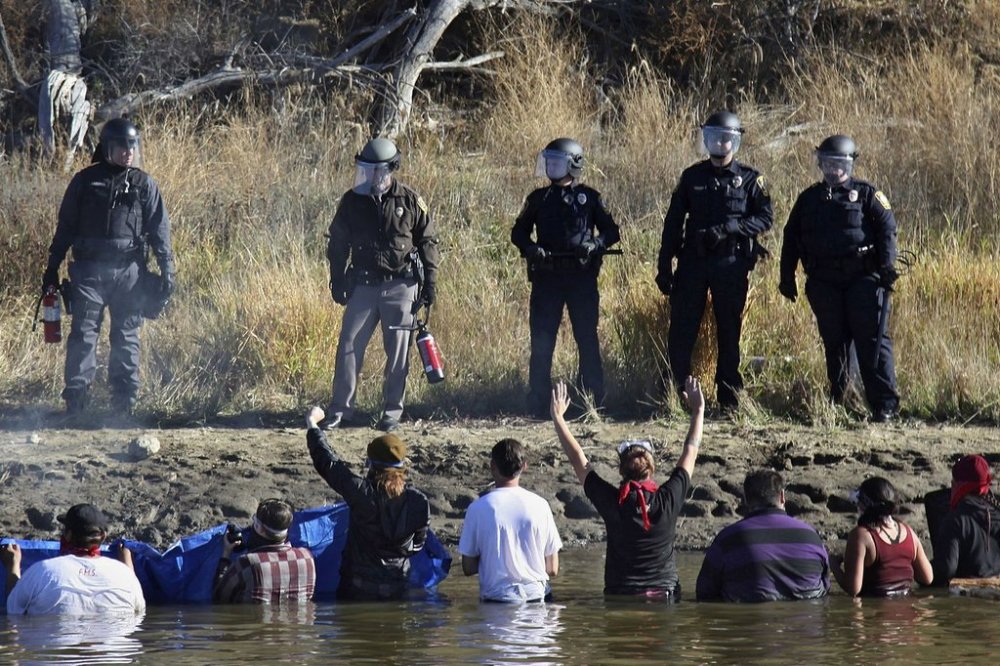
Greenpeace said earlier that a large award to the pipeline company would threaten to bankrupt the environmental group. Following the nine-person jury’s verdict, Greenpeace’s senior legal adviser said the organization’s work “is never going to stop.”
The independent global campaigning network has been fighting for a wide array of environmental issues for more than half a century and has a long history of contentious legal battles.
Here are some things to know:
How was Greenpeace founded?
Environmental activists founded the group in Vancouver, Canada, in 1971.
The network’s first action was to work to stop more nuclear weapons tests on Amchitka Island in the Aleutian island chain in southwest Alaska. They took a ship toward the island to “bear witness,” which is a Quaker protest tradition, but were intercepted by the U.S. Navy, according to the Greenpeace website.
The U.S. later opted to abandon their nuclear testing grounds on the island, marking Greenpeace’s first major victory.
Where did the name Greenpeace come from?
During initial work to stop the nuclear weapons tests on Amchitka, Canadian ecologist Bill Darnell was leaving one of the group’s meetings when someone held up two fingers and said “peace!” according to Greenpeace’s website.
Darnell, who is considered a founding member of Greenpeace, replied: “Let’s make it a Green Peace.”
The name was condensed into one word so it could fit on buttons for the group’s first fundraiser.
What does Greenpeace do today?
Greenpeace describes itself as the largest environmental campaigning organization in the world. It is made up of dozens of independent national or regional organizations in more than 55 countries, according to its website.
Its work to preserve and restore valuable ecosystems and push back on fossil fuel corporations is centered on nonviolent action. Its protests have ranged from efforts to stop Shell from drilling for oil in the Alaskan Arctic to demonstrations to put an end to France’s atmospheric tests in the South Pacific to campaigns to conserve Canada’s coastal rainforest.
Greenpeace and its activists have also been the target of charges and lawsuits, including in 2023 when four activists were arrested for scaling the country estate of former U.K. Prime Minister Rishi Sunak and draping it in black fabric to protest his plan to expand oil and gas drilling in the North Sea. They were later cleared of criminal charges.
It was also one of the environmental groups that filed a lawsuit seeking to block the Willow oil project in Alaska in recent years.

Who supports Greenpeace?
Greenpeace is an independent network that does not take money from governments, corporations or political parties, according to its website. Its funding comes from individual contributions, along with foundation grants.
In 2023, Greenpeace USA had about $40 million in revenue and support, and about $38 million in expenses, according to its online financial statement.
Its website says it does not consider anyone a permanent friend or enemy.
“If your government or company is willing to change, we will work with you to achieve your aims,” its website states. “Reverse course, and we will be back.”