Loss of FEMA program spells disaster for hundreds of communities and their projects
Advertisement
Read this article for free:
or
Already have an account? Log in here »
To continue reading, please subscribe:
Digital Subscription
One year of digital access for only $1.44 a week*
- Enjoy unlimited reading on winnipegfreepress.com
- Read the E-Edition, our digital replica newspaper
- Access News Break, our award-winning app
- Play interactive puzzles
*Billed as $5.77 plus GST every four weeks. After 52 weeks, price increases to the regular rate of $19.95 plus GST every four weeks. Offer available to new and qualified returning subscribers only. Cancel any time.
To continue reading, please subscribe:
Add Free Press access to your Brandon Sun subscription for only an additional
$1 for the first 4 weeks*
- Enjoy unlimited reading on winnipegfreepress.com
- Read the E-Edition, our digital replica newspaper
- Access News Break, our award-winning app
- Play interactive puzzles
*Your next Brandon Sun subscription payment will increase by $1.00 and you will be charged $17.95 plus GST for four weeks. After four weeks, your payment will increase to $24.95 plus GST every four weeks.
Read unlimited articles for free today:
or
Already have an account? Log in here »
Hey there, time traveller!
This article was published 28/04/2025 (537 days ago), so information in it may no longer be current.
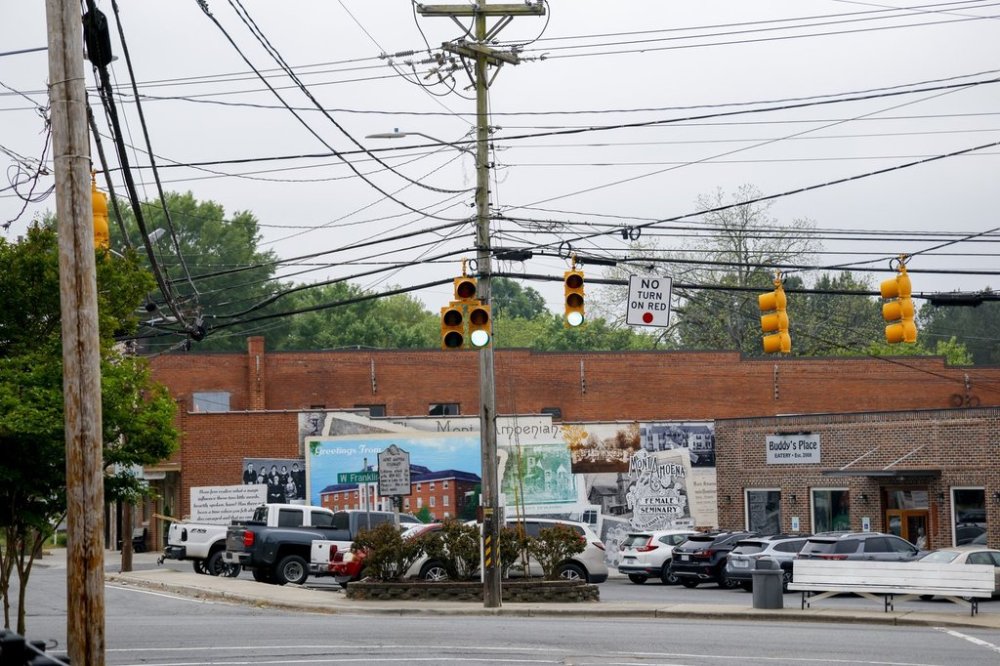
NEW ORLEANS (AP) — The textile mills that once served as the backbone of Mount Pleasant, North Carolina, have long been shuttered, and officials believed federal money would be key to the town’s overdue revitalization. They hoped an improved stormwater drainage system and secured electrical wires — funded through a program to help communities protect against natural disasters and climate change — would safeguard investments in new businesses like a renovated historic theater to spur the largely rural economy.
Mount Pleasant was about to receive $4 million when the Federal Emergency Management Agency eliminated the program. Officials say their plans — years in the making — and those of hundreds of communities nationwide supported by the Building Resilient Infrastructure and Communities program have been upended.
“This is a generational set of infrastructure projects that would set us up for the next hundred years and it just — poof — went away,” said Erin Burris, assistant town manager for Mount Pleasant, 25 miles (40 kilometers) east of Charlotte.
FEMA’s elimination this month of the BRIC program revoked upwards of $3.6 billion in funding earmarked for communities like Mount Pleasant. Though President Donald Trump has openly questioned whether to shutter FEMA completely, local officials said they were blindsided by the move to end BRIC, established during the Republican president’s first term.
Many affected communities are in Republican-dominated, disaster-prone regions. FEMA called the BRIC grants “wasteful” and “politicized” tools, but officials and residents say they were a vital use of government resources to proactively protect lives, infrastructure and economies. Money would have gone toward strengthening electrical poles to withstand hurricane-force winds in Louisiana, relocating residents in Pennsylvania’s floodplains and safeguarding water supply lines in Oklahoma’s Tornado Alley.
Disasters affect the vast majority of Americans — 95% live in a county that has had a federally declared weather disaster since 2011, said Amy Chester, director of Rebuild by Design, a nonprofit focused on disaster prevention.
The BRIC program told communities, “We’re going to help your community be stronger ahead of time,” she said. “Cutting one of the sole sources of funding for that need is essentially telling Americans that it’s OK that they’re suffering.”
Officials call FEMA’s program imperfect but important
Across multiple states, officials said the BRIC program was far from perfect — they were often frustrated with the wait for funding.
But in southeastern Louisiana, Lafourche Parish President Archie Chaisson said despite his issues with FEMA’s bureaucracy, he’s seen firsthand that money invested to fortify homes and infrastructure works.
The hurricane-ravaged state receives the highest rate of federal disaster assistance per capita, with more than $8 billion pouring in since 2011, according to Rebuild by Design. Lafourche Parish has seen more than a dozen federally declared extreme weather disasters since 2011.
Lafourche had been set to receive more than $20 million from several grants to replace wooden electrical poles with steel and take other steps to lower the soaring costs of home insurance.
Chaisson, a Republican whose parish saw 80% of voters support Trump in November, said he backs efforts to streamline federal agencies — as long as funding continues to flow for disaster prevention.
“I’m hopeful that that’s what the president’s trying to do with this,” he said. “Is there some other way to get the money so we can continue to do these projects? … No matter where you sit on the political spectrum, the programs themselves and the dollars allocated make our communities more resilient.”
Research backs him up: A 2024 study funded by the U.S. Chamber of Commerce found every $1 invested in disaster preparation saved $13 in economic impact, damage and cleanup costs.
Democratic officials in states that lost money have publicly expressed outrage. Few Republicans have joined in at a national level, even though about two-thirds of the top 15 states in total FEMA funds received, spending per person and number of federally declared disasters lean heavily Republican.
An exception has been Louisiana’s senior U.S. senator, Bill Cassidy. He took to the Senate floor this month calling for BRIC’s reinstatement, saying it’s “a lifesaver and a cost-saver.”
About $185 million intended for Louisiana evaporated, and officials had to shelve dozens of applications for hundreds of millions of dollars in new funding, according to data compiled by state and federal agencies.
“This isn’t waste,” Cassidy said. “To do anything other than use that money to fund flood mitigation projects is to thwart the will of Congress.”
FEMA says more than $3.6 billion of BRIC funds will be returned to the federal Disaster Relief Fund, for disaster response and recovery, and an additional $882 million is being returned to the U.S. Treasury or reapportioned by Congress in the following fiscal year. Agency officials did not comment further for this story.
Some states fight to restore funds
Twenty-two mostly blue states and the District of Columbia have filed a lawsuit demanding the federal government release obligated funding, including FEMA grants.
The lawsuit highlights Grants Pass in conservative southern Oregon, where FEMA has refused to release BRIC funding awarded for a $50 million water treatment facility.
Flooding could knock out the water supply for 60,000 people for months, said Jason Canady, city public works director. Funding would have been used in part to build a modernized plant on higher ground.
“If you can’t provide drinking water, hospitals, groceries, restaurants are going to have trouble. Economically, it would be devastating,” he said. “It really is the cornerstone on which the community is built.”
In Stillwater, Oklahoma, Mayor Will Joyce spent two years working with FEMA on a BRIC application to overhaul and provide backup supply for a regional water system used by 100,000 people. Its 36-mile (58-kilometer) pipeline is at risk of damage from tornadoes and flooding. If it breaks, Stillwater has less than a day’s worth of reserve drinking water.
“We can’t just hope nothing bad happens,” Joyce said. “This project is a necessity.”
Without FEMA’s support, he said, Stillwater will have to double the cost of water for residents to fund the project.
In an open letter, U.S. Rep. Rob Bresnahan Jr., a northeast Pennsylvania Republican, urged FEMA to revive BRIC, saying communities in his district would struggle to fund disaster adaptation work, including relocating families in flooded homes.
Bresnahan wrote that “programs like BRIC are not wasteful, but well within the purview of federal coordination of disaster relief efforts” and noted that Trump “promised not to leave the forgotten men and women of America behind.”
Some towns fear their needs will be forgotten
In Mount Pleasant, Whit Moose, the fourth-generation owner of a downtown pharmacy, said few of his neighbors seem aware that funding disappeared, though his own business would have benefited.
“It was going to be a wonderful thing,” he said. “Now we just got to start over.”
Republican voters in the town embrace efforts to downsize government, but the perception is that cuts are focused on federal bureaucracy, related waste and redundancy, or diversity, equity and inclusion spending, said Jim Quick, vice chairman of the Cabarrus County Republican Party.
“It would be a surprise for us to learn that those budget cuts would be impacting a local municipality,” Quick said. “The reality is all of us have to trim back.”
Town voters are unlikely to retract their support for Trump, he said, noting that 80% supported him in November.
Burris, the assistant town manager, worries about flooding downtown. And she points to one vulnerable utility pole she’s nicknamed Atlas — after the Greek god carrying the world on his shoulders — holding up the electricity, internet and telecommunications for the town’s 1,700 people.

“It’s a special community, and it deserves good things,” Burris said, choking up. “I don’t know what was political about Mount Pleasant — little, teeny, tiny Mount Pleasant — getting a little bit of help with some stormwater flooding.”
___
Brook is a corps member for The Associated Press/Report for America Statehouse News Initiative. Report for America is a nonprofit national service program that places journalists in local newsrooms to report on undercovered issues.
___
Follow Brook on the social platform X at @jack_brook96.