Vatican workers install Sistine Chapel stove where ballots are burned during conclave to elect pope

Advertisement

Advertise with us

VATICAN CITY (AP) — Vatican workers installed the simple stove in the Sistine Chapel where ballots will be burned during the conclave to elect a new pope and began taking measures to block any electronic interference with their deliberations, as jockeying continued Saturday outside over who among the cardinals was in the running.

Read this article for free:


By clicking the button above, an account will be created and you will begin to receive some of our recommended newsletters. You may opt out of any newsletter by visiting your Email and Communication Preferences page or by clicking "unsubscribe" at the bottom of any email.

or

Already have an account? Log in here »

To continue reading, please subscribe:

Digital Subscription

One year of digital access for only $1.44 a week*

  • Enjoy unlimited reading on winnipegfreepress.com
  • Read the E-Edition, our digital replica newspaper
  • Access News Break, our award-winning app
  • Play interactive puzzles

*Billed as $5.77 plus GST every four weeks. After 52 weeks, price increases to the regular rate of $19.95 plus GST every four weeks. Offer available to new and qualified returning subscribers only. Cancel any time.

To continue reading, please subscribe:

Add Free Press access to your Brandon Sun subscription for only an additional

$1 for the first 4 weeks*

  • Enjoy unlimited reading on winnipegfreepress.com
  • Read the E-Edition, our digital replica newspaper
  • Access News Break, our award-winning app
  • Play interactive puzzles
Start now

*Your next Brandon Sun subscription payment will increase by $1.00 and you will be charged $17.95 plus GST for four weeks. After four weeks, your payment will increase to $24.95 plus GST every four weeks.

Hey there, time traveller!
This article was published 03/05/2025 (537 days ago), so information in it may no longer be current.

VATICAN CITY (AP) — Vatican workers installed the simple stove in the Sistine Chapel where ballots will be burned during the conclave to elect a new pope and began taking measures to block any electronic interference with their deliberations, as jockeying continued Saturday outside over who among the cardinals was in the running.

The Holy See released a video Saturday of the preparations for the May 7 conclave, which included installing the stove and a false floor in the frescoed Sistine Chapel to make it even. The footage also showed workers lining up simple wooden tables where the cardinals will sit and cast their votes starting Wednesday, and a ramp leading to the main seating area for any cardinal in a wheelchair.

The engineer overseeing the works, Silvio Screpanti, said workers were also deactivating all the electronic sensors that have been installed in the Sistine Chapel in recent years to help protect its precious frescoes. Such work is part of the technological blackout that accompanies a conclave to prevent bugging of the secret deliberations and ensure the cardinals have no contact with the outside world.
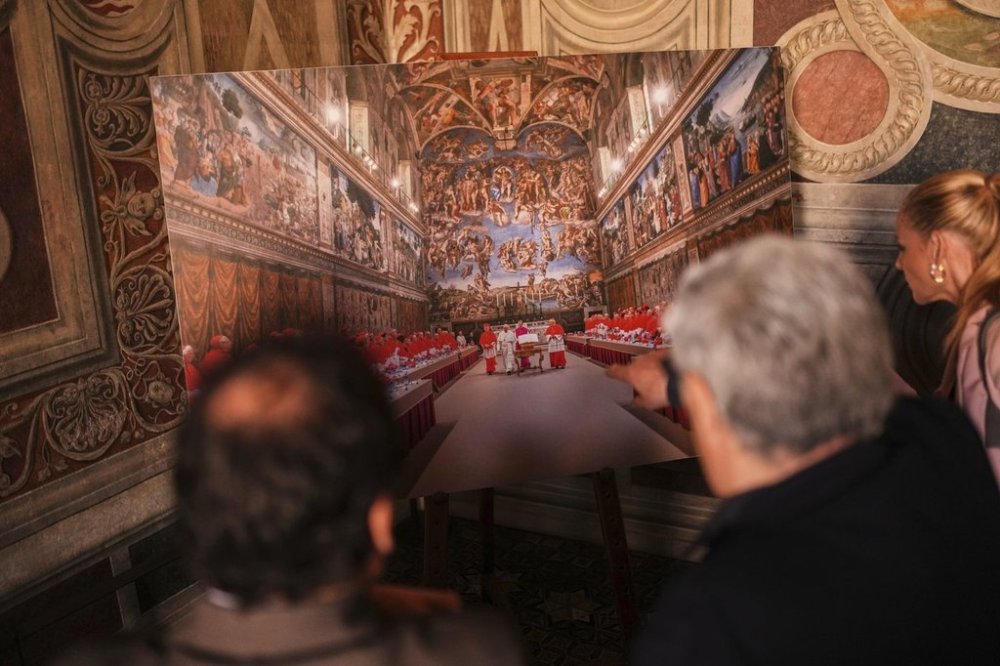
Journalists look at a photograph of the conclave where late Pope Francis was elected on March 13, 2013, and displayed inside the Borgia Apartments at the Vatican Museums during a press tour, Friday, May 2, 2025. (AP Photo/Francisco Seco)

In the coming days, all the windows of the Apostolic Palace facing the Sistine Chapel will be darkened. On the eve of the first vote itself, some 80 seals will be erected around the perimeter of the space where the cardinals will live — between their residence and the Sistine Chapel — to keep outsiders away, he said in comments posted on the site of the Vatican city state.

On Friday, fire crews were seen on the chapel roof attaching the chimney from which smoke signals will indicate whether a pope has been elected.

The preparations are all leading up to the solemn pageantry of the start of the conclave to elect a successor to Pope Francis, history’s first Latin American pope, who died April 21 at age 88.

Vatican spokesman Matteo Bruni issued a net denial of reports that one of the leading candidates, Cardinal Pietro Parolin, had suffered health problems earlier in the week that required medical attention. The reports, which spoke of a blood pressure issue, were carried by some Italian media and picked up by some conservative U.S. sites, including Catholicvote.org, the U.S. site headed by Brian Burch, the Trump administration’s choice to be ambassador to the Holy See.

Speculation about a papal candidate’s health is a mainstay of conclave politics and maneuvering, as various factions try to torpedo or boost certain cardinals. Francis experienced the dynamic firsthand: When the votes were going his way in the 2013 conclave, one breathless cardinal asked him if it was true that he had only one lung, as rumors had it. (Francis later recounted that he told the cardinal he had had the upper lobe of one lung removed as a young man.) He was elected a short time later.

Bruni also confirmed the names of two cardinal electors who will not be participating for health reasons, bringing the number down to 133: Cardinal Antonio Cañizares Llovera, the retired archbishop of Valencia, Spain, and the retired archbishop of Nairobi, Kenya, Cardinal John Njue. Two more cardinals have yet to arrive in Rome

What happens in the conclave?

The Vatican said Saturday that all cardinals will be asked to arrive at the main Vatican residence, Domus Santa Marta hotel, or an adjacent residence between Tuesday evening and Wednesday morning to begin their sequester. They must be in place before Mass on Wednesday morning in St. Peter’s Basilica celebrated by the dean of the College of Cardinals, Cardinal Giovanni Battista Re. In the afternoon after lunch, they will process into the Sistine Chapel, hear a meditation and take their oaths before casting their first ballots.

If no candidate reaches the necessary two-thirds majority, or 89 votes, on the first ballot, the papers will be burned and black smoke will indicate to the world that no pope was elected.

The cardinals will go back to their Vatican residence for the night and return to the Sistine Chapel on Thursday morning to conduct two votes in the morning, two in the afternoon, until a winner is found.

Cardinal Francis Xavier Kriengsak Kovithavanij arrives at the Vatican, Saturday, May 3, 2025, to attend the General Congregation of cardinals in the New Synod Hall where they are preparing for the upcoming conclave starting on May 7, to elect the 267th Roman pontiff. (AP Photo/Andrew Medichini)

The preparations are underway as the cardinals meet privately in more informal sessions to discuss the needs of the Catholic Church going forward and the type of pope who can lead it.

Cardinal Jean-Paul Vesco, the archbishop of Algiers, Algeria, said cardinals were feeling the pressure to find a new pope but weren’t ready.

“Of course we don’t feel ready,” Vesco said as he arrived for Saturday’s closed-door meetings. “Because we have to discover the one that God has already chosen. We need a lot more time of prayer together. But I’m sure that at the right moment we will be ready and we will give to the church the pope that God himself wanted.”

Singapore Cardinal William Goh, who welcomed Francis on the final stop of his four-nation Asian trip last September, said the right pope would eventually materialize.

“We recognize the achievement (of Pope Francis) but no pope is perfect, no one is able to do everything, so we’ll find the best person to succeed St. Peter,” he said.

___

Associated Press religion coverage receives support through the AP’s collaboration with The Conversation US, with funding from Lilly Endowment Inc. The AP is solely responsible for this content.

Report Error Submit a Tip

The Free Press acknowledges the financial support it receives from members of the city’s faith community, which makes our coverage of religion possible.
More Stories

Mayoral candidates snipe over safety during radio debate

Joyanne Pursaga 6 minute read Preview

Mayoral candidates snipe over safety during radio debate

Joyanne Pursaga 6 minute read Updated: Yesterday at 5:31 PM CDT

Public safety took centre stage during a sometimes fiery mayoral debate Wednesday in which Kevin Klein revealed he would have to raise property taxes to fund his plan to make Winnipeg safer.

The CJOB debate also included candidates Scott Gillingham and Mike Vogiatzakis, who were selected as the top contenders in the race based on polling data.

Klein noted he has promised to strike a task force on public safety and to hire more police, if he’s elected Oct. 28.

“We are 100 police officers short of the very bare minimum of the per capita (number) right now. We have to replace those officers,” said Klein, a former city councillor and Tory cabinet minister.

Read
Updated: Yesterday at 5:31 PM CDT

Manitoba First Nation taking federal government, department to court over damage to sturgeon population

Morgan Modjeski 5 minute read Preview

Manitoba First Nation taking federal government, department to court over damage to sturgeon population

Morgan Modjeski 5 minute read Yesterday at 11:27 AM CDT

A remote Manitoba First Nation is taking the federal government to court over claims a Manitoba Hydro project is hurting the sturgeon population in the lower Churchill River.

In an Oct. 15 statement of claim filed in Manitoba’s Court of King’s Bench, Tataskweyak Cree Nation said the Churchill River diversion operated by Manitoba Hydro has had widespread ecological effects and damaged sturgeon populations in the area.

The lawsuit alleges Ottawa has breached its treaty obligations to protect the community’s right to harvest the fish.

The lawsuit names both His Majesty the King in Right of Canada, the minister of fisheries and Oceans Canada as defendants.

Read
Yesterday at 11:27 AM CDT

Mayoral candidates focus on public safety at Indigenous forum

Morgan Modjeski 4 minute read Preview

Mayoral candidates focus on public safety at Indigenous forum

Morgan Modjeski 4 minute read Tuesday, Oct. 20, 2026

Mayoral hopefuls made their pitch to Winnipeg’s Indigenous community Tuesday at a forum hosted by chiefs organizations.

“Public safety must include trust between police and First Nations,” said candidate Kevin Klein, a former chair of the police board. “Winnipeg needs a policing approach that protects Indigenous residents, supports victims, prevents crime and builds lasting relationships with Indigenous communities.”

The former city councillor and Tory cabinet minister promised harsher penalties for drug dealers and said he’d work to create a community safety task force that would include Indigenous leadership.

He also said the police service must recruit more Indigenous officers to change its culture.

Read
Tuesday, Oct. 20, 2026

Brandon senior hockey player files suit against opponent, league, Hockey Manitoba over serious injuries, lost income

Morgan Modjeski 3 minute read Preview

Brandon senior hockey player files suit against opponent, league, Hockey Manitoba over serious injuries, lost income

Morgan Modjeski 3 minute read Yesterday at 2:01 AM CDT

A Brandon man is taking a fellow hockey player and two sport organizations to court after he was seriously injured on the ice, alleging it caused him hardship and lost income.

In 2024, Devon Leblanc played for the Virden Oil Kings, a senior amateur team in the Tiger Hills Hockey League, which is a member of the Hockey Manitoba association.

Leblanc’s age is not made clear in the court filing, but an online roster suggests he’s 38.

Leblanc alleges Bryce Enns, a member of the Killarney Shamrocks, bodychecked and assaulted him during a game between the two teams on Nov. 28, 2024.

Read
Yesterday at 2:01 AM CDT

Play asks the cutting questions

Ben Waldman 6 minute read Preview

Play asks the cutting questions

Ben Waldman 6 minute read 2:00 AM CDT

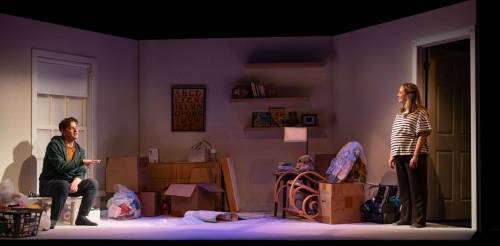
An IKEA nursery awaiting its tenant is the first stage into which visitors are allowed entry in playwright Jordi Mand’s The Cut.

We see an antique rocker and unmarked boxes strewn about, with a table lamp — an unofficial Ner tamid, eternal candle — sitting on the unblemished carpet in the centre of the room. Sarah (Hallie Seline) and Andrew (Wade Bogert O’Brien) have a lot to unpack as they settle into their own home: two shelves of biography waiting for a third.

The box of books from Sarah’s parents is opened early.

“Something From Nothing? Goodnight Bubbala?” Andrew laughs, turning the volumes cover-out on the wall of his future son’s room. “What are they building? A Jewish bookshelf?”

Read
2:00 AM CDT

Letters, Oct. 22

7 minute read 2:00 AM CDT

Creating safe sports environments

We do not do enough in youth sports to create a safe environment for all youth to participate safely and fully. Access to sports is a huge part of personal development for youth, including core teamwork and interpersonal skills, discipline and responsibility and passion.

Barriers should be removed for children and youth to be able to participate — especially girls and racialized youth. Despite being one of the strongest ways to connect as a community, sports hold a lot of privilege in who can access them and who will remain able to participate.

All youth deserve to feel a sense of belonging, have access to spaces for physical activity and to experience recreation free from harassment or discrimination from players, coaches or spectators.