

The EU seeks to halt Russian gas imports by the end of 2027 and ban new contracts already this year
Advertisement
Read this article for free:
or
Already have an account? Log in here »
To continue reading, please subscribe:
Monthly Digital Subscription
$1 per week for 24 weeks*
- Enjoy unlimited reading on winnipegfreepress.com
- Read the E-Edition, our digital replica newspaper
- Access News Break, our award-winning app
- Play interactive puzzles
*Billed as $4.00 plus GST every four weeks. After 24 weeks, price increases to the regular rate of $19.95 plus GST every four weeks. Offer available to new and qualified returning subscribers only. Cancel any time.
Monthly Digital Subscription
$4.99/week*
- Enjoy unlimited reading on winnipegfreepress.com
- Read the E-Edition, our digital replica newspaper
- Access News Break, our award-winning app
- Play interactive puzzles
*Billed as $19.95 plus GST every four weeks. Cancel any time.
To continue reading, please subscribe:
Add Free Press access to your Brandon Sun subscription for only an additional
$1 for the first 4 weeks*
*Your next subscription payment will increase by $1.00 and you will be charged $16.99 plus GST for four weeks. After four weeks, your payment will increase to $23.99 plus GST every four weeks.
Read unlimited articles for free today:
or
Already have an account? Log in here »
Hey there, time traveller!
This article was published 06/05/2025 (326 days ago), so information in it may no longer be current.
BRUSSELS (AP) — The European Union should halt imports of Russian natural gas by the end of 2027 to deprive President Vladimir Putin of revenue that helps fuel his war on Ukraine, the bloc’s executive branch said Tuesday.
Under a detailed plan to be presented next month, the European Commission would seek to ban new gas contracts with Russia by the end of this year and phase out existing ones still in use in the 27-nation EU by the end of 2027.
“Putin has shown that he doesn’t mind weaponizing gas,” EU Energy Commissioner Dan Jørgensen said as he outlined the plan. “We do not want to fill up his war chest and support his war economy because who knows which countries will be next.”
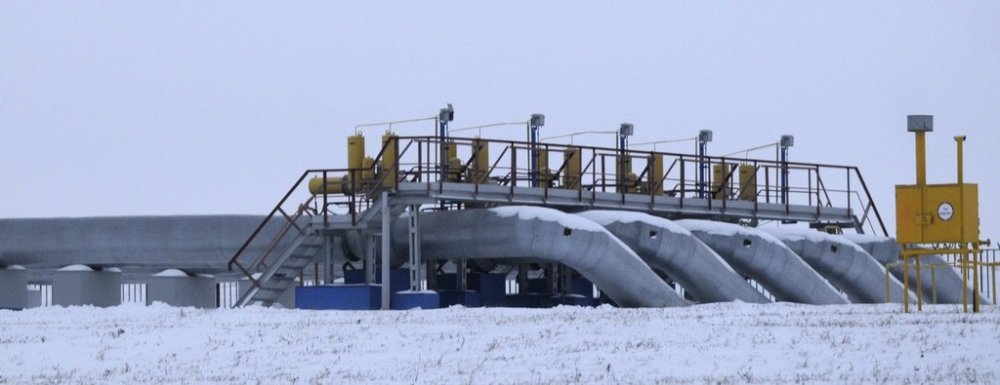
Jørgensen said the EU had completely cut coal purchases from Russia and drastically lowered oil and gas imports since the war on Ukraine began in 2022, but that 1.8 billion euros ($2 billion) in energy revenue still reached Moscow every month last year.
“I am a little bit embarrassed that last year we still paid 23 billion euros ($26 billion) to Russia whilst they are in war with our friends in Ukraine,” Jørgensen told reporters in Strasbourg, France.
The EU says it has cut gas imports from 45% to 19%, and oil from 27% to 3%, of its prewar levels. But that still makes it Russia’s biggest gas client, with pipelines in operation across the Black Sea, Belarus, and Turkey, according to the Energy and Clean Air think tank.
Ten countries continue to import energy from Russia. Those that still take its gas via pipelines include Greece, Hungary and Slovakia. Austria, Poland and the Baltic countries – Estonia, Latvia and Lithuania – have phased out their imports.
Hungary and Slovakia – whose leaders are considered to be Putin’s closest allies in Europe – have blocked EU military assistance to Ukraine, and are sure to oppose the commission’s gas plans.
However, the EU’s executive branch appears determined not to let them veto the plan and is ready to propose a system that would only have to be endorsed by about two-thirds of the 27 member countries, and possibly by the European Parliament.

Jørgensen said that by the end of this year, each country would be required to submit plans showing how they intend to stop imports of Russian energy and that existing spot market contracts would be banned, measures that would eliminate one-third of imports.
He conceded that the plan would face challenges but said that it would be introduced “in a gradual, coordinated way,” with EU support being provided if needed to those countries that are hardest hit.
“Russia is a threat to all of us. Therefore, we must act,” Jørgensen said.
___
McNeil contributed to this report from Barcelona, Spain.