Abortion-rights groups denounce censorship on Meta-owned apps in Latin America and beyond
Advertisement
Read this article for free:
or
Already have an account? Log in here »
To continue reading, please subscribe:

Digital Subscription
One year of digital access for only $205*
- Enjoy unlimited reading on winnipegfreepress.com
- Read the E-Edition, our digital replica newspaper
- Access News Break, our award-winning app
- Play interactive puzzles
*First annual payment billed as $205.00 + GST for one year. This annual subscription will automatically renew at $233.00 + GST every 52 weeks (10% off the regular annual price of $259.35). Offer available to new and qualified returning subscribers only. Cancel any time.
To continue reading, please subscribe:
Add Free Press access to your Brandon Sun subscription for only an additional
$1 for the first 4 weeks*
- Enjoy unlimited reading on winnipegfreepress.com
- Read the E-Edition, our digital replica newspaper
- Access News Break, our award-winning app
- Play interactive puzzles
*Your next Brandon Sun subscription payment will increase by $1.00 and you will be charged $17.95 plus GST for four weeks. After four weeks, your payment will increase to $24.95 plus GST every four weeks.
Read unlimited articles for free today:
or
Already have an account? Log in here »
Hey there, time traveller!
This article was published 15/05/2025 (516 days ago), so information in it may no longer be current.
MEXICO CITY (AP) — All of a sudden, women contacting one of the biggest sources of information about abortion in Mexico through the encrypted messaging app WhatsApp were met with silence.
The nongovernmental organization’s business account had been blocked. Weeks later, a similar digital blackout struck a collective in Colombia.
Across the Americas, organizations that guide women seeking abortions in various countries are raising alarm, decrying what they see as a new wave of censorship on platforms owned by tech giant Meta — even in countries where abortion is decriminalized. The organizations believe this is due to a combination of changes to Meta policies and attacks by anti-abortion groups that denounce their content.
While this also occurs on Instagram and Facebook, the blocking of organizations’ verified WhatsApp business accounts, which they use to communicate with people seeking help, has been particularly disruptive. These accounts are crucial for communicating with people seeking help, and their blockage has significantly complicated daily interactions between women and support providers.
Meta usually attributes its content blocking to policy violations, though it has acknowledged occasional mistakes. Since January, Meta changed the way it moderates content, now relying on user-generated notes “to allow more speech and reduce enforcement mistakes.” U.S. President Donald Trump has said the changes were “probably” made in response to his threats over what conservatives considered a liberal bias in fact-checking.
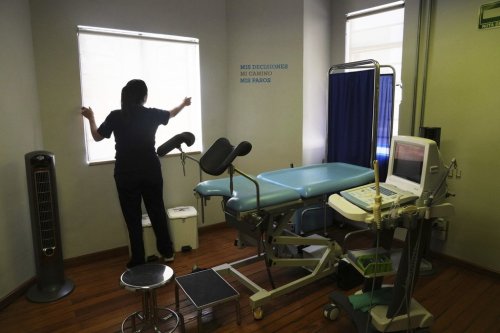
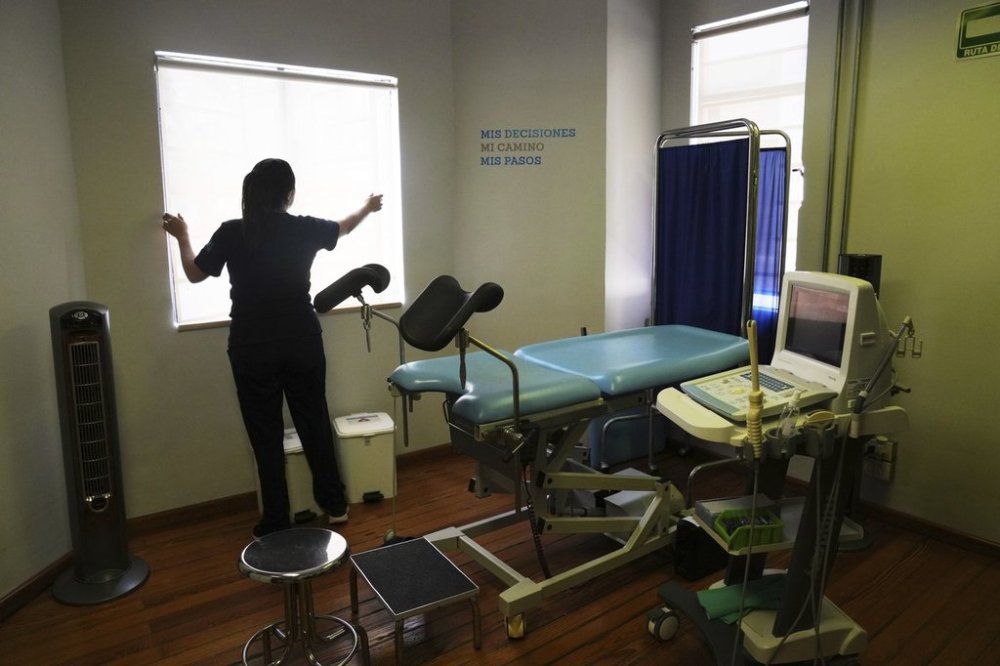
Among the organizations whose WhatsApp business accounts were suspended is the MSI Foundation (part of MSI Reproductive Choices, formerly Marie Stopes) a network working in Mexico for 25 years. Its account was suspended in February, and the Colombian group Oriéntame, or Guide Me, which has worked in women’s health in Colombia for decades, was labeled by Instagram as “dangerous.”
While conservatives cheered the change in Meta moderation policies, organizations helping women who seek abortions say that, even if they just apply in the U.S., they often result in over-enforcement, likely driven by Artificial Intelligence, which disproportionately flags or removes their posts — obstacles that have increased since the start of the Trump administration.
“It is not always intentional censorship, but the outcome is still more censorship for us and our partners,” said Martha Dimitratou, cofounder of Repro Uncensored, an organization that monitors digital suppression of reproductive health content.
In additional comments on Thursday, Meta rejected any link between the groups’ experiences and its policy changes.
“Our policies and enforcement regarding abortion medication-related content have not changed recently and were not part of the content moderation changes,” Meta said in a statement.
‘Looks orchestrated’
“From one day to the next they blocked communication between our users and women who need first-hand information” to address doubts or look for medical follow-up with MSI, said Araceli López-Nava, the organization’s Latin America director.
In the days after the suspension, appointments dropped 80%
López Nava said that MSI had previously faced issues with regular WhatsApp numbers, because it’s easy to file complaints. So, the organization thought it would be different with a business account, which gives them a platform to manage the thousands of messages they receive every month.
That wasn’t the case. After an initial suspension, MSI’s WhatsApp business account was permanently suspended two weeks later. The reason cited in Meta’s notification? “Sending spam.”
“The argument is that they’ve received complaints, but from whom?” López-Nava asked. She said the organization can’t be accused of sending spam because they only answer those who contact them and provide information in line with Mexican law. Abortion is decriminalized in Mexico at the federal level and in the majority of its 32 states.
“It looks like an orchestrated strategy to us,” López-Nava said. “And not necessarily by Meta.”
Warnings before suspension
Dimitratou, who is also digital strategist for Canada-based Women on Web and the U.S.-based Plan C, said cases of blocked content have increased since Trump’s election, not only in the U.S., but around the world, likely driven by anti-abortion groups.
Conservative or religious groups have a history of attempting to leverage technology companies to obstruct abortion supporters’ efforts, but the anonymity of app reporting prevents organizations from proving who is behind it.
That is why MSI and an ally NGO, Women’s Link Worldwide, have asked Meta to implement transparent mechanisms to be able to appeal the company’s decisions and to respect international human rights standards. They have not received a response.
A Meta spokesperson told The Associated Press that MSI’s WhatsApp business account was blocked for valid reasons, saying that organizations receiving numerous negative comments receive warnings before suspension. Meta declined to provide details about the nature of the negative comments or comment on whether they could be coordinated by anti-abortion groups aiming to paralyze MSI.
The Instagram accounts of Women on Web United States and Women on Web Latin America were suspended right after the U.S. presidential election in November, though they were later reinstated. Dimitratou said that Meta has also limited the organization’s ability to place ads on accounts in Latin America, South Korea and West Africa.
Repro Uncensored has documented at least 60 instances of similar digital censorship since January. The most recent occurred this week, when Thailand’s TamTang Group said that Facebook had accused them of violating rules on selling medicines simply for sharing information about free abortion pills provided by the Thai government.
Health information vs. explicit content
A 2025 report by the California-based Center for Intimacy Justice, based on a survey of 159 nonprofits worldwide, found that major tech platforms were removing ads and content related to abortion and other women’s sexual and reproductive health issues like menopause.
When asked about the report, Meta downplayed its findings, noting that it was based on a small number of examples.
Tech companies often cite policies against explicit or inappropriate sexual content or the advertisement of unsafe substances, such as abortion pills, even though the World Health Organization has said they’re safe.
In April, months after Meta announced changes to ensure greater freedom of expression, Oriéntame, the Colombian collective that offers reproductive health services, posted on Instagram a drawing of a heart and the phrase “Abort without pain.” The post was blocked with the explanation: “Dangerous people and organizations, photo removed.”
While Colombia legalized abortion in 2022, Oriéntame experienced censorship of at least 14 of their posts on Instagram in April 2025. That same month, their WhatsApp business account was suspended, said Tatiana Martínez, who manages their social media. Although the WhatsApp account was restored after a week, they worry it could happen again.
A Meta spokesperson said this week that the Instagram posts were mistakenly taken down and not the result of a change in its content standards.
A creative response
Oriéntame director María Vivas says the organization has been battling Google for years over online content limitations. The tech giant said in a message to the AP that it only restricts content when it violates policies. But Google keeps Colombia on the list of countries with restrictions on abortion ads — even though abortion was decriminalized there in 2022.
As for their problems with Meta, Vivas said they started in late 2024, when the company started to make some data management adjustments.
Taking legal action against tech giants, when each country has its own laws, is complicated. As a result, affected organizations have turned to creative strategies, like operating multiple backup accounts, having a substitute ready when one is blocked and reformulating language in posts to avoid censorship triggers.

“It feels like Meta is our boss,” Vivas joked about the ongoing struggle with the tech giant over the basic right to provide health information. “We live to respond to Meta, to adapt ourselves to Meta,” she said. “That’s absurd.”
____
AP journalist Maria Cheng contributed to this report from New York.
____
Follow AP’s coverage of Latin America and the Caribbean at https://apnews.com/hub/latin-america