Japan’s troubled automaker Nissan banks on hybrid EV technology
Advertisement
Read this article for free:
or
Already have an account? Log in here »
To continue reading, please subscribe:

Digital Subscription
One year of digital access for only $205*
- Enjoy unlimited reading on winnipegfreepress.com
- Read the E-Edition, our digital replica newspaper
- Access News Break, our award-winning app
- Play interactive puzzles
*First annual payment billed as $205.00 + GST for one year. This annual subscription will automatically renew at $233.00 + GST every 52 weeks (10% off the regular annual price of $259.35). Offer available to new and qualified returning subscribers only. Cancel any time.
To continue reading, please subscribe:
Add Free Press access to your Brandon Sun subscription for only an additional
$1 for the first 4 weeks*
- Enjoy unlimited reading on winnipegfreepress.com
- Read the E-Edition, our digital replica newspaper
- Access News Break, our award-winning app
- Play interactive puzzles
*Your next Brandon Sun subscription payment will increase by $1.00 and you will be charged $17.95 plus GST for four weeks. After four weeks, your payment will increase to $24.95 plus GST every four weeks.
Read unlimited articles for free today:
or
Already have an account? Log in here »
Hey there, time traveller!
This article was published 26/05/2025 (480 days ago), so information in it may no longer be current.
YOKOSUKA, Japan (AP) — Money-losing Japanese automaker Nissan is banking on its latest “e-Power” technology for a turnaround.
A kind of hybrid, e-Power comes equipped with both an electric motor and gasoline engine, much like the Toyota Motor Corp. Prius. It’s different from a Prius in that it doesn’t switch back and forth between the motor and engine during the drive.
That means the car always is running on its EV battery, ensuring a quiet, smooth ride.
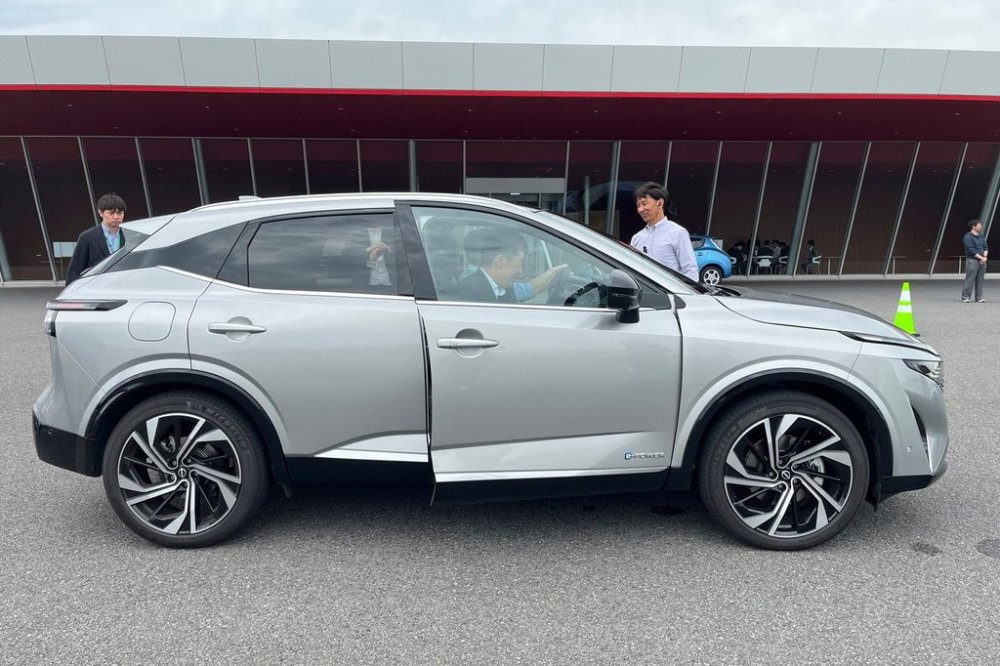
“Nissan has a proud history of pioneering innovative technology that set us apart,” Chief Technology Officer Eiichi Akashi told reporters on the sidelines of a test drive at its Grandrive course outside Tokyo.
The advantage of e-Power vehicles is that they never need to be charged like EVs do. The owner just fuels up at a gas station and the car never runs out of a charge.
Nissan Motor Corp., which racked up a $4.5 billion loss for the fiscal year through March, sorely needs a hot-seller, especially in the lucrative North American market. But the U.S. market is proving a big headache for all the Japanese automakers because of President Donald Trump’s tariff policies.
To achieve a turnaround, Nissan is working on reducing costs, strengthening business partnerships and redefining its lineup. That’s where e-Power fits in, according to Akashi.
Yokohama-based Nissan announced earlier this month that it’s slashing about 15% of its global work force, or about 20,000 employees, and reducing the number of its auto plants to 10 from 17, under an ambitious recovery plan led by its new Chief Executive Ivan Espinosa.
Nissan officials did not give a price for the upcoming e-Power models. The one other automaker that offers a similar technology is “kei,” or tiny car, manufacturer Daihatsu Motor Co.
E-Power is already offered on the Nissan Qashqai and X-Trail model in Europe, and the Note in Japan. The upgraded version will be offered in the new Rogue in the U.S.
Nissan, a pioneer in EVs with its Leaf, which went on sale in 2010, is also preparing beefed up EV models. It’s also working on a solid-state battery which is expected to replace the lithium-ion batteries now widely used in hybrids, EVs and e-Power models.
Analysts say Nissan is in danger of running out of cash and needs a partner. Speculation is rife its Yokohama headquarters building will get sold, or one of its Japan plants will be turned into a casino.
Nissan started talks last year with Japanese rival Honda Motor Co. for a business integration but announced in February that it was dropping the talks.
___
Yuri Kageyama is on Threads: https://www.threads.com/@yurikageyama