$14 billion in clean energy projects have been canceled in the US this year, analysis says
Advertisement
Read this article for free:
or
Already have an account? Log in here »
To continue reading, please subscribe:
Digital Subscription
One year of digital access for only $1.44 a week*
- Enjoy unlimited reading on winnipegfreepress.com
- Read the E-Edition, our digital replica newspaper
- Access News Break, our award-winning app
- Play interactive puzzles
*Billed as $5.77 plus GST every four weeks. After 52 weeks, price increases to the regular rate of $19.95 plus GST every four weeks. Offer available to new and qualified returning subscribers only. Cancel any time.
To continue reading, please subscribe:
Add Free Press access to your Brandon Sun subscription for only an additional
$1 for the first 4 weeks*
- Enjoy unlimited reading on winnipegfreepress.com
- Read the E-Edition, our digital replica newspaper
- Access News Break, our award-winning app
- Play interactive puzzles
*Your next Brandon Sun subscription payment will increase by $1.00 and you will be charged $17.95 plus GST for four weeks. After four weeks, your payment will increase to $24.95 plus GST every four weeks.
Read unlimited articles for free today:
or
Already have an account? Log in here »
Hey there, time traveller!
This article was published 29/05/2025 (509 days ago), so information in it may no longer be current.
More than $14 billion in clean energy investments in the U.S. have been canceled or delayed this year, according to an analysis released Thursday, as President Donald Trump’s pending megabill has raised fears over the future of domestic battery, electric vehicle and solar and wind energy development.
Many companies are concerned that investments will be in jeopardy amid House Republicans’ passage of a tax bill that would gut clean energy credits, nonpartisan group E2 said in its analysis of projects that it and consultancy Atlas Public Policy tracked.
The groups estimate the losses since January have also cost 10,000 new clean energy jobs.
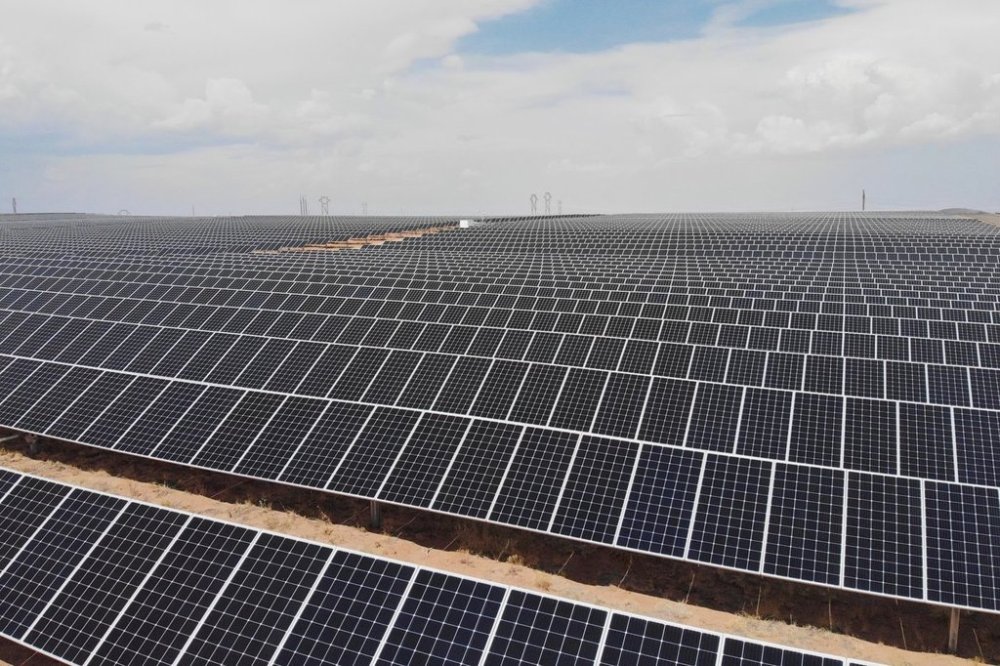
The tax credits, bolstered in the landmark climate bill passed under former President Joe Biden in 2022, are crucial for boosting renewable technologies key to the clean energy transition. E2 estimates that $132 billion in plans have been announced since the so-called Inflation Reduction Act passed, not counting the cancellations.
Last week’s House bill effectively renders moot many of the law’s incentives. Advocacy groups decried the potential impact that could have on the industry after the multitrillion-dollar tax breaks package passed.
“The House’s plan coupled with the administration’s focus on stomping out clean energy and returning us to a country powered by coal and gas guzzlers is causing businesses to cancel plans, delay their plans and take their money and jobs to other countries instead,” E2 executive director Bob Keefe said.
The Senate is now reviewing the bill with an informal July 4 deadline to get it to the president’s desk.
What has been canceled
Some of the most recent cancellations include the Kore Power battery factory in Arizona and BorgWarner’s closure of two EV manufacturing sites in Michigan. Bosch suspended a $200 million investment in a hydrogen fuel cell factory in South Carolina, citing changes within the market over the past year in a statement to The Associated Press.
Tariffs, inflationary pressures, nascent company struggles and low adoption rates for some technologies may also have been reasons for these companies’ plans changing. For instance, the battery storage and electric vehicle sectors have seen the most impact in 2025, with the latter especially having had had a difficult past few years. Several projects spurred by the IRA were also canceled prior to 2025.
Of the projects canceled this year, most — more than $12 billion worth — came in Republican-led states and congressional districts, the analysis said. Red districts have benefited more than blue ones from an influx of clean energy development and jobs, experts say.
Georgia and Tennessee are particularly at risk because they are highly invested in EV and battery production, said Marilyn Brown, an energy policy professor at the Georgia Institute of Technology who was not involved in the analysis.
“If all of a sudden these tax credits are removed, I’m not sure how these ongoing projects are going to continue,” said Fengqi You, an engineering professor at Cornell University who also was not involved.
A handful of Republican lawmakers have urged the continuation of energy tax credits, with some saying in an April letter to Senate Majority Leader John Thune, R-S.D. that a repeal could disrupt the American people and weaken the county’s position as a global energy leader.
The US and the global stage
The Trump administration has sought to dismantle much of Biden’s environmental and climate-related policy — what he calls the Democrats’ “green new scam” — withdrawing again from the Paris climate agreement, rolling back countless landmark pollution regulations and environmental initiatives, reconsidering scientific findings supporting climate action, blocking renewable energy sources and more in an effort to bolster a fossil fuel-led “American energy dominance” agenda.
Meanwhile other countries are proceeding with green investments. The European Parliament is committing to the European Union Carbon Border Adjustment Mechanism, a policy meant to prevent “carbon leakage,” or companies moving production to countries where climate policies are less strict. And the International Maritime Organization is moving toward a global carbon tax on shipping.
In a sign that not all hope is lost for the future of renewables in the U.S., April alone saw nearly $500 million in new development, with Japanese manufacturing company Hitachi’s energy arm building out transformer manufacturing in Virginia and materials and technology company Corning investing in solar manufacturing in Michigan.
Still, $4.5 billion in development was canceled or delayed last month, according to E2’s tally.
___
The story has been corrected to reflect Hitachi’s energy arm is building out transformer manufacturing in Virginia, not transmission and electrification operations.
___

Associated Press writer Matthew Daly in Washington contributed to this report.
___
Read more of AP’s climate coverage at http://www.apnews.com/climate-and-environment
___
The Associated Press’ climate and environmental coverage receives financial support from multiple private foundations. AP is solely responsible for all content. Find AP’s standards for working with philanthropies, a list of supporters and funded coverage areas at AP.org.