Nova Scotia mum on why it won’t release findings from environmental racism panel

Advertisement

Advertise with us

HALIFAX - The Nova Scotia government is refusing to release recommendations from a panel tasked with examining environmental racism in the province, and the minister responsible isn’t saying why.

Read this article for free:


or

Already have an account? Log in here »

To continue reading, please subscribe:

Subscribe and receive a limited-edition Free Press branded hat or tote.

Digital Subscription

One year of digital access for only $205*

  • Enjoy unlimited reading on winnipegfreepress.com
  • Read the E-Edition, our digital replica newspaper
  • Access News Break, our award-winning app
  • Play interactive puzzles

*First annual payment billed as $205.00 + GST for one year. This annual subscription will automatically renew at $233.00 + GST every 52 weeks (10% off the regular annual price of $259.35). Offer available to new and qualified returning subscribers only. Cancel any time.

To continue reading, please subscribe:

Add Free Press access to your Brandon Sun subscription for only an additional

$1 for the first 4 weeks*

  • Enjoy unlimited reading on winnipegfreepress.com
  • Read the E-Edition, our digital replica newspaper
  • Access News Break, our award-winning app
  • Play interactive puzzles
Start now

*Your next Brandon Sun subscription payment will increase by $1.00 and you will be charged $17.95 plus GST for four weeks. After four weeks, your payment will increase to $24.95 plus GST every four weeks.

Hey there, time traveller!
This article was published 29/05/2025 (496 days ago), so information in it may no longer be current.

HALIFAX – The Nova Scotia government is refusing to release recommendations from a panel tasked with examining environmental racism in the province, and the minister responsible isn’t saying why.

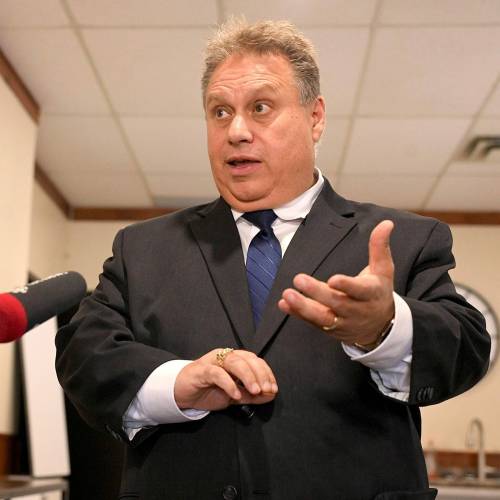
Justice Minister Becky Druhan, who is also responsible for the Office of Equity and Anti-Racism, avoided giving an explanation when pressed by reporters after a provincial cabinet meeting Thursday.

Druhan did say the province’s Progressive Conservative government is committed to addressing issues of equity and racism and she said the panel’s work will “inform” those efforts.
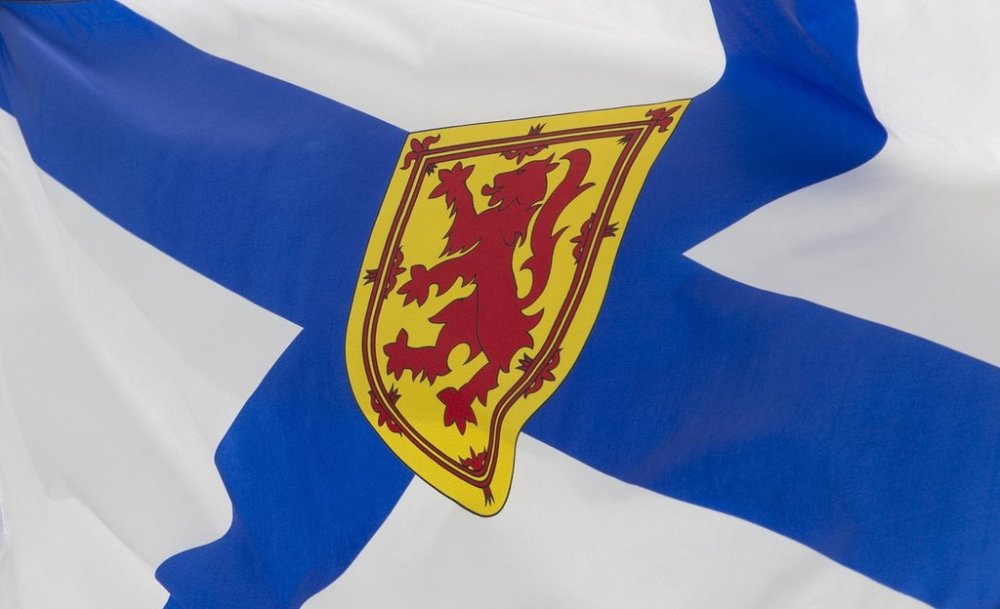
Nova Scotia's provincial flag flies on a flag pole in Ottawa, Friday July 3, 2020. THE CANADIAN PRESS/Adrian Wyld

“One of the important insights that the panel provided to us … is that systemic and foundational change is needed to address racism around environmental issues,” the minister said.

Druhan wouldn’t answer when asked whether she had seen the panel’s recommendations, saying its work had predated her time as minister.

The eight-member panel was appointed in June 2023 to look at how racism affects a community’s natural environment and it was expected to submit its recommendations by the end of that year. It was chaired by Augy Jones, who is now the government’s executive director of African Nova Scotian Affairs.

When he was appointed to the panel in December 2022, Jones was clear about how he wanted its work to be perceived.

“We want this process to be an example to Canada on how you engage with marginalized communities who have been traumatized in an intergenerational way,” he told The Canadian Press in an interview.

The idea for the panel came from the opposition New Democrats, who proposed an amendment to climate change legislation that was passed in the fall of 2023.

Examples of environmental racism include instances where landfills, trash incinerators, coal plants, toxic waste facilities and other environmentally hazardous activities are located near communities of colour, Indigenous territories and the working poor.

Opposition NDP Leader Claudia Chender said it was “disheartening” that the government has sat on the panel’s findings for more than a year. She said the report should be released to the public.

“The promise made when this panel was established was to bring some clarity and truth and recommendations to what is a really shameful legacy in this province of environmental racism,” Chender said.

Interim Liberal leader Derek Mombourquette said the government was sending a “disgraceful” message in not releasing the panel’s recommendations.

“The minister has the absolute obligation to release that report so communities and Nova Scotians can read it,” he said.

Examples of environmental racism in Nova Scotia include the toxic dump and landfill that operated for decades near the historic Black communities of Shelburne and Lincolnville.

As well, the cleanup continues at Boat Harbour, N.S., near the Pictou Landing First Nation, where a once pristine body of water served for decades as an effluent lagoon for a nearby paper mill.

Liberal critic Iain Rankin, a former environment minister and premier, once referred to Boat Harbour as one of the worst cases of environmental racism in Canada.

This report by The Canadian Press was first published May 29, 2025.
Report Error Submit a Tip

More Stories

Mayoral candidates Klein, Vogiatzakis continue to snipe over inducement allegations

Chris Kitching and Joyanne Pursaga 6 minute read Preview

Mayoral candidates Klein, Vogiatzakis continue to snipe over inducement allegations

Chris Kitching and Joyanne Pursaga 6 minute read Monday, Oct. 5, 2026

Winnipeg mayoral candidate Mike Vogiatzakis told reporters Monday he will contact the city clerk to report his allegation that rival Kevin Klein offered him a job to drop out of the race.

Vogiatzakis and Klein both doubled down a day after accusing each other of offering the other a position at city hall, if they were victorious in the Oct. 28 election, in exchange for a withdrawal.

“Do I want to get him charged? Not really. I don’t want to destroy anybody’s life,” Vogiatzakis told reporters.

“Kevin’s a good guy. I thought he was a friend of mine, but he’s not. Kevin uses leverage to get ahead, and he tried to use me as leverage.”

Read
Monday, Oct. 5, 2026

Sidney Crosby sings praises of Jets' Bjorck, summer training partner Barron

Ken Wiebe 6 minute read Preview

Sidney Crosby sings praises of Jets' Bjorck, summer training partner Barron

Ken Wiebe 6 minute read Monday, Oct. 5, 2026

PITTSBURGH — It wasn’t that long ago when the shoe was on the other foot for Sidney Crosby.

Read
Monday, Oct. 5, 2026

Gov. Gen. Arbour embarks on first official visit to Manitoba

Chris Kitching 2 minute read Preview

Gov. Gen. Arbour embarks on first official visit to Manitoba

Chris Kitching 2 minute read Updated: 1:04 PM CDT

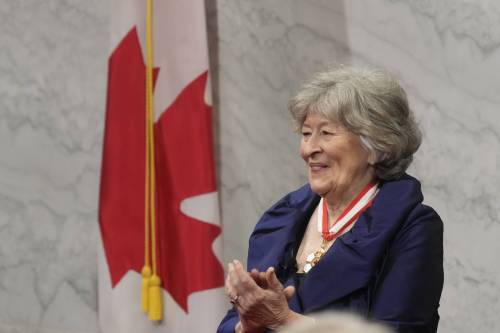
Gov. Gen. Louise Arbour began her first official visit to Manitoba on Wednesday with a welcoming ceremony before private meetings with Premier Wab Kinew, Indigenous leaders and others.

Arbour’s three-day stop in Winnipeg and Gimli will focus on activities related to civil engagement, youth and reconciliation while she also spends time meeting with cadets and members of the Royal Canadian Air Force, an official itinerary said.

Arbour was greeted by Lt.-Gov. Anita Neville, Premier Wab Kinew, Chief Justice Marianne Rivolan, Speaker Tom Lindsey and Mayor Scott Gillingham as she entered the Manitoba Legislative Building at 12:15 p.m., after meeting privately with Neville at Government House, the official residence of the lieutenant governor.

“Bienvenue au Manitoba,” Kinew said while welcoming Arbour.

Read
Updated: 1:04 PM CDT

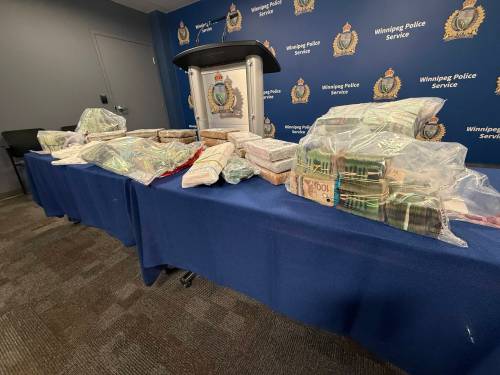
Police seize cocaine valued at $1.5M, about $750K in cash in raid on St. Vital house

Scott Billeck 5 minute read Preview

Police seize cocaine valued at $1.5M, about $750K in cash in raid on St. Vital house

Scott Billeck 5 minute read Yesterday at 3:30 PM CDT

A St. Vital homeowner and her husband were going about their business during an afternoon last month when police officers in tactical gear suddenly appeared, walking across their front lawn.

The target was a few doors down: a maroon bi-level home on a quiet stretch of Satinwood Place, within earshot of children playing outside at a nearby school.

The homeowner, who asked not to be named to protect their privacy, said the police presence caught the couple by surprise in the Southglen neighbourhood, where they weren’t accustomed to seeing that kind of activity.

“We never heard the (police) cars pull up, but there were cars blocking the entrance to the street from both sides,” said the neighbour. “They had a shield, a battering ram — everything. Just not used to seeing that.”

Read
Yesterday at 3:30 PM CDT

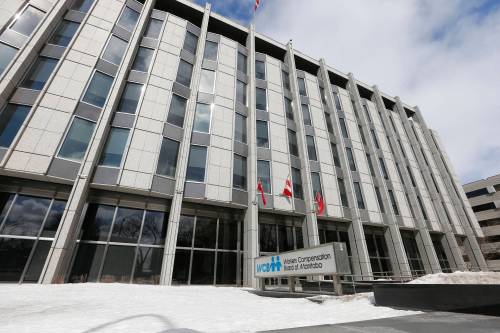
Manitoba Federation of Labour calls for independent review of Workers Compensation Board

Gabrielle Piché 5 minute read Preview

Manitoba Federation of Labour calls for independent review of Workers Compensation Board

Gabrielle Piché 5 minute read Yesterday at 9:54 PM CDT

A major labour association is calling for an independent Workers Compensation Board review as Manitoba leads the country in workplace injury rates.

Last year, 2.5 employees in every 100 reported a workplace injury serious enough to take time off, WCB tracking shows. The number is higher than any other province — just as it has been for the past three years, according to the Manitoba Federation of Labour.

(In 2025, the next highest time loss injury rate was in British Columbia: 2.04 people for every 100.)

“Our prevention work in Manitoba is failing Manitobans,” said Kevin Rebeck, president of the Manitoba Federation of Labour. “We need an independent review to help shine a light on, ‘What is happening on the prevention front of WCB?’”

Read
Yesterday at 9:54 PM CDT

AI governance: Canada’s next structural test

Anne Thompson 4 minute read 2:00 AM CDT

Artificial intelligence is accelerating faster than the governance structures meant to contain it. Canada now faces a structural test — whether our institutions can protect autonomy, dignity, and continuity in an era when decision-making is increasingly mediated by systems we did not design, cannot fully audit, and do not yet constitutionally constrain.

This is not a technological problem. It is a governance problem.

AI systems influence how information flows, how institutions behave, and how decisions are made. They shape the conditions under which harm becomes predictable. They amplify both the strengths and weaknesses of the systems into which they are deployed. And they do all of this at a scale and speed that outpaces traditional regulatory tools.

Canada’s current approach to AI governance relies heavily on policy, guidelines, and sector-specific regulation. These are important, but they are not sufficient. What is missing is structural clarity — a constitutional-grade framework that defines authority, responsibility, accountability, and the minimum conditions under which AI systems may operate without undermining human dignity or institutional credibility.