FDA approves Moderna’s new lower-dose COVID-19 vaccine

Advertisement

Advertise with us

The U.S. approved a new COVID-19 vaccine made by Moderna late Friday but with limits on who can use it — not a replacement for the company’s existing shot, but a second option.

Read this article for free:


or

Already have an account? Log in here »

To continue reading, please subscribe:

Subscribe and receive a limited-edition Free Press branded hat or tote.

Digital Subscription

One year of digital access for only $205*

  • Enjoy unlimited reading on winnipegfreepress.com
  • Read the E-Edition, our digital replica newspaper
  • Access News Break, our award-winning app
  • Play interactive puzzles

*First annual payment billed as $205.00 + GST for one year. This annual subscription will automatically renew at $233.00 + GST every 52 weeks (10% off the regular annual price of $259.35). Offer available to new and qualified returning subscribers only. Cancel any time.

To continue reading, please subscribe:

Add Free Press access to your Brandon Sun subscription for only an additional

$1 for the first 4 weeks*

  • Enjoy unlimited reading on winnipegfreepress.com
  • Read the E-Edition, our digital replica newspaper
  • Access News Break, our award-winning app
  • Play interactive puzzles
Start now

*Your next Brandon Sun subscription payment will increase by $1.00 and you will be charged $17.95 plus GST for four weeks. After four weeks, your payment will increase to $24.95 plus GST every four weeks.

Hey there, time traveller!
This article was published 31/05/2025 (459 days ago), so information in it may no longer be current.

The U.S. approved a new COVID-19 vaccine made by Moderna late Friday but with limits on who can use it — not a replacement for the company’s existing shot, but a second option.

The new vaccine, mNexspike, is a step toward next-generation coronavirus vaccines. It’s made in a way that allows for a lower dose — a fifth of the dose of its current COVID-19 vaccine, Spikevax — by refining its immune target.

The approval “adds an important new tool to help protect people at high risk of severe disease from COVID-19,” Stephane Bancel, Moderna’s CEO, said in a statement Saturday.

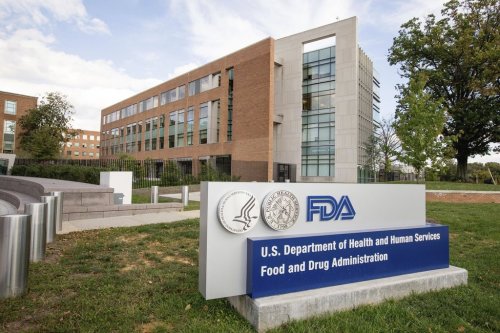
FILE - The U.S. Food and Drug Administration campus in Silver Spring, Md., is photographed on Oct. 14, 2015. (AP Photo/Andrew Harnik, File)

The Food and Drug Administration approved the new vaccine for use in all adults 65 and older, and for people age 12 to 64 who have a least one health condition that puts them at increased risk from the coronavirus.

That’s the same limit that the FDA set in licensing another COVID-19 vaccine option from competitor Novavax.

Those restrictions are a departure from how the U.S. has handled COVID-19 vaccines until now, reflecting skepticism about vaccines from Health Secretary Robert F. Kennedy Jr. and other Trump officials.

Moderna’s existing vaccine doesn’t face those limits and has long been used for anyone ages 6 months and older. The company said it expected to offer both options this fall.

The FDA’s approval was based on a study of 11,400 people age 12 and older that compared the new low-dose vaccine with Moderna’s existing vaccine. It found the new vaccine was safe and was at least as effective — and more by some measures — than the original shot, the company said.

The news came just days after the Trump administration canceled funding for Moderna to develop a vaccine against potential pandemic flu viruses, including the H5N1 bird flu, despite promising early study results.

___

The Associated Press Health and Science Department receives support from the Howard Hughes Medical Institute’s Science and Educational Media Group and the Robert Wood Johnson Foundation. The AP is solely responsible for all content.
Report Error Submit a Tip

More Stories

Renewed spirit and life: Indigenous treatment centre expands with $21-M revamp

Scott Billeck 5 minute read Preview

Renewed spirit and life: Indigenous treatment centre expands with $21-M revamp

Scott Billeck 5 minute read Yesterday at 3:44 PM CDT

Don Robinson knows first-hand that many people don’t get sober by themselves.

In late June 1984, Robinson downed his last drink. His recovery began at Pritchard House in Winnipeg’s North End, a 22-bed treatment facility run by the Native Addictions Council of Manitoba.

“I didn’t get sober by myself,” said Robinson, a member of Bunibonibee Cree Nation who now works in grief and trauma counselling and traditional knowledge as an elder at Ka Ni Kanichihk Inc.

More than four decades later, Robinson was back at the council on Monday, crowded into a room at its newly renovated treatment centre at 160 Salter St. — a place he once turned to for help and where he helps others now.

Read
Yesterday at 3:44 PM CDT

Filtering the worst of our behaviour

Gwynne Dyer 5 minute read 2:00 AM CDT

On Sunday, Aug. 30, a Falcon Heavy rocket delivered the Nancy Grace Roman space telescope onto a direct transfer trajectory to its permanent home at the Lagrange Two Point (L2), 1.5-million km from Earth. In 100 days it will reach its station, power up, and start observing the universe.

Astronomers will use it to try to understand the nature of dark matter, which makes up most of the mass in the universe (but some say may not even exist).

It is expected to find up to 100,000 new exoplanets circling other stars, and may be able to spot ones even smaller than Mars. Current methods can only see much bigger ones.

It will test a new technology called a coronagraph, which may one day be able to detect life on some of those planets by analyzing the light reflected from them. It would be nice to have a better answer to scientist Enrico Fermi’s famous question: “Where is everybody?”

Man who killed truck passenger handed new 12-year sentence

Erik Pindera 4 minute read Preview

Man who killed truck passenger handed new 12-year sentence

Erik Pindera 4 minute read 2:00 AM CDT

Manitoba’s highest court has given a man who shot at a passing truck and killed a 20-year-old woman a 12-year prison sentence for manslaughter.

William Ryerson Thomas Comber, now in his mid 20s, was found guilty of second-degree murder by a jury in December 2022 for the killing of Hailey Dugay on Nov. 17, 2018. Comber was later sentenced to life in prison with no chance of parole for 12 years.

Dugay died after the truck she was travelling in was struck by gunfire late at night on a gravel road near Fraserwood, 90 kilometres north of Winnipeg.

The Court of Appeal struck down Comber’s murder conviction earlier this year and ruled he was instead guilty of the lesser offence of manslaughter.

Read
2:00 AM CDT

At last, some good news on homelessness

Editorial 4 minute read Preview

At last, some good news on homelessness

Editorial 4 minute read Yesterday at 2:00 AM CDT

There is no shortage of reasons to be frustrated about homelessness in Winnipeg. But the latest numbers provide something that has been increasingly difficult to find — evidence that at least some things are getting better.

Read
Yesterday at 2:00 AM CDT

FDA approves Moderna’s new lower-dose COVID-19 vaccine

The Associated Press 2 minute read Preview

FDA approves Moderna’s new lower-dose COVID-19 vaccine

The Associated Press 2 minute read Saturday, May. 31, 2025

The U.S. approved a new COVID-19 vaccine made by Moderna late Friday but with limits on who can use it — not a replacement for the company’s existing shot, but a second option.

The new vaccine, mNexspike, is a step toward next-generation coronavirus vaccines. It's made in a way that allows for a lower dose — a fifth of the dose of its current COVID-19 vaccine, Spikevax — by refining its immune target.

The approval “adds an important new tool to help protect people at high risk of severe disease from COVID-19,” Stephane Bancel, Moderna’s CEO, said in a statement Saturday.

The Food and Drug Administration approved the new vaccine for use in all adults 65 and older, and for people age 12 to 64 who have a least one health condition that puts them at increased risk from the coronavirus.

Read
Saturday, May. 31, 2025

Officers, not technology, stop huge drug drop into Stony prison

Chris Kitching 4 minute read Preview

Officers, not technology, stop huge drug drop into Stony prison

Chris Kitching 4 minute read Yesterday at 5:08 PM CDT

Stony Mountain Institution officers intercepted $1.8 million worth of drugs and other banned items Sunday in one of the largest reported seizures in recent years at Manitoba’s only federal prison.

Jake Suelzle, president of the Union of Canadian Correctional Officers’ prairie region, said employees spotted a drone while it delivered packages containing contraband.

“What marks this one a little bit unique is the (Correctional Service of Canada) just invested a significant amount of money into a drone detector, and this drone detector sure showed its worth when it didn’t detect at all,” he said Tuesday. “No alarm was raised when this package was dropped.”

In a news release that offered limited details, the correctional service said the items, including THC concentrate, were found in packages thanks to the “vigilance” of employees.

Read
Yesterday at 5:08 PM CDT