Cuts to USAID severed longstanding American support for Indigenous people around the world
Advertisement
Read this article for free:
or
Already have an account? Log in here »
To continue reading, please subscribe:
Digital Subscription
One year of digital access for only $1.44 a week*
- Enjoy unlimited reading on winnipegfreepress.com
- Read the E-Edition, our digital replica newspaper
- Access News Break, our award-winning app
- Play interactive puzzles
*Billed as $5.77 plus GST every four weeks. After 52 weeks, price increases to the regular rate of $19.95 plus GST every four weeks. Offer available to new and qualified returning subscribers only. Cancel any time.
To continue reading, please subscribe:
Add Free Press access to your Brandon Sun subscription for only an additional
$1 for the first 4 weeks*
- Enjoy unlimited reading on winnipegfreepress.com
- Read the E-Edition, our digital replica newspaper
- Access News Break, our award-winning app
- Play interactive puzzles
*Your next Brandon Sun subscription payment will increase by $1.00 and you will be charged $17.95 plus GST for four weeks. After four weeks, your payment will increase to $24.95 plus GST every four weeks.
Read unlimited articles for free today:
or
Already have an account? Log in here »
Hey there, time traveller!
This article was published 04/06/2025 (504 days ago), so information in it may no longer be current.
NEW YORK (AP) — Miguel Guimaraes Vasquez fought for years to protect his homeland in the Peruvian Amazon from deforestation related to the cocaine trade, even laboring under death threats from drug traffickers.
A leader in an Indigenous rights group, Vasquez said such efforts were long supported by financial assistance from the U.S. Agency for International Development, which spent billions of dollars starting in the 1980s to help farmers in Peru shift from growing coca for cocaine production to legal crops such as coffee and cacao for chocolate. The agency funded economic and agricultural training and technology, and helped farmers gain access to international markets.
But the Trump administration’s recent sweeping cuts to the agency have thrown that tradition of U.S. assistance into doubt, and Indigenous people in the Amazon worry that without American support there will be a resurgence of the cocaine market, increased threats to their land and potentially violent challenges to their human rights.
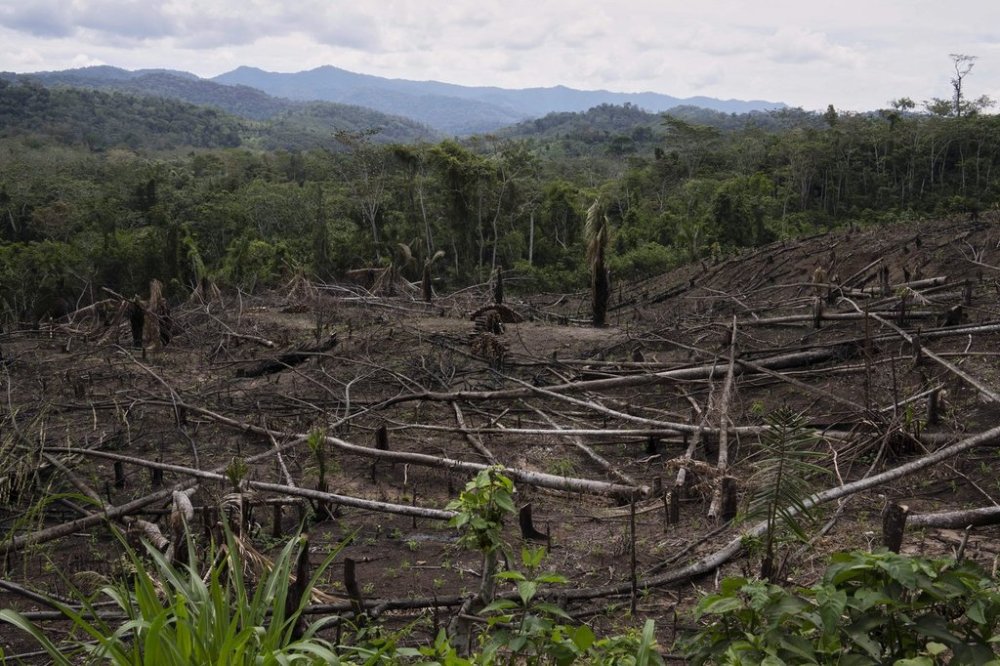
“We don’t have the U.S. government with us anymore. So it can get really dangerous,” said Vásquez, who belongs to the Shipibo-Konibo people and is vice president of the Interethnic Association for the Development of the Peruvian Rainforest. “We think the situation is going to get worse.”
Several Indigenous human rights defenders have been killed trying to protect their land, Vasquez said, and in some of those cases U.S. foreign aid provided money to help prosecute the slayings. “We really needed those resources,” he said.
Sweeping cuts began in January
When Elon Musk’s Department of Government Efficiency, or DOGE, began dismantling USAID shortly after President Donald Trump began his second term, it all but eliminated U.S. foreign aid spending, including decades of support to Indigenous peoples around the world.
USAID’s work with Indigenous peoples sought to address a variety of global issues affecting the U.S., according to former employees. Its economic development efforts created jobs in South America, easing the need for people to work in illicit drug markets and reducing the likelihood they would migrate to America seeking jobs and safety. And its support for the rights of Indigenous peoples to steward their own land offered opportunities to mitigate climate change.
That included Vásquez’s organization, which was about to receive a four-year, $2.5 million grant to continue fighting illicit activity that affects Indigenous people in the region. Vásquez said that grant was rescinded by the new administration.
In January, DOGE launched a sweeping effort empowered by Trump to fire government workers and cut trillions in government spending. USAID, which managed about $35 billion in appropriations in fiscal year 2024, was one of his prime targets. Critics say the aid programs are wasteful and promote a liberal agenda. Trump, Musk and Republicans in Congress have accused the agency of advancing liberal social programs.
“Foreign assistance done right can advance our national interests, protect our borders, and strengthen our partnerships with key allies,” Secretary of State Marco Rubio said in a statement in March. “Unfortunately, USAID strayed from its original mission long ago. As a result, the gains were too few and the costs were too high.”
Musk last week announced his departure from the Trump administration, marking the end of a turbulent chapter that included thousands of layoffs and reams of litigation.
Former USAID employees said political pressure from the U.S. often kept foreign governments from violating some Indigenous rights.
In the three months since thousands of foreign aid workers were fired and aid contracts canceled, the Peruvian government has moved quickly to strip Indigenous people of their land rights and to tighten controls on international organizations that document human rights abuses. It’s now a serious offense for a nonprofit to provide assistance to anyone working to bring lawsuits against the government.
The National Commission for Development and a Drug-Free Lifestyle, the country’s agency that fights drug trafficking, did not respond to a request for comment from The Associated Press.
“The impact was really, really strong, and we felt it really quickly when the Trump administration changed its stance about USAID,” Vásquez said.
The U.S. spends less than 1% of its budget on foreign assistance. Tim Rieser, a senior foreign policy aide in the Senate who works for Democratic Vermont Sen. Peter Welch, called DOGE’s cuts to USAID a “mindless” setback to years of work.
The White House did not respond to a request for comment.
Agency reached Indigenous communities worldwide
USAID’s work reached Indigenous communities around the world. It sought to mitigate the effects of human rights abuses in South America, created programs in Africa to enable Indigenous people to manage their own communities and led the global U.S. effort to fight hunger.
One of the most recent additions to USAID’s work was incorporating international concepts of Indigenous rights into policy.
Rieser, for instance, was responsible for crafting legislation that created an adviser within USAID to protect the rights and address the needs of Indigenous peoples. The adviser advocated for Indigenous rights in foreign assistance programs, including actions by the World Bank.
“That provided Indigenous people everywhere with a way to be heard here in Washington,” Rieser said. “That has now been silenced.”
That adviser position remains unfilled.
Vy Lam, USAID’s adviser on Indigenous peoples, who said he was fired in March as part of the DOGE downsizing, said the idea of Indigenous rights, and the mandate to recognize them in foreign operations, was new to USAID. But it gained momentum under President Joe Biden’s administration.
He said concepts such as “free, prior and informed consent” — the right of Indigenous people to give or withhold approval for any action that would affect their lands or rights — were slowly being implemented in American foreign policy.
One of the ways that happened, Lam said, came in the form of U.S. political pressure on foreign governments or private industry to negotiate mutually beneficial agreements between Indigenous peoples and their governments.
For instance, if an American company wanted to build a hotel in an area that could affect an Indigenous community, the U.S. could push for the deal to require Indigenous approval, or at least consultation.
“We had that convening power, and that is the thing that I grieve the most,” Lam said.
U.S. foreign aid workers were also able to facilitate the reporting of some human rights violations, such as when a human rights or environmental defender is jailed without charges, or Indigenous peoples are forced off their land for the establishment of a protected area.
Money supported attendance at international meetings
In some cases, USAID supported travel to the United Nations, where Indigenous leaders and advocates could receive training to navigate international bodies and document abuses.
Last year, under the Biden administration, USAID awarded a five-year grant to support Indigenous LGBTQIA people through the United Nations Voluntary Fund for Indigenous People, an agency that offers financial support to Indigenous peoples to participate in the U.N.
At $350,000 per year, it was the largest grant from any member state in the U.N., fund Secretary Morse Flores said. The money would have paid for attendance at the U.N. and other international bodies to report human rights abuses and to testify on foreign policy.
In February, the fund received notice that the grant would be terminated. The State Department does not plan to fulfill its pledge to fund the remaining four years of the grant.
In most cases, people receiving assistance to attend major meetings “are actual victims of human rights violations,” Flores said. “For someone who’s unable to come and speak up, I mean, it’s really just an injustice.”
___
This story was published in partnership with Grist, a nonprofit, independent media organization dedicated to reporting on climate change.