Cutting off rhinos’ horns is a contentious last resort to stop poaching. A new study found it works
Advertisement
Read this article for free:
or
Already have an account? Log in here »
To continue reading, please subscribe:

Digital Subscription
One year of digital access for only $205*
- Enjoy unlimited reading on winnipegfreepress.com
- Read the E-Edition, our digital replica newspaper
- Access News Break, our award-winning app
- Play interactive puzzles
*First annual payment billed as $205.00 + GST for one year. This annual subscription will automatically renew at $233.00 + GST every 52 weeks (10% off the regular annual price of $259.35). Offer available to new and qualified returning subscribers only. Cancel any time.
To continue reading, please subscribe:
Add Free Press access to your Brandon Sun subscription for only an additional
$1 for the first 4 weeks*
- Enjoy unlimited reading on winnipegfreepress.com
- Read the E-Edition, our digital replica newspaper
- Access News Break, our award-winning app
- Play interactive puzzles
*Your next Brandon Sun subscription payment will increase by $1.00 and you will be charged $17.95 plus GST for four weeks. After four weeks, your payment will increase to $24.95 plus GST every four weeks.
Read unlimited articles for free today:
or
Already have an account? Log in here »
Hey there, time traveller!
This article was published 05/06/2025 (456 days ago), so information in it may no longer be current.
CAPE TOWN, South Africa (AP) — Cutting off the horns of sedated rhinos with a chainsaw has been viewed by wildlife conservationists in Africa for more than 30 years as a necessary evil to save the iconic endangered species from poaching.
They hoped the drastic action was working, but evidence was scarce.
Now, a study published Thursday in the academic journal Science has found that dehorning rhinos has led to a large reduction in poaching in game reserves in and around the Kruger National Park in northern South Africa — an area that’s home to 25% of the world’s rhinos and is especially vulnerable to poaching.
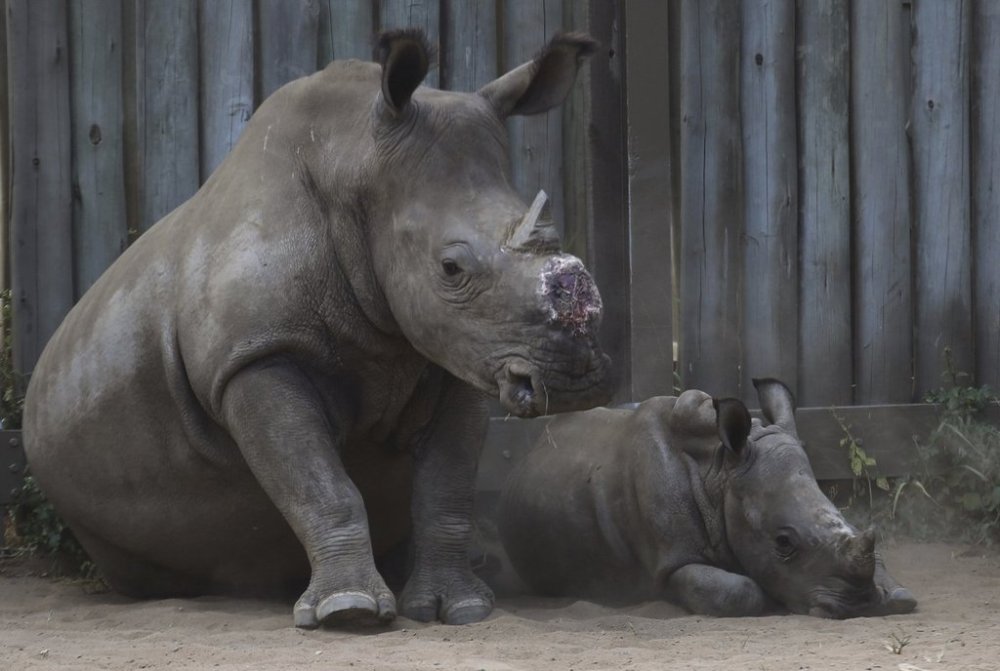
The results of the seven-year study that ended in 2023 are seen as long-awaited evidence that removing rhinos’ horns — which needs to be done every one to two years because they grow back — helps them survive, even if the animals lose part of their makeup.
Consistently reduced poaching
The conclusions seem obvious. Lucrative illegal markets in parts of southeast Asia and China crave rhino horns for use in traditional medicines, and removing the rhinos’ horns take away what poachers are after.
But Tim Kuiper, a biodiversity scientist at South Africa’s Nelson Mandela University and the lead author of the study, said it was new to have long-term data from multiple sites on dehorning rhinos. He said the study, conducted between January 2017 and December 2023, focused on 11 reserves in the Kruger area and compared data from eight that dehorned their rhinos against the three that didn’t.
It also analyzed data from the reserves before and after they dehorned their rhinos.
The study showed that dehorning consistently reduced poaching, Kuiper said. It found that the dehorning of more than 2,000 rhinos resulted in a 78% reduction in poaching in those eight reserves, providing some confirmation that such an invasive intervention was worth it.
“It is a big part of what a rhino is, having a horn,” Kuiper said. “So having to remove it is kind of a necessary evil, if I can put it that way. But it’s very effective. There’s no doubt it saved hundreds of rhinos’ lives.”
South Africa has the largest numbers of black and white rhinos. Namibia, Zimbabwe and Kenya also have significant populations. There are around 17,500 white rhinos and 6,500 black rhinos left in the world, with black rhino numbers reduced from 70,000 in 1970 to less than 2,500 by the time poaching reached a crisis point in the mid-1990s, according to the Save the Rhino organization.
Dehorning was not always accepted
Dehorning rhinos started in southern Africa as early as 1989. It has not been accepted without question.
There has been opposition from animal rights activists but also questions from conservationists over what impact it has on a rhino’s wellbeing, and what a future might look like with more hornless rhinos.
Vanessa Duthe, a rhino researcher in South Africa not involved in the study, said rhinos use their horns to defend themselves against predators, to compete for territory and, in the case of black rhinos, to look for food. There is also evidence that dehorned rhinos adjust their movements to live in smaller ranges, she said.
She said conservationists don’t know the full impacts of dehorning, but research had found it had no adverse effect on rhinos’ breeding rates or mortality rates.
“What we do know is that the benefits of dehorning by far outweigh any ecological cost that we’re aware of today,” Duthe said. She said dehorning a rhino now takes around 10 minutes and the process causes minimum distress. Blindfolds and earmuffs are put on sedated rhinos during dehorning, which also provides an opportunity to microchip rhinos and collect samples that aid research.
Only one part of the battle

Conservationists agree that dehorning alone will not end rhino poaching and Kuiper said he saw it as a short-to-mid-term solution. Other efforts like more effective law enforcement and better support for game rangers on the frontline are key.
While South Africa has helped pull rhinos back from the threat of extinction, more than 400 rhinos a year are still killed by poachers in the country.
The dehorning study was a collaboration between scientists from three South African universities, Oxford University in England and game reserve managers and rangers. It also involved the South African National Parks department, the World Wildlife Fund and the Rhino Recovery Fund.
___
AP Africa news: https://apnews.com/hub/africa