How scammers are using AI to steal college financial aid
Advertisement
Read this article for free:
or
Already have an account? Log in here »
To continue reading, please subscribe:

Digital Subscription
One year of digital access for only $205*
- Enjoy unlimited reading on winnipegfreepress.com
- Read the E-Edition, our digital replica newspaper
- Access News Break, our award-winning app
- Play interactive puzzles
*First annual payment billed as $205.00 + GST for one year. This annual subscription will automatically renew at $233.00 + GST every 52 weeks (10% off the regular annual price of $259.35). Offer available to new and qualified returning subscribers only. Cancel any time.
To continue reading, please subscribe:
Add Free Press access to your Brandon Sun subscription for only an additional
$1 for the first 4 weeks*
- Enjoy unlimited reading on winnipegfreepress.com
- Read the E-Edition, our digital replica newspaper
- Access News Break, our award-winning app
- Play interactive puzzles
*Your next Brandon Sun subscription payment will increase by $1.00 and you will be charged $17.95 plus GST for four weeks. After four weeks, your payment will increase to $24.95 plus GST every four weeks.
Read unlimited articles for free today:
or
Already have an account? Log in here »
Hey there, time traveller!
This article was published 09/06/2025 (488 days ago), so information in it may no longer be current.
It was an unusual question coming from a police officer. Heather Brady was napping at home in San Francisco on a Sunday afternoon when the officer knocked on her door to ask: Had she applied to Arizona Western College?
She had not, and as the officer suspected, somebody else had applied to Arizona community colleges in her name to scam the government into paying out financial aid money.
When she checked her student loan servicer account, Brady saw the scammers hadn’t stopped there. A loan for over $9,000 had been paid out in her name — but to another person — for coursework at a California college.
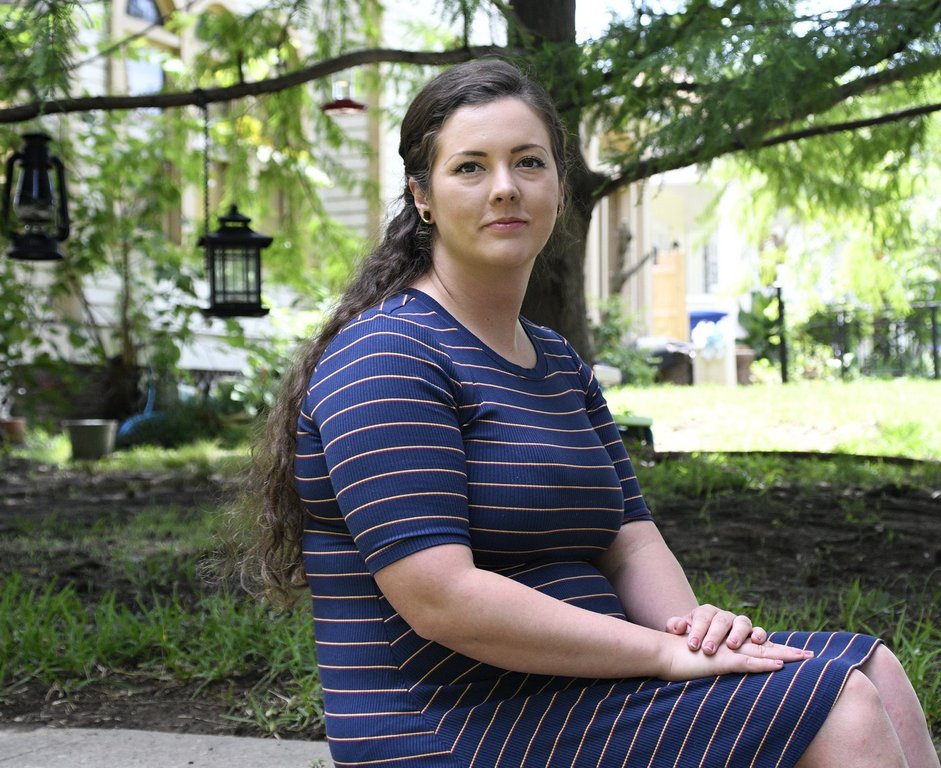
“I just can’t imagine how many people this is happening to that have no idea,” Brady said.
The rise of artificial intelligence and the popularity of online classes have led to an explosion of financial aid fraud. Fake college enrollments have been surging as crime rings deploy “ghost students” — chatbots that join online classrooms and stay just long enough to collect a financial aid check.
In some cases, professors discover almost no one in their class is real. Students get locked out of the classes they need to graduate as bots push courses over their enrollment limits. And victims of identity theft who discover loans fraudulently taken out in their names must go through months of calling colleges, the Federal Student Aid office and loan servicers to try to get the debt erased.
On Friday, the U.S. Education Department introduced a temporary rule requiring students to show colleges a government-issued ID to prove their identity. It will apply only to first-time applicants for federal student aid for the summer term, affecting some 125,000 borrowers. The agency said it is developing more advanced screening for the fall.
“The rate of fraud through stolen identities has reached a level that imperils the federal student aid program,” the department said in its guidance to colleges.
Public colleges have lost millions of dollars to fraud
An Associated Press analysis of fraud reports obtained through a public records request shows California colleges in 2024 reported 1.2 million fraudulent applications, which resulted in 223,000 suspected fake enrollments. Other states are affected by the same problem, but with 116 community colleges, California is a particularly large target.
Criminals stole at least $11.1 million in federal, state and local financial aid from California community colleges last year that could not be recovered, according to the reports.
Colleges typically receive a portion of the loans intended for tuition, with the balance going directly to students for other expenses. Community colleges are targeted in part because their lower tuition means larger percentages of grants and loans go to borrowers.
Scammers frequently use AI chatbots to carry out the fraud, targeting courses that are online and allow students to watch lectures and complete coursework on their own time.
In January, Wayne Chaw started getting emails about a class he never signed up for at De Anza Community College, where he had taken coding classes a decade earlier. Identity thieves had obtained his Social Security number and collected $1,395 in financial aid in his name.
The energy management class required students to submit a homework assignment to prove they were real. But someone wrote submissions impersonating Chaw, likely using a chatbot.
“This person is typing as me, saying my first and last name. … It’s very freaky when I saw that,” said Chaw.
The fraud involved a grant, not loans, so Chaw himself did not lose money. He called the Social Security Administration to report the identity theft, but after five hours on hold, he never got through to a person.
As the Trump administration moves to dismantle the Education Department, federal cuts may make it harder to catch criminals and help victims of identity theft. In March, the Trump administration fired more than 300 people from the Federal Student Aid office, and the department’s Office of Inspector General, which investigates fraud, has lost more than 20% of its staff through attrition and retirements since October.
“I’m just nervous that I’m going to be stuck with this,” Brady said. “The agency is going to be so broken down and disintegrated that I won’t be able to do anything, and I’m just going to be stuck with those $9,000” in loans.
Criminal cases around the country offer a glimpse of the schemes’ pervasiveness.
In the past year, investigators indicted a man accused of leading a Texas fraud ring that used stolen identities to pursue $1.5 million in student aid. Another person in Texas pleaded guilty to using the names of prison inmates to apply for over $650,000 in student aid at colleges across the South and Southwest. And a person in New York recently pleaded guilty to a $450,000 student aid scam that lasted a decade.
Identify fraud victims who never attended college are hit with student debt
Brittnee Nelson of Shreveport, Louisiana, was bringing her daughter to day care two years ago when she received a notification that her credit score had dropped 27 points.
Loans had been taken out in her name for colleges in California and Louisiana, she discovered. She canceled one before it was paid out, but it was too late to stop a loan of over $5,000 for Delgado Community College in New Orleans.
Nelson runs her own housecleaning business and didn’t go to college. She already was signed up for identity theft protection and carefully monitored her credit. Still, her debt almost went into collections before the loan was put in forbearance. She recently got the loans taken off her record after two years of effort.
“It’s like if someone came into your house and robbed you,” she said.
The federal government’s efforts to verify borrowers’ identity could help, she said.
“If they can make these hurdles a little bit harder and have these verifications more provable, I think that’s really, really, really going to protect people in the long run,” she said.
Delgado spokesperson Barbara Waiters said responsibility for approving loans ultimately lies with federal agencies.

“This is an unfortunate and serious matter, but it is not the direct or indirect result of Delgado’s internal processes,” Waiters said.
In San Francisco, the loans taken out in Brady’s name are in a grace period, but still on the books. That has not been her only challenge. A few months ago, she was laid off from her job and decided to sign up for a class at City College San Francisco to help her career. But all the classes were full.
After a few weeks, Brady finally was able to sign up for a class. The professor apologized for the delay in spots opening up: The college has been struggling with fraudulent applications.
___
The Associated Press’ education coverage receives financial support from multiple private foundations. AP is solely responsible for all content. Find AP’s standards for working with philanthropies, a list of supporters and funded coverage areas at AP.org.
Related Articles
AI keeps pushing the boundaries
Advertisement Advertise With Us
Advertisement Advertise With Us