No way to win, not willing to lose Extinguishing massive out-of-control wildfires in Manitoba is unrealistic, say experts; the priority is to slow the destruction, wait for rain
Read this article for free:
or
Already have an account? Log in here »
To continue reading, please subscribe:

Digital Subscription
One year of digital access for only $205*
- Enjoy unlimited reading on winnipegfreepress.com
- Read the E-Edition, our digital replica newspaper
- Access News Break, our award-winning app
- Play interactive puzzles
*First annual payment billed as $205.00 + GST for one year. This annual subscription will automatically renew at $233.00 + GST every 52 weeks (10% off the regular annual price of $259.35). Offer available to new and qualified returning subscribers only. Cancel any time.
To continue reading, please subscribe:
Add Free Press access to your Brandon Sun subscription for only an additional
$1 for the first 4 weeks*
- Enjoy unlimited reading on winnipegfreepress.com
- Read the E-Edition, our digital replica newspaper
- Access News Break, our award-winning app
- Play interactive puzzles
*Your next Brandon Sun subscription payment will increase by $1.00 and you will be charged $17.95 plus GST for four weeks. After four weeks, your payment will increase to $24.95 plus GST every four weeks.
Read unlimited articles for free today:
or
Already have an account? Log in here »
Hey there, time traveller!
This article was published 13/06/2025 (468 days ago), so information in it may no longer be current.
There are moments — as tendrils of flames creep over treetops, spew acrid smoke and envelop the horizon in a crimson glow — that an out-of-control wildfire can seemingly transform from a natural phenomenon to something hellish and alive.
Jody Butz has seen it happen.
He was the operations section chief of the Fort McMurray Fire Department in 2016 when a massive inferno, nicknamed “The Beast,” incinerated the city in northeastern Alberta.
“What you will see first is the sun will go away… there’s this black smoke column that just encapsulates the horizon,” Butz says.
“Way before you see flames, you will see the embers coming in. It’s ashes falling on the hood of your vehicle, falling into these neighbourhoods … Then, you start to hear the roar of the fire itself, and it gets louder and louder until it’s deafening.”
JEFF MCINTOSH / THE CANADIAN PRESS FILES Jody Butz was the operations section chief of the Fort McMurray Fire Department in 2016.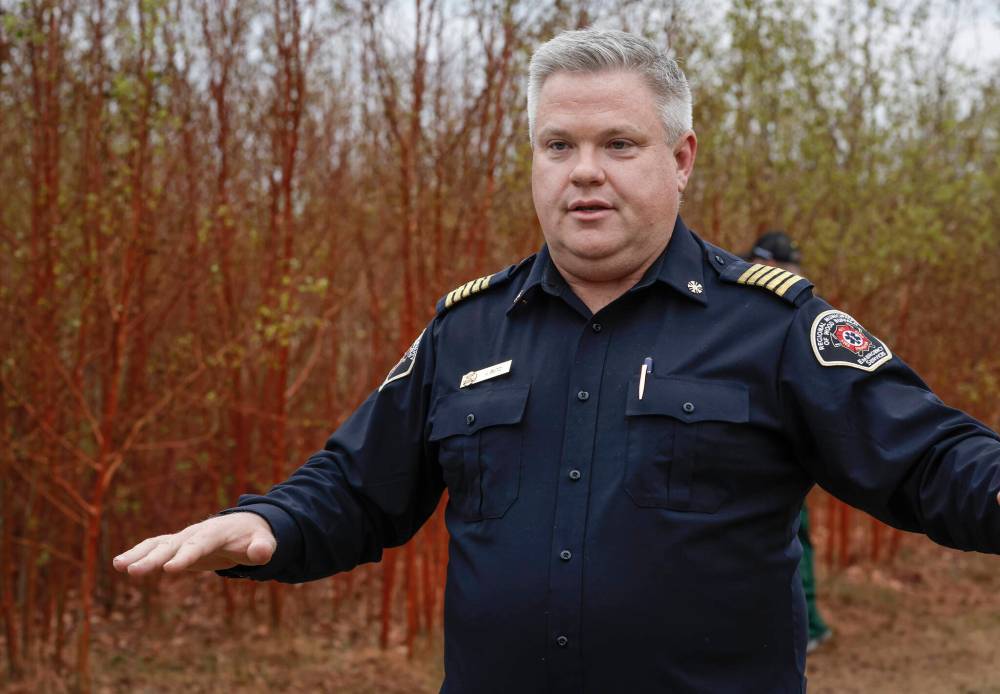
Butz says the name given to the fire that ravaged his city was a bit “theatrical” but it captured the sinister and volatile nature of wildland fires.
He’s watched with concern as high winds and tinder-dry conditions have fuelled wildfires across the Prairies, causing mass evacuations in three provinces, signalling an explosive start to Canada’s wildfire season.
In Manitoba, two people have died, at least one firefighter was seriously injured, dozens of homes have been destroyed and more than 21,000 people have fled from 27 communities.
As of Wednesday, flames had ignited about 830,000 hectares, equivalent to nearly four per cent of the province’s 23.6 million hectares of forest.
Provincial data shows the total area burned annually from 1914 to 2020 has exceeded 800,000 hectares only seven times. With months of summer left to go, the 2025 wildfire season has already earned the grim distinction of being among the worst in Manitoba.
The Free Press spoke with wildfire experts and firefighters who said there might be little crews can do but slow down the spread of large-scale fires and pray for rain.
Flin Flon, a city emptied of its 5,000 inhabitants, is a key battleground.
Bumping up against the Saskatchewan border to the west and south, the city is surrounded by the largest wildfire that’s burning in Manitoba, measuring about 307,000 hectares — more than seven times the size of Winnipeg.
Hundreds of firefighters on the ground, piloting dozens of aircraft and operating tonnes of equipment have been operating near the city for more than two weeks. So far, they have managed to keep the inferno at bay.
Mike Flannigan, a wildfire expert and researcher from Thompson Rivers University in Kamloops, B.C., says the idea of extinguishing a fire of that size is mostly a myth. The priority for crews is controlling its spread.
“You see pictures of planes dropping water or retardant on a fire and people might think we can put out all the fires all the time, but we can’t. If the fire is large and intense… it’s like spitting on a campfire; there’s nothing you can do to stop it,” Flannigan says.
MIKE DEAL / FREE PRESS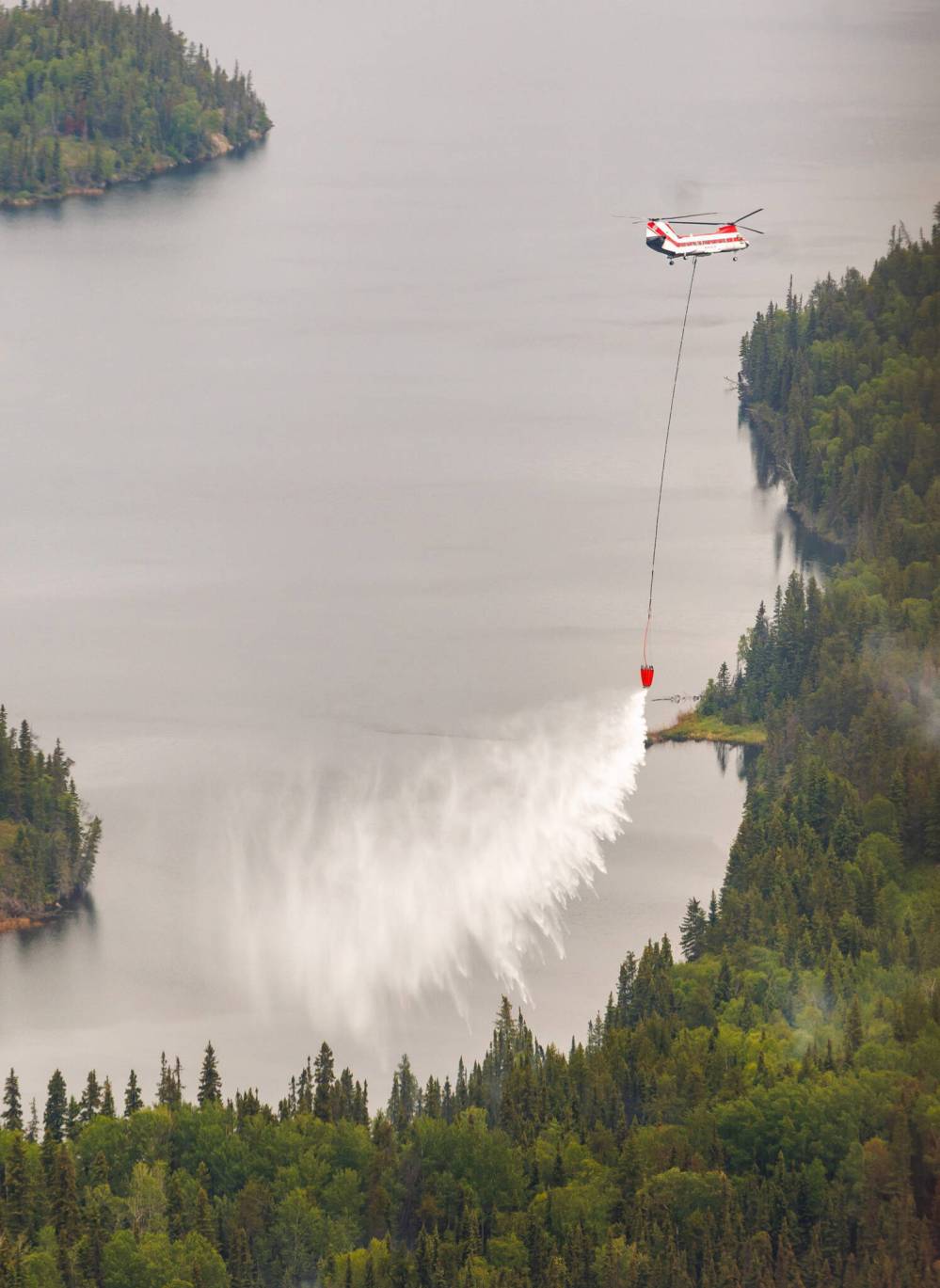
A typical strategy for large-scale fires involves focusing efforts on the perimeter of the blaze. Crews target hot spots with pumps, hoses and water bombers, while heavy equipment and hand tools are used to dig trenches and separate the flames from natural fuels or infrastructure, he says.
Firefighters will be on alert for spot fires, sparked by embers that can be carried vast distances by the wind. Hot spots located closer to the centre of the blaze are largely ignored, allowing them to consume existing fuels and burn themselves out.
While the Manitoba government could not provide specifics about how the Flin Flon fire is being managed (noting the strategy is fluid and subject to change), a spokesperson says Flannigan’s assessment is largely accurate.
Flin Flon Mayor George Fontaine says local crews are handling the fire response in the city, while senior levels of government are in charge of everything beyond.
Mathew Conte, fire chief and director of emergency management for the Municipality of Jasper, in Alberta, knows what it’s like to be inside a community under threat of fire.
He was among the firefighters who fought the blaze that destroyed about one-third of the resort town last July. He, like Butz, says the fire took on a life of its own.
“Absolutely, what we found was the fire intensity and the rate of travel and spread was very extreme,” Conte says.
“It was the highest fire intensity a lot of our wildfires crews have ever seen or had to work with…. It was just kind of mind-blowing.”
A key component of the Jasper fire response included setting up sprinklers and counter-fire measures around critical infrastructure, including the water treatment plant, hospital, schools, power stations and communications towers, he says.
Jasper remained under an evacuation order for nearly a month before the wind calmed and rain fell, giving crews an opportunity to extinguish the remaining flames and hot spots.
Outside town, the wildfire grew larger than 32,000 hectares before the federal government declared it under control on Sept. 7. Parks Canada didn’t classify it as being extinguished until April of this year.
Weather conditions — particularly wind, rain and temperatures — are factors that largely determine the lifespan of a fire, Flannigan says.
A downpour of 100 to 150 millimetres (four to six inches) of rain in a short period, coupled with cool temperatures, might be enough to quell the flames near Flin Flon, he says.
The latest forecast from Environment and Climate Change Canada suggests some favourable weather may be on the way in the northern part of the province, although there’s no sign of that kind of precipitation in the near future.
Temperatures in the teens and low-20s are currently projected next week, and 10-30 millimetres of rain is expected to fall on Flin Flon over the weekend, scientist Christy Climenhaga says.
SUPPLIED John Davies a senior wildland fire specialist for B.C.-based consultancy firm Forsite.
John Davies, a senior wildland fire specialist for B.C.-based consultancy firm Forsite, said officials in charge of the Manitoba response will be watching the weather closely.
If conditions are favourable, crews may be able to conduct targeted burn operations to eliminate fuels in the fire path, but the battle could continue for weeks or even months, Davies says.
“It’s going to come down to Mother Nature to cool these fires down and eventually put them out,” he says.
Flannigan offers a similar prediction, warning some of Manitoba’s fires may be “burning deep” — a term used to describe when intense flames and heat reach deep into the earth, where they can feast on soil contents and smoulder undetected for weeks or months.
When hot, dry and windy conditions return, these fires can re-emerge from the depths in a phenomenon known as “zombie fires.”
Infrared technology can be used to identify the otherwise unseen fires and stop them before they rise again. In other instances, fire crews can flag hidden hot spots simply by feeling the heat rising through the soil, Flannigan says.
“As as soon as you hear ‘burning deep,’ this is bad news, OK, because it means it is so much harder to extinguish it. You have to dig down deep, or you have to use a lot of water…. It’s laborious and time-consuming,” he says.
“If the dryness continues, it could burn through the winter. We have fires in B.C. that started in 2023 that are still burning today…. There’s a chance, if it stays dry, this fire will survive winter and you folks will be dealing with it next spring again.”
“It’s going to come down to Mother Nature to cool these fires down and eventually put them out.”–John Davies
Asked about the potential for flare-ups to occur in Manitoba, a provincial spokesperson said it’s too early to comment.
All of the fires will remain under investigation, with plans to conduct thermal-imaging flights over the affected areas when it is safe to do so, the spokesperson said.
Davies said the longer the fires burn, the more challenging conditions could become. Crews who’ve been called in for support from other provinces or countries may have to return to fight blazes on their home fronts, he says.
“You never have enough resources, there’s just always a demand,” Davies says. “It’s pretty early in the season to be bringing people in from other jurisdictions. Typically, we get much deeper into our fire season before we see that request.”
As of Thursday, 229 firefighters from other provinces and the U.S. were helping to battle the flames.
Nobody can say how long Manitoba’s wildfires will rage, but one thing is certain: there will be more, says Norman Brandson, former deputy minister of the Manitoba Departments of Environment, Conservation and Water Stewardship.
“It’s a fool’s errand to think we are going to somehow prevent these fires from occurring. In fact, they are essential to the health of the forest,” Brandson says.
“Part of prevention is identifying some of these potential large-scale areas that might be at risk, and I don’t think we’ve done much of that.”
“It’s a fool’s errand to think we are going to somehow prevent these fires from occurring. In fact, they are essential to the health of the forest.”–Norman Brandson
Brandson, who was a deputy minister for about 17 years before retiring in 2006, has continued to take an interest in environmental management.
He says it’s time for the province to rethink how it manages its forests and responds to wildfires.
Brandson wants to see new regulations to govern companies that cut timber in northern Manitoba’s boreal forest, such as compelling them to cut in a “checkerboard” style to create many smaller fire breaks, instead of clear-cutting.
MIKE DEAL / FREE PRESS Flin Flon is surrounded by the largest wildfire that’s burning in Manitoba, measuring about 307,000 hectares.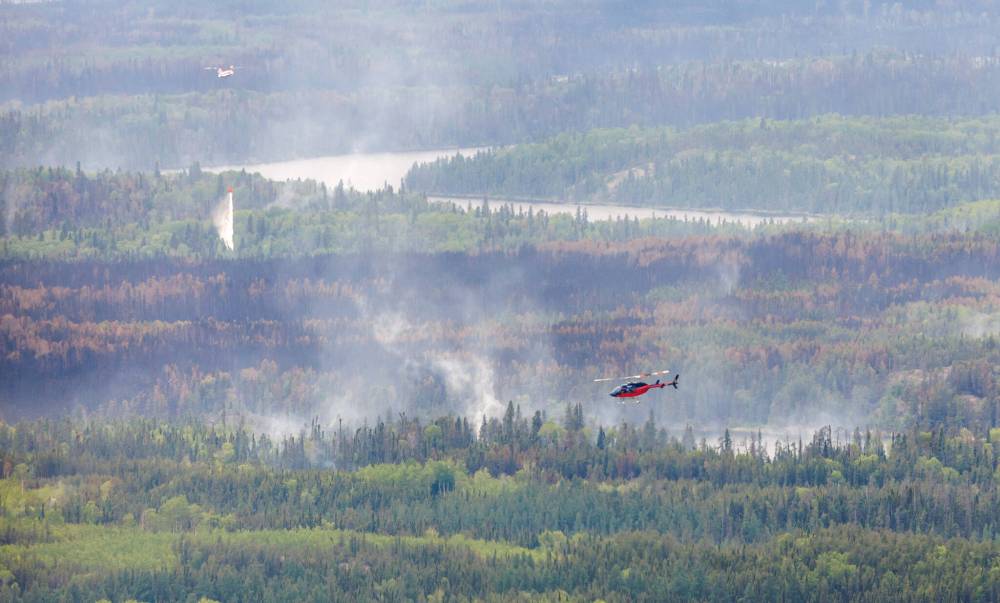
He suggests additional training and resources should be available to Indigenous communities to help them mitigate and respond to fire emergencies.
Addressing climate change is another critical component, and one that should be prioritized by the federal government, he says.
Finally, lessons must be learned from this year’s wildfire season and applied to policies and legislation. Jurisdictional barriers among all levels of government must be reviewed to ensure a thorough, strategic and year-round approach to environmental management and emergency response, he says.
“My sense is that this new approach has to be scaled up significantly in terms of resources, in terms of jurisdictional issues. The federal government has to be involved much more than it has been in the past,” Brandson says.
“The years we don’t have forest fires are just as important as the years we do.”
tyler.searle@freepress.mb.ca

Tyler Searle is a multimedia producer who writes for the Free Press’s city desk. A graduate of Red River College Polytechnic’s creative communications program, he wrote for the Stonewall Teulon Tribune, Selkirk Record and Express Weekly News before joining the paper in 2022. Read more about Tyler.
Every piece of reporting Tyler produces is reviewed by an editing team before it is posted online or published in print — part of the Free Press‘s tradition, since 1872, of producing reliable independent journalism. Read more about Free Press’s history and mandate, and learn how our newsroom operates.
Our newsroom depends on a growing audience of readers to power our journalism. If you are not a paid reader, please consider becoming a subscriber.
Our newsroom depends on its audience of readers to power our journalism. Thank you for your support.
Related Articles
Sherridon and Snow Lake residents can return home Saturday