

G7 leaders agree to ‘charter’ on wildfires, pledging global co-operation
Advertisement
Read this article for free:
or
Already have an account? Log in here »
To continue reading, please subscribe:
Monthly Digital Subscription
$1 per week for 24 weeks*
- Enjoy unlimited reading on winnipegfreepress.com
- Read the E-Edition, our digital replica newspaper
- Access News Break, our award-winning app
- Play interactive puzzles
*Billed as $4.00 plus GST every four weeks. After 24 weeks, price increases to the regular rate of $19.95 plus GST every four weeks. Offer available to new and qualified returning subscribers only. Cancel any time.
Monthly Digital Subscription
$4.99/week*
- Enjoy unlimited reading on winnipegfreepress.com
- Read the E-Edition, our digital replica newspaper
- Access News Break, our award-winning app
- Play interactive puzzles
*Billed as $19.95 plus GST every four weeks. Cancel any time.
To continue reading, please subscribe:
Add Free Press access to your Brandon Sun subscription for only an additional
$1 for the first 4 weeks*
*Your next subscription payment will increase by $1.00 and you will be charged $16.99 plus GST for four weeks. After four weeks, your payment will increase to $23.99 plus GST every four weeks.
Read unlimited articles for free today:
or
Already have an account? Log in here »
Hey there, time traveller!
This article was published 17/06/2025 (304 days ago), so information in it may no longer be current.
BANFF – Leaders of the G7 have agreed to co-operate on efforts to manage the impacts of devastating wildfires, which are surging for another summer across Canada.
The leaders are calling it the Kananaskis Wildfire Charter and it’s believed to be a groundbreaking commitment for G7 leaders.
It’s a timely statement, as Canada continues to face another destructive wildfire season that has forced thousands from their homes. In Manitoba earlier this week, some of the province’s 21,000 evacuees were given the green light to return home.
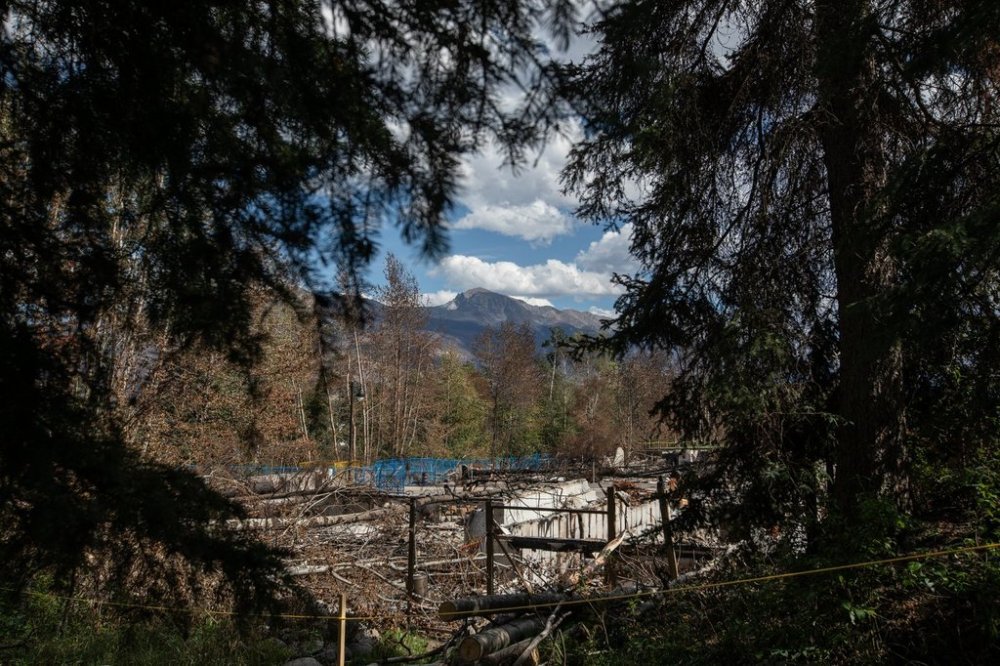
“These increasingly extreme wildfires are endangering lives, affecting human health, destroying homes and ecosystems, and costing governments and taxpayers billions of dollars each year,” the leaders wrote in a joint statement.
Wildfires have been mentioned in past G7 communiqués, but in far less detail.
At last year’s summit, leaders agreed in a one-sentence commitment to prevent and manage the negative impacts of wildfires. In 2023, wildfires were not mentioned, but leaders reaffirmed previous commitments to reversing deforestation by 2030 — a pledge included in the charter.
The charter, published on the final day of the summit Tuesday, lays out steps all G7 countries and five non-member countries will take to prevent fires, collaborate on research and improve community rebuilding efforts.
The countries say they will reduce the risk of extreme fires through sustainable forest management and Indigenous land management techniques, such as controlled burning.
A pledge to mitigate and respond to the impact of fires on human health is included — an apparent reference to volumes of wildfire smoke that have travelled oceans and crossed borders in recent summers.
They also committed to collecting and sharing data and finding better ways to provide timely access to basic firefighting equipment.
“This is a really good step forward in international wildfire co-operation,” said Ilya Goheen with the University of Toronto’s G7 Research Group.
He said it’s likely the first wildfire charter to ever come from G7 leaders. However, the charter doesn’t mention climate change, which scientists say is partly responsible for the more frequent and intense fires seen in recent years.
Goheen said leaders may have avoided the phrase to placate U.S. President Donald Trump, who has taken specific aim at dismantling federal policies aimed at addressing climate change.
One Canadian climate advocacy organization took notice of its absence.
Caroline Brouillette, executive director of Climate Action Network Canada, said the country catered to the “lowest common denominator” to appease the U.S. president and failed the test of its climate leadership.
Canadian Prime Minister Mark Carney, in his closing news conference, mentioned climate change as he listed numerous challenges facing the world. He said recovering from wildfires is something felt “intensely here in the Prairies.”
The charter comes as Canada battles yet another devastating wildfire season and almost one year after flames ripped through Jasper, a town 250 kilometres north of the G7 summit site in Kananaskis.
Carney laid the groundwork for wildfires to feature in G7 discussions, formally highlighting the issue as a priority for the gathering. In separate bilateral meetings in Calgary on Sunday, he thanked the leaders of Australia and South Africa for their firefighting support.
The charter was signed by non-G7 leaders from Australia, India, Mexico, South Korea and South Africa, all invited to the summit by Carney.
This report by The Canadian Press was first published June 17, 2025.