The summer solstice is here. What to know about the longest day of the year

Advertisement

Advertise with us

Peak sunshine has arrived in the Northern Hemisphere — the summer solstice.

Read this article for free:


or

Already have an account? Log in here »

To continue reading, please subscribe:

Subscribe and receive a limited-edition Free Press branded hat or tote.

Digital Subscription

One year of digital access for only $205*

  • Enjoy unlimited reading on winnipegfreepress.com
  • Read the E-Edition, our digital replica newspaper
  • Access News Break, our award-winning app
  • Play interactive puzzles

*First annual payment billed as $205.00 + GST for one year. This annual subscription will automatically renew at $233.00 + GST every 52 weeks (10% off the regular annual price of $259.35). Offer available to new and qualified returning subscribers only. Cancel any time.

To continue reading, please subscribe:

Add Free Press access to your Brandon Sun subscription for only an additional

$1 for the first 4 weeks*

  • Enjoy unlimited reading on winnipegfreepress.com
  • Read the E-Edition, our digital replica newspaper
  • Access News Break, our award-winning app
  • Play interactive puzzles
Start now

*Your next Brandon Sun subscription payment will increase by $1.00 and you will be charged $17.95 plus GST for four weeks. After four weeks, your payment will increase to $24.95 plus GST every four weeks.

Hey there, time traveller!
This article was published 19/06/2025 (432 days ago), so information in it may no longer be current.

Peak sunshine has arrived in the Northern Hemisphere — the summer solstice.

Friday is the longest day of the year north of the equator, where the solstice marks the start of astronomical summer. It’s the opposite in the Southern Hemisphere, where it is the shortest day of the year and winter will start.

The word “solstice” comes from the Latin words “sol” for sun and “stitium” which can mean “pause” or “stop.” The solstice is the end of the sun’s annual march higher in the sky, when it makes its longest, highest arc. The bad news for sun lovers: It then starts retreating and days will get a little shorter every day until late December.
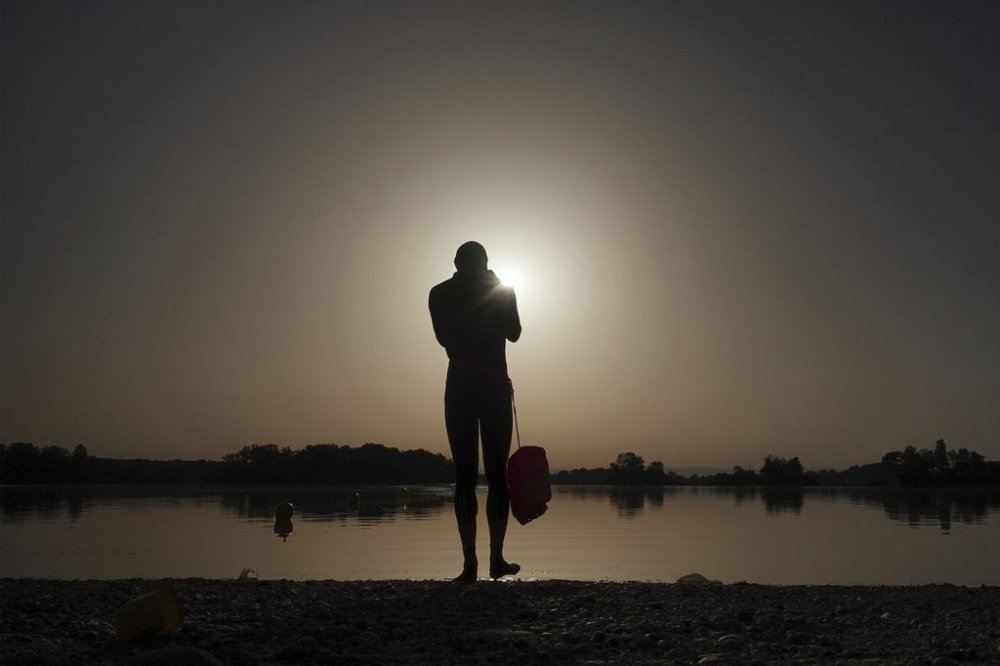
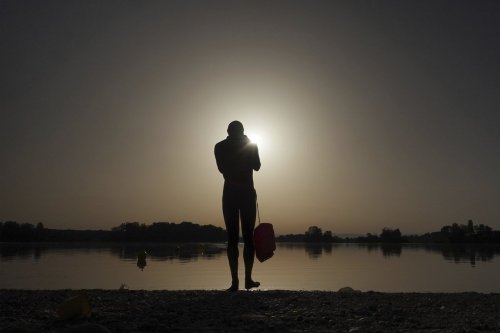
FILE - A man prepares to enter the water as the sun rises above the Miribel lake, outside Lyon, France, June 18, 2022. (AP Photo/Laurent Cipriani, File)

People have marked solstices for eons with celebrations and monuments, including Stonehenge, which was designed to align with the sun’s paths at the solstices. But what is happening in the heavens? Here’s what to know about the Earth’s orbit.

Solstices are when days and nights are at their most extreme

As the Earth travels around the sun, it does so at an angle relative to the sun. For most of the year, the Earth’s axis is tilted either toward or away from the sun. That means the sun’s warmth and light fall unequally on the northern and southern halves of the planet.

The solstices mark the times during the year when this tilt is at its most extreme, and days and nights are at their most unequal.

During the Northern Hemisphere’s summer solstice, the upper half of the earth is tilted toward the sun, creating the longest day and shortest night of the year. This solstice falls between June 20 and 22.

Meanwhile, at the winter solstice, the Northern Hemisphere is leaning away from the sun — leading to the shortest day and longest night of the year. The winter solstice falls between December 20 and 23.

The equinox is when there is an equal amount of day and night

During the equinox, the Earth’s axis and its orbit line up so that both hemispheres get an equal amount of sunlight.

The word equinox comes from two Latin words meaning equal and night. That’s because on the equinox, day and night last almost the same amount of time — though one may get a few extra minutes, depending on where you are on the planet.

The Northern Hemisphere’s spring — or vernal — equinox can land between March 19 and 21, depending on the year. Its fall – or autumnal — equinox can land between Sept. 21 and 24.

On the equator, the sun will be directly overhead at noon. Equinoxes are the only time when both the north and south poles are lit by sunshine at the same time.

What’s the difference between meteorological and astronomical seasons?

These are just two different ways to carve up the year.

While astronomical seasons depend on how the Earth moves around the sun, meteorological seasons are defined by the weather. They break down the year into three-month seasons based on annual temperature cycles. By that calendar, spring starts on March 1, summer on June 1, fall on Sept. 1 and winter on Dec. 1.

___

The Associated Press Health and Science Department receives support from the Howard Hughes Medical Institute’s Department of Science Education and the Robert Wood Johnson Foundation. The AP is solely responsible for all content.

Report Error Submit a Tip

More Stories

Winnipeg team behind national LGBT monument spent six years bringing it to fruition

Nicole Buffie 5 minute read Preview

Winnipeg team behind national LGBT monument spent six years bringing it to fruition

Nicole Buffie 5 minute read Sunday, Aug. 23, 2026

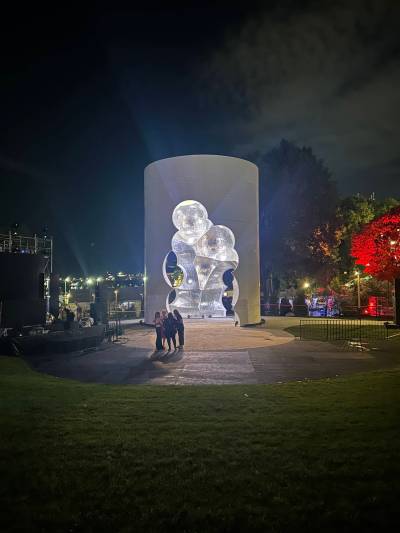
The Winnipeg team behind a national monument recognizing the LGBT Purge were in Ottawa to celebrate its official unveiling Friday.

Thunderhead is the work of local artists Shawna Dempsey and Lorri Millan, Liz Wreford and Peter Sampson of Public City Architecture, and knowledge keeper Albert McLeod, who served as cultural adviser for the project.

The team beat out 31 international submissions for the project, which is permanently located at 201 Wellington St. in Ottawa along the Ottawa River, in view of Parliament.

“We are a beacon internationally around the world of what democracies can do about inclusion, about human rights,” McLeod said.

Read
Sunday, Aug. 23, 2026

Ottawa to announce details of retaliatory tariffs on U.S. Tuesday

Nick Murray and Catherine Morrison, The Canadian Press 6 minute read Preview

Ottawa to announce details of retaliatory tariffs on U.S. Tuesday

Nick Murray and Catherine Morrison, The Canadian Press 6 minute read Updated: Yesterday at 7:08 PM CDT

OTTAWA - The federal government is set to unveil details of Canada's retaliatory tariffs against the United States on Tuesday.

Finance Minister François-Philippe Champagne, Industry Minister Mélanie Joly, Jobs Minister Patty Hajdu and Artificial Intelligence Minister Evan Solomon are also expected to share details of supports for workers affected by tariffs.

Solomon is also the minister responsible for the Federal Economic Development Agency for Southern Ontario.

Communities on both sides of the Canada-U.S. border have been affected by the ongoing trade war. 

Read
Updated: Yesterday at 7:08 PM CDT

H.P. Tergesen & Sons General Market surpasses 127 years as family-run business in Gimli

Aaron Epp 7 minute read Preview

H.P. Tergesen & Sons General Market surpasses 127 years as family-run business in Gimli

Aaron Epp 7 minute read Yesterday at 6:00 AM CDT

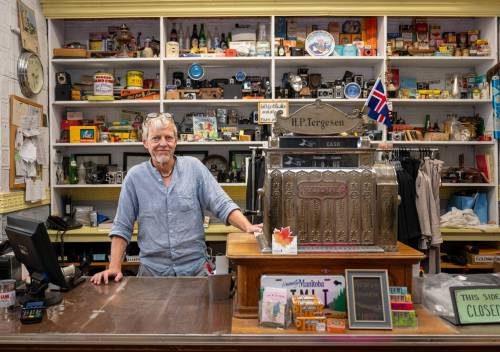
GIMLI — Walk into the store. Meander past the clothing, candy and candles. Find him in the corner, his eyes scanning the bookshelves, a smile on his face as a half-dozen people explore this side of the shop.

Wearing grey shorts and a light blue shirt, Stefan Tergesen, the fourth-generation proprietor of H.P. Tergesen & Sons General Market, is explaining his vision for what’s widely recognized as the oldest general store in Western Canada.

“First and foremost, I want everybody to enjoy being in here,” he says. “I want you at some point to look and go, ‘Oh, cool!’ after seeing something that gets your blood flowing.”

If you ever find yourself on the west side of Lake Winnipeg, some 80 kilometres north of Manitoba’s capital, and you realize you forgot to pack something, there’s a good chance you’ll find it at Tergesen’s.

Read
Yesterday at 6:00 AM CDT

The summer solstice is here. What to know about the longest day of the year

The Associated Press 4 minute read Preview

The summer solstice is here. What to know about the longest day of the year

The Associated Press 4 minute read Friday, Jun. 20, 2025

Peak sunshine has arrived in the Northern Hemisphere — the summer solstice.

Friday is the longest day of the year north of the equator, where the solstice marks the start of astronomical summer. It's the opposite in the Southern Hemisphere, where it is the shortest day of the year and winter will start.

The word “solstice” comes from the Latin words “sol” for sun and “stitium” which can mean “pause” or “stop.” The solstice is the end of the sun's annual march higher in the sky, when it makes its longest, highest arc. The bad news for sun lovers: It then starts retreating and days will get a little shorter every day until late December.

People have marked solstices for eons with celebrations and monuments, including Stonehenge, which was designed to align with the sun's paths at the solstices. But what is happening in the heavens? Here’s what to know about the Earth’s orbit.

Read
Friday, Jun. 20, 2025

Man facing murder charge in Selkirk shooting

1 minute read Yesterday at 12:16 PM CDT

A 30-year-old Selkirk man is charged with second-degree murder after a man was shot at a home in the city just north of Winnipeg.

RCMP said officers found the victim inside the Dufferin Avenue home when they arrived shortly after 12 a.m. Sunday.

A number of people were inside and outside the home when police arrived. The victim was pronounced dead after paramedics arrived.

Police said the suspect, Justin Linklater, was arrested at the scene and charged. He was remanded in custody prior to a court appearance.

Ukraine — does it need an election now?

Gwynne Dyer 5 minute read 2:00 AM CDT

“Democracy cannot be held hostage by Russia,” said Mihaylo Fedorov, who was, until recently, Ukraine’s defence minister. “We must find a legal, safe and realistic mechanism which will allow Ukraine to renew its full democratic process even in the conditions of a long war.”

Seven years after the last election, some Ukrainians are demanding a new one.

The protesters who have been outside President Volodymyr Zelenskyy’s office on Ivan Franko Square since Fedorov was fired last month were still there the day after his nine-minute video went out on Aug. 18. However, they were not more numerous than the day before.

It has been seven years since the election that brought Zelenskyy to power in a landslide powered by widespread revulsion at the rampant corruption in the government. His popularity soared after the Russian invasion (90 per cent) and four-and-a-half years into the war, it’s still at 65 per cent. That’s why Fedorov’s bid to mobilize the people against him has failed.