

Egypt says Ethiopia’s completed power-generating dam lacks a legally binding agreement
Advertisement
Read this article for free:
or
Already have an account? Log in here »
To continue reading, please subscribe:

Digital Subscription
One year of digital access for only $205*
- Enjoy unlimited reading on winnipegfreepress.com
- Read the E-Edition, our digital replica newspaper
- Access News Break, our award-winning app
- Play interactive puzzles
*First annual payment billed as $205.00 + GST for one year. This annual subscription will automatically renew at $233.00 + GST every 52 weeks (10% off the regular annual price of $259.35). Offer available to new and qualified returning subscribers only. Cancel any time.
To continue reading, please subscribe:
Add Free Press access to your Brandon Sun subscription for only an additional
$1 for the first 4 weeks*
- Enjoy unlimited reading on winnipegfreepress.com
- Read the E-Edition, our digital replica newspaper
- Access News Break, our award-winning app
- Play interactive puzzles
*Your next Brandon Sun subscription payment will increase by $1.00 and you will be charged $17.95 plus GST for four weeks. After four weeks, your payment will increase to $24.95 plus GST every four weeks.
Read unlimited articles for free today:
or
Already have an account? Log in here »
Hey there, time traveller!
This article was published 04/07/2025 (410 days ago), so information in it may no longer be current.
CAIRO (AP) — Egypt said Friday that Ethiopia has consistently lacked the political will to reach a binding agreement on its now-complete dam, an issue that involves Nile River water rights and the interests of Egypt and Sudan.
Ethiopia’s prime minister said Thursday that the country’s power-generating dam, known as the Grand Ethiopian Renaissance Dam, on the Nile is now complete and that the government is “preparing for its official inauguration” in September.
Egypt has long opposed the construction of the dam, because it would reduce the country’s share of Nile River waters, which it almost entirely relies on for agriculture and to serve its more than 100 million people.
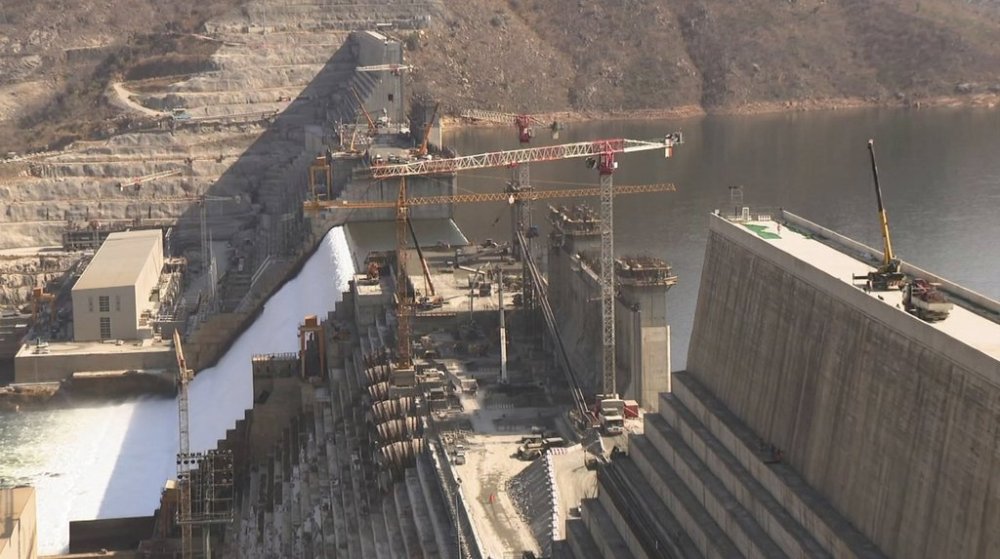
The more than the $4 billion dam on the Blue Nile near the Sudan border began producing power in 2022. It’s expected to eventually produce more than 6,000 megawatts of electricity — double Ethiopia’s current output.
Ethiopia and Egypt have spent years trying to reach an agreement over the dam, which Ethiopia began building in 2011. At one point, tensions ran so high that some feared the dispute would escalate to war.
Both countries reached no deal despite negotiations over 13 years, and it remains unclear how much water Ethiopia will release downstream in case of a drought.
Egyptian officials, in a statement, called the completion of the dam “unlawful” and said that it violates international law, reflecting “an Ethiopian approach driven by an ideology that seeks to impose water hegemony” instead of equal partnership.
“Egypt firmly rejects Ethiopia’s continued policy of imposing a fait accompli through unilateral actions concerning the Nile River, which is an international shared watercourse,” Egypt’s Ministry of Water Resources and Irrigation said in a statement Friday.

Ethiopian Prime Minister Abiy Ahmed, in his address to lawmakers Thursday, said that his country “remains committed to ensuring that our growth does not come at the expense of our Egyptian and Sudanese brothers and sisters.”
“We believe in shared progress, shared energy, and shared water,” he said. “Prosperity for one should mean prosperity for all.”
However, the Egyptian water ministry said Friday that Ethiopian statements calling for continued negotiations “are merely superficial attempts to improve its image on the international stage.”
“Ethiopia’s positions, marked by evasion and retreat while pursuing unilateralism, are in clear contradiction with its declared willingness to negotiate,” the statement read.
However, Egypt is addressing its water needs by expanding agricultural wastewater treatment and improving irrigation systems, according to the ministry, while also bolstering cooperation with Nile Basin countries through backing development and water-related projects.