WEATHER ALERT

Navigating the unknown

From science experiments to ordering dinner, trying new things can pay valuable dividends

Advertisement

Advertise with us

Among the many technical terms from fields such as neuroscience, artificial intelligence, applied mathematics and genetics found in this fascinating new book by bestselling Canadian science writer/distance runner/physicist Alex Hutchinson, the reader discovers “prediction error.”

Read this article for free:

or

Already have an account? Log in here »

To continue reading, please subscribe:

Subscribe and receive a limited-edition Free Press branded hat or tote.

Digital Subscription

One year of digital access for only $205*

  • Enjoy unlimited reading on winnipegfreepress.com
  • Read the E-Edition, our digital replica newspaper
  • Access News Break, our award-winning app
  • Play interactive puzzles

*First annual payment billed as $205.00 + GST for one year. This annual subscription will automatically renew at $233.00 + GST every 52 weeks (10% off the regular annual price of $259.35). Offer available to new and qualified returning subscribers only. Cancel any time.

To continue reading, please subscribe:

Add Free Press access to your Brandon Sun subscription for only an additional

$1 for the first 4 weeks*

  • Enjoy unlimited reading on winnipegfreepress.com
  • Read the E-Edition, our digital replica newspaper
  • Access News Break, our award-winning app
  • Play interactive puzzles
Start now

*Your next Brandon Sun subscription payment will increase by $1.00 and you will be charged $17.95 plus GST for four weeks. After four weeks, your payment will increase to $24.95 plus GST every four weeks.

Hey there, time traveller!
This article was published 05/07/2025 (387 days ago), so information in it may no longer be current.

Among the many technical terms from fields such as neuroscience, artificial intelligence, applied mathematics and genetics found in this fascinating new book by bestselling Canadian science writer/distance runner/physicist Alex Hutchinson, the reader discovers “prediction error.”

It’s a term that comes from studies of how the brain makes sense of the impressions presented to it by the senses. The brain doesn’t simply receive sensory data; rather, it continually makes predictions based on partial sense data and feeds these back to the senses. When we get lost, the predictions we make tend to be errors.

We also carry a variant of the gene DRD4 that gives us a happy endorphin boost when our rate of prediction error declines. That genetic variant, Hutchinson writes, emerged 40-50,000 years ago, “right around the time when our ancestors began their long, multi-pronged march to the farthest corners of the globe. It was a march, the findings hinted, spurred in part by dopamine.”
Associated Press files
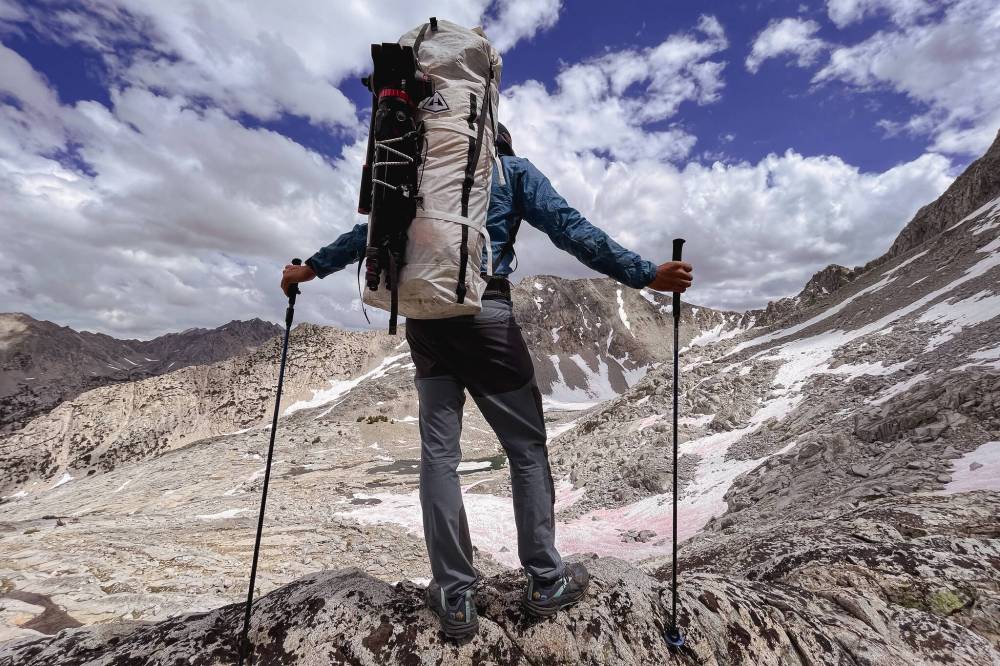
                                Despite the book’s title, Alex Hutchinson’s latest is about much more than investigating far-flung and remote corners of our planet.

Associated Press files

Despite the book’s title, Alex Hutchinson’s latest is about much more than investigating far-flung and remote corners of our planet.

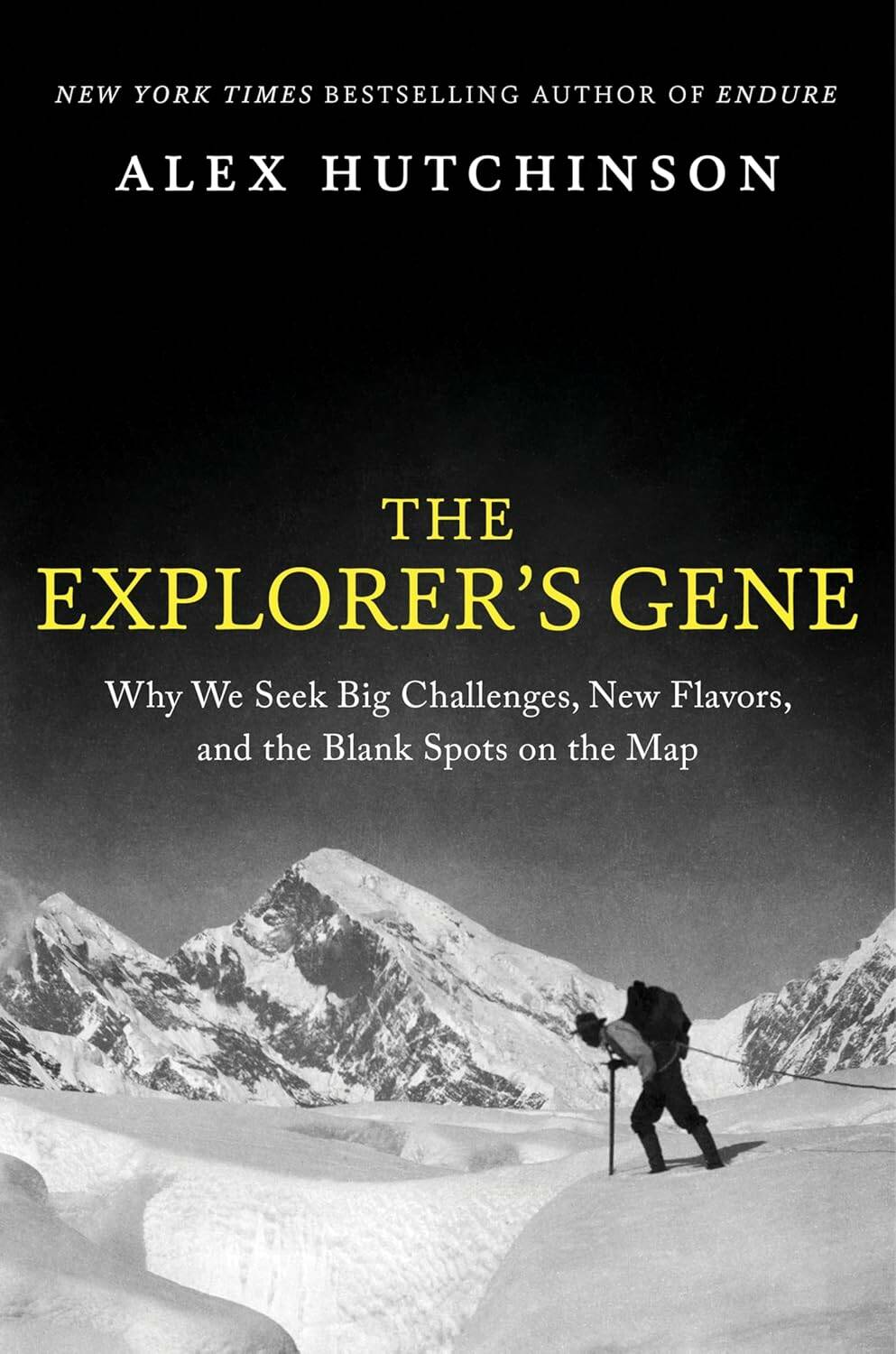
Appropriately enough, The Explorer’s Gene will be picked up by many readers as a result of a prediction error. Judging by the title and the historic mountaineering photo on the cover, readers may assume the book is a story of outdoor adventure.

So it may come as a surprise that it’s packed with discussions of experiments involving social-science questionnaires, rats in cages or brain imaging.

Exploration, in Hutchinson’s context, can mean striding off into the unknown, conducting scientific research or even varying your restaurant selections. Should you always order from the pizza parlour you like, knowing from experience that you’ll enjoy it? Or should you “explore” the restaurant scene in case a new, better place has opened up? According to Hutchinson, the science says “try that new joint now and then.”

Hutchinson, who has a master’s degree in journalism from Cornell University and a PhD in physics from the University of Cambridge, drew on his experience with Canada’s national distance running team to write the bestseller Endure, on the science of endurance.

Hutchinson cites Swedish speedskater Nils van der Poel as an example of the benefits of experimentation. The skater had done reasonably well with the standard approach to training, but after the 2018 Olympics tried an unheard-of training regimen that led to Olympic gold in Beijing in 2022 and world records.
Supplied photo
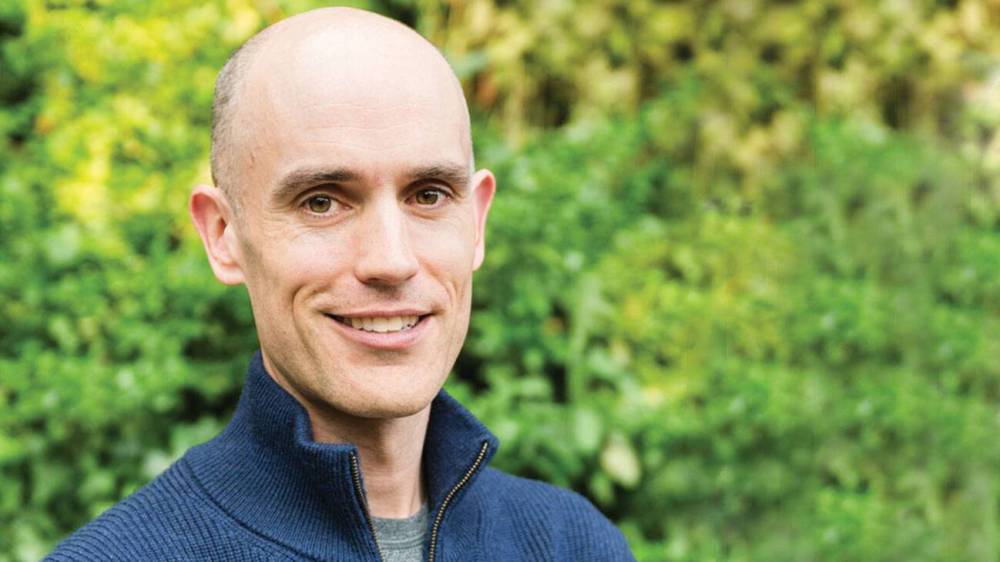
                                Hutchinson is a science writer, long-distance runner and physicist.

Supplied photo

Hutchinson is a science writer, long-distance runner and physicist.

Each chapter begins with a capsule illustration of an aspect of exploration, exemplified in incidents such as Alexander Mackenzie’s journey to the Arctic Ocean in the 18th century or the Polynesian voyages that settled the Pacific Ocean. One story, about a six-year-old boy who got lost in the mountains of Oregon and found his way home on his own, introduces a discussion of free childhood play as a form of exploration and the worrisome consequences of a decline in such exploration in a wired, media-fed culture.

Another topic may be of special interest to readers with a lot of mileage on their traveling shoes. It’s called the “explore-exploit” dilemma. Generally speaking, we explore when we’re young and have time to make mistakes and try again. When we’re older we “exploit” our existing knowledge, living off skills acquired earlier. But that doesn’t mean we should give up exploring altogether.

In fact, Hutchinson argues that continuing to explore helps keep people physically and mentally healthy as they age.

So even if you feel too old to learn about algorithms and game theory, and even if your explorations are mostly carried out through a screen, adding The Explorer’s Gene to your bookcase may help you navigate the seas of advancing age as you sail toward the final discovery.

Bob Armstrong is a Winnipeg novelist who writes about his explorations on Substack @wanderingwriterbobarmstrong.
The Explorer’s Gene

The Explorer’s Gene

Report Error Submit a Tip

More Stories

Sultans one win away from MJBL three-peat

Cassidy Dankochik 3 minute read Preview

Sultans one win away from MJBL three-peat

Cassidy Dankochik 3 minute read 6:31 PM CDT

A small delay due to lightning didn’t slow down the Carillon Sultans as they stormed into Koskie Field and defeated the Elmwood Giants 12-0 Sunday to take a 2-0 series lead in the Manitoba Junior Baseball League final.

Across the first two games of the best-of-five series, Carillon has a 27-5 run advantage after a similar offensive output during Game 1 in Steinbach on Friday. The Giants and Sultans have played in the finals the past three seasons, with Carillon winning both previous years.

The Sultans offence was quick to strike, plating eight runs in the top of the second inning. Anders Meilleur cleared the bases with a three-run double to start the barrage, with Dayton Christensen crushing a three-run home run to left-centre to cap off the inning.

“If we get on a roll in an inning, it’s contagious,” head coach Don Meilleur said. “We don’t hurt teams by getting one or two runs an inning, we hurt teams because we put up a crooked number most of the time and today was the perfect example… Anybody on that bench and anybody in the lineup can hurt another team. We just always find ways to get somebody to be a hero.”

Read
6:31 PM CDT

Winnipeg Fringe Festival: 2026 show reviews

Winnipeg Free Press 1 minute read Preview

Winnipeg Fringe Festival: 2026 show reviews

Winnipeg Free Press 1 minute read Tuesday, Jul. 14, 2026

Not sure what to see at this year's Winnipeg Fringe Theatre Festival? All of the Free Press’s reviews will be published here.  Find a show and click to read its review.

Read
Tuesday, Jul. 14, 2026

A 39-year-old woman has been charged after police say a retail theft attempt led to a knife being used against a security guard at a store on Portage Avenue.

The Winnipeg Police Service said Central District General Patrol officers arrested the woman at about 5:30 p.m. on Thursday in connection with a robbery at a retail store in the 300 block of Portage Avenue.

Police said the woman entered the store shortly before 2 p.m. and attempted to steal merchandise before being confronted by store security. Police said the suspect then brandished a knife and assaulted a security guard.

Security was able to gain control of the suspect, and police were contacted.

Automation reaches new heights on farm

Laura Rance-Unger 4 minute read Preview

Automation reaches new heights on farm

Laura Rance-Unger 4 minute read Yesterday at 2:01 AM CDT

LANGHAM, Sask. — The thousands of farmers from across the Prairies who flock to the annual Ag in Motion show every July seem oblivious to the possibility the technology on display could one day replace many of them.

Families with children in tow, Hutterite colony workers, grandparents and young couples just starting out roamed through the 600 or more exhibitor displays, amazed at how everything about farming just keeps getting bigger, more efficient and increasingly more automated.

It’s now possible to seed using a 100-foot-wide drill — a 12-foot jump over the widest available a few years ago — provided the farmer can afford a tractor with enough horsepower to pull it. Those sell for around $850,000 and up.

Granted, the number of farms with enough acres to justify that kind of width and drawing power is still relatively small, but farms continue to grow. And it’s no secret the number of people who have the interest, skills and financial wherewithal to run them continues to shrink.

Read
Yesterday at 2:01 AM CDT

From science experiments to ordering dinner, trying new things can pay valuable dividends

Reviewed by Bob Armstrong 4 minute read Preview

From science experiments to ordering dinner, trying new things can pay valuable dividends

Reviewed by Bob Armstrong 4 minute read Saturday, Jul. 5, 2025

Among the many technical terms from fields such as neuroscience, artificial intelligence, applied mathematics and genetics found in this fascinating new book by bestselling Canadian science writer/distance runner/physicist Alex Hutchinson, the reader discovers “prediction error.”

It’s a term that comes from studies of how the brain makes sense of the impressions presented to it by the senses. The brain doesn’t simply receive sensory data; rather, it continually makes predictions based on partial sense data and feeds these back to the senses. When we get lost, the predictions we make tend to be errors.

We also carry a variant of the gene DRD4 that gives us a happy endorphin boost when our rate of prediction error declines. That genetic variant, Hutchinson writes, emerged 40-50,000 years ago, “right around the time when our ancestors began their long, multi-pronged march to the farthest corners of the globe. It was a march, the findings hinted, spurred in part by dopamine.”

Appropriately enough, The Explorer’s Gene will be picked up by many readers as a result of a prediction error. Judging by the title and the historic mountaineering photo on the cover, readers may assume the book is a story of outdoor adventure.

Read
Saturday, Jul. 5, 2025

Men cycling across Canada for charity have bikes stolen in Winnipeg

Chris Kitching 5 minute read Preview

Men cycling across Canada for charity have bikes stolen in Winnipeg

Chris Kitching 5 minute read Friday, Jul. 24, 2026

Thomas Clark and Valentin Duquenne were devastated after their bikes went missing outside CBC Manitoba’s headquarters, but uplifted by the outpouring of support from Manitobans afterward.

Read
Friday, Jul. 24, 2026