Fraud experts warn of smishing scams made easier by artificial intelligence, new tech
Advertisement
Read this article for free:
or
Already have an account? Log in here »
To continue reading, please subscribe:

Digital Subscription
One year of digital access for only $205*
- Enjoy unlimited reading on winnipegfreepress.com
- Read the E-Edition, our digital replica newspaper
- Access News Break, our award-winning app
- Play interactive puzzles
*First annual payment billed as $205.00 + GST for one year. This annual subscription will automatically renew at $233.00 + GST every 52 weeks (10% off the regular annual price of $259.35). Offer available to new and qualified returning subscribers only. Cancel any time.
To continue reading, please subscribe:
Add Free Press access to your Brandon Sun subscription for only an additional
$1 for the first 4 weeks*
- Enjoy unlimited reading on winnipegfreepress.com
- Read the E-Edition, our digital replica newspaper
- Access News Break, our award-winning app
- Play interactive puzzles
*Your next Brandon Sun subscription payment will increase by $1.00 and you will be charged $17.95 plus GST for four weeks. After four weeks, your payment will increase to $24.95 plus GST every four weeks.
Read unlimited articles for free today:
or
Already have an account? Log in here »
Hey there, time traveller!
This article was published 11/07/2025 (404 days ago), so information in it may no longer be current.
If it seems like your phone has been blowing up with more spam text messages recently, it probably is.
The Canadian Anti-Fraud Centre says so-called smishing attempts appear to be on the rise, thanks in part to new technologies that allow for co-ordinated bulk attacks.
The centre’s communications outreach officer Jeff Horncastle says the agency has actually received fewer fraud reports in the first six months of 2025, but that can be misleading because so few people actually alert the centre to incidents.
He says smishing is “more than likely increasing” with help from artificial intelligence tools that can craft convincing messages or scour data from security breaches to uncover new targets.
The warning comes as the Competition Bureau sent a recent alert about the tactic because it says many people are seeing more suspicious text messages.
Smishing is a sort of portmanteau of SMS and phishing in which a text message is used to try to get the target to click on a link and provide personal information.
The ruse comes in many forms but often involves a message that purports to come from a real organization or business urging immediate action to address an alleged problem.
It could be about an undeliverable package, a suspended bank account or news of a tax refund.
Horncastle says it differs from more involved scams such as a text invitation to call a supposed job recruiter, who then tries to extract personal or financial information by phone.
Nevertheless, he says a text scam might be quite sophisticated since today’s fraudsters can use artificial intelligence to scan data leaks for personal details that bolster the hoax, or use AI writing tools to help write convincing text messages.
“In the past, part of our messaging was always: watch for spelling mistakes. It’s not always the case now,” he says.
“Now, this message could be coming from another country where English may not be the first language but because the technology is available, there may not be spelling mistakes like there were a couple of years ago.”
The Competition Bureau warns against clicking on suspicious links and forwarding texts to 7726 (SPAM), so that the cellular provider can investigate further. It also encourages people to delete smishing messages, block the number and ignore texts even if they ask to reply with “STOP” or “NO.”
Horncastle says the centre received 886 reports of smishing in the first six months of 2025, up to June 30. That’s trending downwards from 2,546 reports in 2024, which was a drop from 3,874 in 2023. That too, was a drop in reports from 7,380 in 2022.
But those numbers don’t quite tell the story, he says.
“We get a very small percentage of what’s actually out there. And specifically when we’re looking at phishing or smishing, the reporting rate is very low. So generally we say that we estimate that only five to 10 per cent of victims report fraud to the Canadian Anti-Fraud Centre.”
Horncastle says it’s hard to say for sure how new technology is being used, but he notes AI is a frequent tool for all sorts of nefarious schemes such as manipulated photos, video and audio.
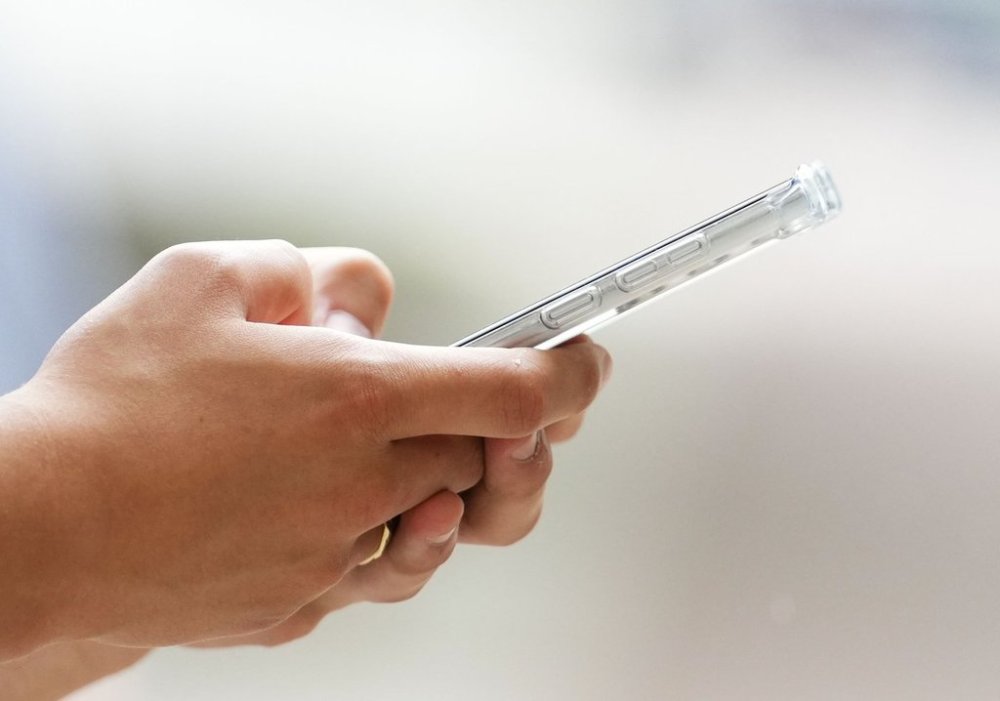
“It’s more than likely increasing due to different types of technology that’s available for fraudsters,” Horncastle says of smishing attempts.
“So we would discuss AI a lot where fraudsters now have that tool available to them. It’s just reality, right? Where they can craft phishing messages and send them out in bulk through automation through these highly sophisticated platforms that are available.”
The Competition Bureau’s deceptive marketing practices directorate says an informed public is the best protection against smishing.
“The bureau is constantly assessing the marketplace and through our intelligence capabilities is able to know when scams are on the rise and having an immediate impact on society,” says deputy commissioner Josephine Palumbo.
“That’s where these alerts come in really, really handy.”
She adds that it’s difficult to track down fraudsters who sometimes use prepaid SIM cards to shield their identity when targeting victims.
“Since SIM cards lack identification verification, enforcement agencies like the Competition Bureau have a hard time in actually tracking these perpetrators down,” Palumbo says.
Fraudsters can also spoof phone numbers, making it seem like a text has originated with a legitimate agency such as the Canada Revenue Agency, Horncastle adds.
“They might choose a number that they want to show up randomly or if they’re claiming to be a financial institution, they may make that financial institutions’ number show up on the call display,” he says.
“We’ve seen (that) with the CRA and even the Canadian Anti-Fraud Centre, where fraudsters have made our phone numbers show up on victims’ call display.”
This report by The Canadian Press was first published July 11, 2025.
Related Articles
Is it OK to use AI in your job search? Experts say yes. Here's how to do it right
Advertisement Advertise With Us
Advertisement Advertise With Us