Obesity rates in Canada increased faster during pandemic than in previous 11 years

Advertisement

Advertise with us

TORONTO - A new report says the prevalence of obesity increased faster during the COVID-19 pandemic than it did over the course of more than a decade beforehand, specifically in young adults.

Read this article for free:


By clicking the button above, an account will be created and you will begin to receive some of our recommended newsletters. You may opt out of any newsletter by visiting your Email and Communication Preferences page or by clicking "unsubscribe" at the bottom of any email.

or

Already have an account? Log in here »

To continue reading, please subscribe:

Digital Subscription

One year of digital access for only $1.44 a week*

  • Enjoy unlimited reading on winnipegfreepress.com
  • Read the E-Edition, our digital replica newspaper
  • Access News Break, our award-winning app
  • Play interactive puzzles

*Billed as $5.77 plus GST every four weeks. After 52 weeks, price increases to the regular rate of $19.95 plus GST every four weeks. Offer available to new and qualified returning subscribers only. Cancel any time.

To continue reading, please subscribe:

Add Free Press access to your Brandon Sun subscription for only an additional

$1 for the first 4 weeks*

  • Enjoy unlimited reading on winnipegfreepress.com
  • Read the E-Edition, our digital replica newspaper
  • Access News Break, our award-winning app
  • Play interactive puzzles
Start now

*Your next Brandon Sun subscription payment will increase by $1.00 and you will be charged $17.95 plus GST for four weeks. After four weeks, your payment will increase to $24.95 plus GST every four weeks.

Hey there, time traveller!
This article was published 13/07/2025 (464 days ago), so information in it may no longer be current.

TORONTO – A new report says the prevalence of obesity increased faster during the COVID-19 pandemic than it did over the course of more than a decade beforehand, specifically in young adults.

The research published in the Canadian Medical Association Journal looked at obesity rates over a 15-year period based on the body mass index of almost 750,000 people who were 18 or older.

Researchers say they saw an increase of about eight per cent over the first 11 years of the study, from 2009 to 2020, compared to an increase of more than 1 percentage point a year between 2020 and 2023.

That’s about twice the pre-pandemic rate of increase.

Laura Anderson, the study’s author and an associate professor at McMaster University, says these findings suggest public health restrictions during the COVID-19 pandemic may have had an impact on obesity rates.

Anderson says there was a “steep increase” in obesity rates among young adults, particularly young females, who showed an increase of 4.7 per cent between 2020 and 2023 in the youngest age group.

Dr. Mélanie Henderson, a pediatric endocrinologist and researcher at the CHU Sainte-Justine, says the closure of gyms, extracurricular programs, schools and workplaces led to an absence of structure, extra screen time and closer proximity to the fridge.

“It was kind of the perfect storm,” says Henderson, who had no connection to the study. She adds that adolescence is a vulnerable time that could have made younger adults more susceptible to pandemic conditions.

The study also suggests that stress related to changes in job status or caregiving may have led to weight gain for some.

But it also says further study is needed to better understand the causes and how they can be prevented in the future.

A closeup of a beam scale in New York, Tuesday, April 3, 2018. THE CANADIAN PRESS/AP-Patrick Sison

Henderson says the first step is creating policies that ensure health-care services are available to treat and manage obesity.

This report by The Canadian Press was first published July 14, 2025.

Canadian Press health coverage receives support through a partnership with the Canadian Medical Association. CP is solely responsible for this content.
Report Error Submit a Tip

More Stories

Detox centre ready but staffing challenges persist

Scott Billeck 6 minute read Preview

Detox centre ready but staffing challenges persist

Scott Billeck 6 minute read Yesterday at 2:01 AM CDT

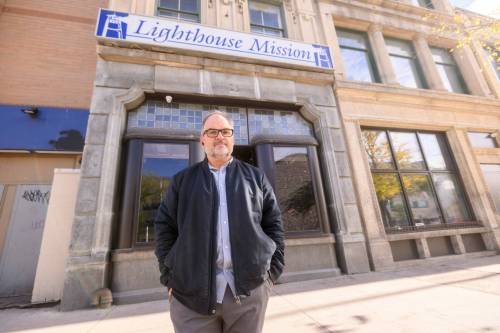
Peter McMullen’s decade-long struggle with addiction gives him insight into the challenges Lighthouse Mission hopes to address with a new Main Street detox facility focused on connecting people with longer-term treatment.

McMullen, executive director of Lighthouse Mission, knows how difficult it can be to navigate Winnipeg’s addiction treatment system, particularly when someone is ready to seek help but the services they need aren’t immediately available.

Now, after years of planning and a lengthy renovation of two century-old buildings, the downtown organization is preparing to open a 10-bed detox facility at 667 and 669 Main St., with five beds each for men and women.

The facility could begin accepting clients as early as November, provided Lighthouse Mission can overcome one final hurdle: recruiting enough staff to operate it.

Read
Yesterday at 2:01 AM CDT

Addressing homelessness and toxic drug use

Kate Kehler and Molly McCracken 5 minute read 2:00 AM CDT

Winnipeg is facing a housing and toxic drug crisis that is not going away. Every day, we see the consequences — people living without safe homes, encampments in neighbourhoods and public spaces, increasingly toxic drugs, overdoses and emergency services stretched to their limits.

These are symptoms of a deeper crisis of inter-generational trauma related to colonization of the original peoples of these lands, compounded by a crisis in housing, income security, mental health and addictions services and the availability of community based supports.

Winnipeg’s next city council must decide whether it is prepared to invest in solutions that address the root causes.

Weaving a Better Winnipeg: The Alternative Municipal Budget 2026, proposes a five-point action plan that would put housing, outreach, human rights and Indigenous leadership at the centre of Winnipeg’s response.

Disgraced ex-dean landed job at German university after fleeing Winnipeg

Maggie Macintosh 8 minute read Preview

Disgraced ex-dean landed job at German university after fleeing Winnipeg

Maggie Macintosh 8 minute read Friday, Oct. 16, 2026

Before he was arrested in a posh Paris suburb, the disgraced dean of Manitoba’s only law school — who fled the country following a 2020 expense scandal — kept a low profile at a German university.

Read
Friday, Oct. 16, 2026

Clay Stevenson credits therapeutic side of hockey in learning to live with mother’s suicide

Mike McIntyre 7 minute read Preview

Clay Stevenson credits therapeutic side of hockey in learning to live with mother’s suicide

Mike McIntyre 7 minute read Yesterday at 5:43 PM CDT

Hockey has always been more than just a game to Clay Stevenson. That was especially true after he suffered the biggest loss of his life: his mother, Holly, died by suicide seven years ago.

Read
Yesterday at 5:43 PM CDT

Katz ‘violated public trust,’ Sheegl lacked ‘moral compass,’ police HQ inquiry commissioner concludes

Joyanne Pursaga 8 minute read Preview

Katz ‘violated public trust,’ Sheegl lacked ‘moral compass,’ police HQ inquiry commissioner concludes

Joyanne Pursaga 8 minute read Updated: Yesterday at 7:29 PM CDT

The final report from the public inquiry into the scandal-plagued Winnipeg Police Service headquarters construction project concludes that former mayor Sam Katz and former city CAO Phil Sheegl broke public trust and engaged in unethical conduct.

And the report, released Monday by inquiry commissioner Garth Smorang, says the cost of the project — transforming a downtown Canada Post office tower and warehouse into the police HQ — soared, in part, because main contractor Caspian Projects overcharged the city by more than $40 million in expenses.

The project’s initial $135-million initial price tag rose to about $209 million in the end. The city purchased the complex in 2009; construction was completed in 2016.

Smorang’s report concludes Katz “violated the public trust” and council code of conduct, and Sheegl suffered from a “complete lack of a moral compass.”

Read
Updated: Yesterday at 7:29 PM CDT

Province looks to keep nearly $1M from traffic stop

Erik Pindera 4 minute read Preview

Province looks to keep nearly $1M from traffic stop

Erik Pindera 4 minute read Yesterday at 2:01 AM CDT

The RCMP constable could see that Alireza Haghgoo was nervous. The 22-year-old, seated as a passenger in a rental Nissan SUV the Mountie pulled over for speeding outside Brandon in late July, was breathing heavily and tapping his foot constantly.

Read
Yesterday at 2:01 AM CDT