King Charles’ annual swan census begins on the River Thames
Advertisement
Read this article for free:
or
Already have an account? Log in here »
To continue reading, please subscribe:

Digital Subscription
One year of digital access for only $205*
- Enjoy unlimited reading on winnipegfreepress.com
- Read the E-Edition, our digital replica newspaper
- Access News Break, our award-winning app
- Play interactive puzzles
*First annual payment billed as $205.00 + GST for one year. This annual subscription will automatically renew at $233.00 + GST every 52 weeks (10% off the regular annual price of $259.35). Offer available to new and qualified returning subscribers only. Cancel any time.
To continue reading, please subscribe:
Add Free Press access to your Brandon Sun subscription for only an additional
$1 for the first 4 weeks*
- Enjoy unlimited reading on winnipegfreepress.com
- Read the E-Edition, our digital replica newspaper
- Access News Break, our award-winning app
- Play interactive puzzles
*Your next Brandon Sun subscription payment will increase by $1.00 and you will be charged $17.95 plus GST for four weeks. After four weeks, your payment will increase to $24.95 plus GST every four weeks.
Read unlimited articles for free today:
or
Already have an account? Log in here »
Hey there, time traveller!
This article was published 14/07/2025 (431 days ago), so information in it may no longer be current.
LONDON (AP) — Scarlet uniforms flashed against the riverbank. Wooden skiffs glided in formation. A young swan, gently lifted from the water, was measured, inspected and released.
The annual five-day census of swans belonging to King Charles III – known as Swan Upping — began Monday on the River Thames to assess their health.
One of the British monarch’s less-known titles is Seigneur of the Swans — Lord of the Swans — and according to ancient lore, he or she owns all members of the mute swan species found in Britain’s open waters.
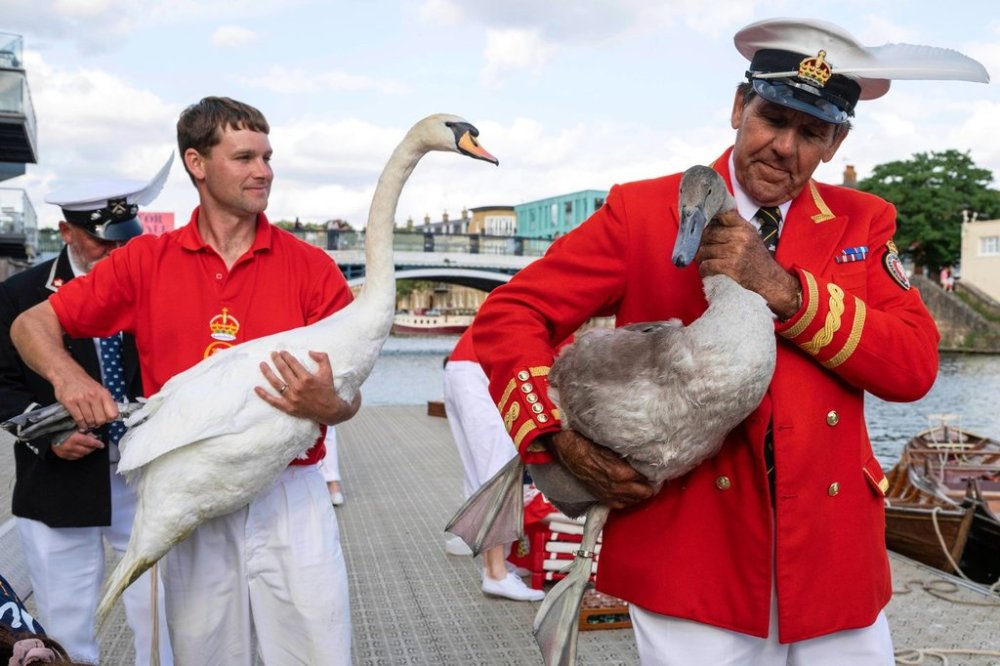
Every year, a team of carefully selected oarsmen — Swan Uppers — are tasked with finding the swans on a stretch of the Thames.
When a family is spotted, they shout, “All up!” and the boats quickly surround the birds, marking them and checking for signs of disease or injury.
“It gives us an indication of what’s going on throughout the country,” said David Barber, who wears a scarlet jacket and a white swan feather in his cap and bears the title of King’s Swan Marker. “It’s a tradition, but I think it’s serving a very useful purpose as well.”
Barber has been leading the event for more than 30 years. He is accompanied by a vet and oarsmen dressed in three colors: red for the king, white for the Worshipful Company of Vintners and blue stripes for the Worshipful Company of Dyers. The last two are medieval London trade guilds that were granted ownership of some Thames swans in the 15th century.

The census tradition dates to the 12th century, when swans were considered an important food for royal banquets and feasts.
While swans are now legally protected from hunting, they face threats from disease, pollution, vandalism and cruelty, Barber said.
Their numbers have declined over the last two years, primarily due to outbreaks of avian flu across Britain, he said, adding that only 86 young swans were found during last year’s Swan Upping, which was 45% fewer than the year before that.
But Barber appeared positive at the end of the event’s first day, with a total of 16 young swans recorded.
The census continues until Friday, traveling from Sunbury, on the outskirts of London, to Abingdon, 80 miles (130 kilometers) upstream.