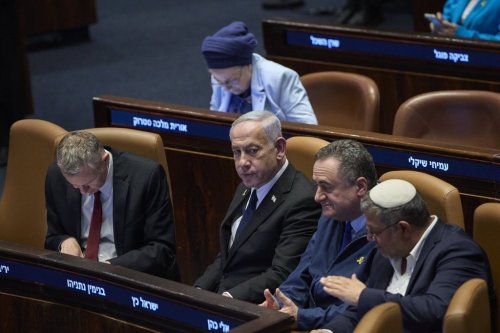
Netanyahu’s governing coalition is fracturing. Here’s what it means for Israel and Gaza
Advertisement
Read this article for free:
or
Already have an account? Log in here »
To continue reading, please subscribe:

Digital Subscription
One year of digital access for only $205*
- Enjoy unlimited reading on winnipegfreepress.com
- Read the E-Edition, our digital replica newspaper
- Access News Break, our award-winning app
- Play interactive puzzles
*First annual payment billed as $205.00 + GST for one year. This annual subscription will automatically renew at $233.00 + GST every 52 weeks (10% off the regular annual price of $259.35). Offer available to new and qualified returning subscribers only. Cancel any time.
To continue reading, please subscribe:
Add Free Press access to your Brandon Sun subscription for only an additional
$1 for the first 4 weeks*
- Enjoy unlimited reading on winnipegfreepress.com
- Read the E-Edition, our digital replica newspaper
- Access News Break, our award-winning app
- Play interactive puzzles
*Your next Brandon Sun subscription payment will increase by $1.00 and you will be charged $17.95 plus GST for four weeks. After four weeks, your payment will increase to $24.95 plus GST every four weeks.
Read unlimited articles for free today:
or
Already have an account? Log in here »
Hey there, time traveller!
This article was published 15/07/2025 (455 days ago), so information in it may no longer be current.
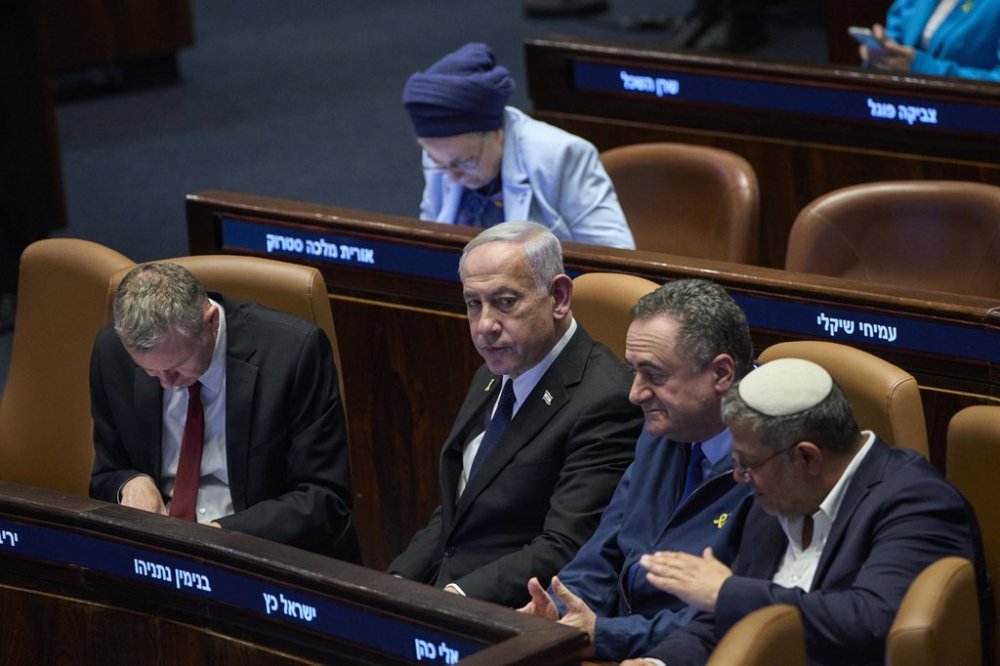
TEL AVIV, Israel (AP) — Israeli Prime Minister Benjamin Netanyahu’s government suffered a serious blow on Tuesday when an ultra-Orthodox party announced it was bolting the coalition.
While this doesn’t immediately threaten Netanyahu’s rule, it could set in motion his government’s demise, although that could still be months away. It also could complicate efforts to halt the war in Gaza.
United Torah Judaism’s two factions said they were leaving the government because of disagreements over a proposed law that would end broad exemptions for religious students from enlistment into the military.
Military service is compulsory for most Jewish Israelis, and the issue of exemptions has long divided the country. Those rifts have only widened since the start of the war in Gaza as demand for military manpower has grown and hundreds of soldiers have been killed.
The threat to the government “looks more serious than ever,” said Shuki Friedman, vice president of the Jewish People Policy Institute, a Jerusalem think tank.
Netanyahu is on trial for alleged corruption, and critics say he wants to hang on to power so that he can use his office as a bully pulpit to rally supporters and lash out against prosecutors and judges. That makes him all the more vulnerable to the whims of his coalition allies.
Here is a look at Netanyahu’s political predicament and some potential scenarios:
The ultra-Orthodox are key partners
Netanyahu, Israel’s longest serving leader, has long relied on the ultra-Orthodox parties to prop up his governments.
Without UTJ, his coalition holds just 61 out of parliament’s 120 seats. That means Netanyahu will be more susceptible to pressure from other elements within his government, especially far-right parties who strongly oppose ending the war in Gaza.
The political shake up isn’t likely to completely derail ceasefire talks, but it could complicate how flexible Netanyahu can be in his concessions to Hamas.
A second ultra-Orthodox party is also considering bolting the government over the draft issue. That would give Netanyahu a minority in parliament and make governing almost impossible.
The ultra-Orthodox military exemptions have divided Israel
A decades-old arrangement by Israel’s first prime minister granted hundreds of ultra-Orthodox men exemptions from compulsory Israeli service. Over the years, those exemptions ballooned into the thousands and created deep divisions in Israel.
The ultra-Orthodox say their men are serving the country by studying sacred Jewish texts and preserving centuries’ old tradition. They fear that mandatory enlistment will dilute adherents’ connection to the faith.
But most Jewish Israelis see the exemption as unfair, as well as the generous government stipends granted to many ultra-Orthodox men who study instead of work throughout adulthood. That bitterness has only worsened during nearly two years of war.
The politically powerful ultra-Orthodox parties have long had outsize influence in Israel’s fragmented political system and used that status to extract major concessions for their constituents.
But a court last year ruled Netanyahu’s government must enlist the ultra-Orthodox so long as there is no new law codifying the exemptions.
Netanyahu’s coalition has been trying to find a path forward on a new law. But his base is largely opposed to granting sweeping draft exemptions and a key lawmaker has stood in the way of giving the ultra-Orthodox a law they can get behind, prompting their exit.
The political shake up comes during Gaza ceasefire talks
The resignations don’t take effect for 48 hours, so Netanyahu will likely spend the next two days seeking a compromise. But that won’t be easy because the Supreme Court has said the old system of exemptions amounts to discrimination against the secular majority.
That does not mean the government will collapse.
Netanyahu’s opponents cannot submit a motion to dissolve parliament until the end of the year because of procedural reasons. And with parliament’s summer recess beginning later this month, the parties could use that time to find a compromise and return to the government.
Cabinet Minister Miki Zohar, from Netanyahu’s Likud party, said he was hopeful the religious party could be coaxed back to the coalition. “God willing, everything will be fine,” he said. A Likud spokesman did not immediately respond to a request for comment.
Once the departures become official, Netanyahu will have a razor-thin majority. The far-right parties within it could threaten to leave the coalition, further weakening him, if he gives in to too many of Hamas’ demands.
Hamas wants a permanent end to the war as part of any ceasefire deal. Netanyahu’s hard-line partners are open to a temporary truce, but say the war cannot end until Hamas is destroyed.
If they or any other party leave the coalition, Netanyahu will have a minority government, and that will make it almost impossible to govern and likely lead to its collapse. But he could still find ways to approve a ceasefire deal, including with support from the political opposition.
Israel may be on the path toward early elections

Netanyahu could seek to shore up his coalition by appeasing the far-right and agreeing for now to just a partial, 60-day ceasefire with Hamas, promising his governing partners that he can still resume the war once it expires.
But Netanyahu is balancing those political constraints with pressure from the Trump administration, which is pressing Israel to wrap up the war.
Gayil Talshir, a political scientist at the Hebrew University of Jerusalem, said she expects Netanyahu to work during those 60 days to shift the narrative away from the draft exemptions and the war in Gaza, toward something that could potentially give him an electoral boost – like an expansion of U.S.-led normalization deals between Israel and Arab or Muslim countries.
Once the 60-day ceasefire is up, Netanyahu could bend to U.S. pressure to end the war and bring home the remaining hostages in Gaza — a move most Israelis would support.
Elections are currently scheduled for October 2026. But if Netanyahu feels like he has improved his political standing, he may want to call elections before then.
Related Articles
UN finds rising child malnutrition in Gaza, where officials say Israeli strikes kill 93 people

Advertisement Advertise With Us
Advertisement Advertise With Us
The Free Press acknowledges the financial support it receives from members of the city’s faith community, which makes our coverage of religion possible.