Canadian researchers create tool to remove anti-deepfake watermarks from AI content

Advertisement

Advertise with us

OTTAWA - University of Waterloo researchers have built a tool that can quickly remove watermarks identifying content as artificially generated — and they say it proves that global efforts to combat deepfakes are most likely on the wrong track.

Read this article for free:


or

Already have an account? Log in here »

To continue reading, please subscribe:

Subscribe and receive a limited-edition Free Press branded hat or tote.

Digital Subscription

One year of digital access for only $205*

  • Enjoy unlimited reading on winnipegfreepress.com
  • Read the E-Edition, our digital replica newspaper
  • Access News Break, our award-winning app
  • Play interactive puzzles

*First annual payment billed as $205.00 + GST for one year. This annual subscription will automatically renew at $233.00 + GST every 52 weeks (10% off the regular annual price of $259.35). Offer available to new and qualified returning subscribers only. Cancel any time.

To continue reading, please subscribe:

Add Free Press access to your Brandon Sun subscription for only an additional

$1 for the first 4 weeks*

  • Enjoy unlimited reading on winnipegfreepress.com
  • Read the E-Edition, our digital replica newspaper
  • Access News Break, our award-winning app
  • Play interactive puzzles
Start now

*Your next Brandon Sun subscription payment will increase by $1.00 and you will be charged $17.95 plus GST for four weeks. After four weeks, your payment will increase to $24.95 plus GST every four weeks.

Hey there, time traveller!
This article was published 23/07/2025 (401 days ago), so information in it may no longer be current.

OTTAWA – University of Waterloo researchers have built a tool that can quickly remove watermarks identifying content as artificially generated — and they say it proves that global efforts to combat deepfakes are most likely on the wrong track.

Academia and industry have focused on watermarking as the best way to fight deepfakes and “basically abandoned all other approaches,” said Andre Kassis, a PhD candidate in computer science who led the research.

At a White House event in 2023, the leading AI companies — including OpenAI, Meta, Google and Amazon — pledged to implement mechanisms such as watermarking to clearly identify AI-generated content.
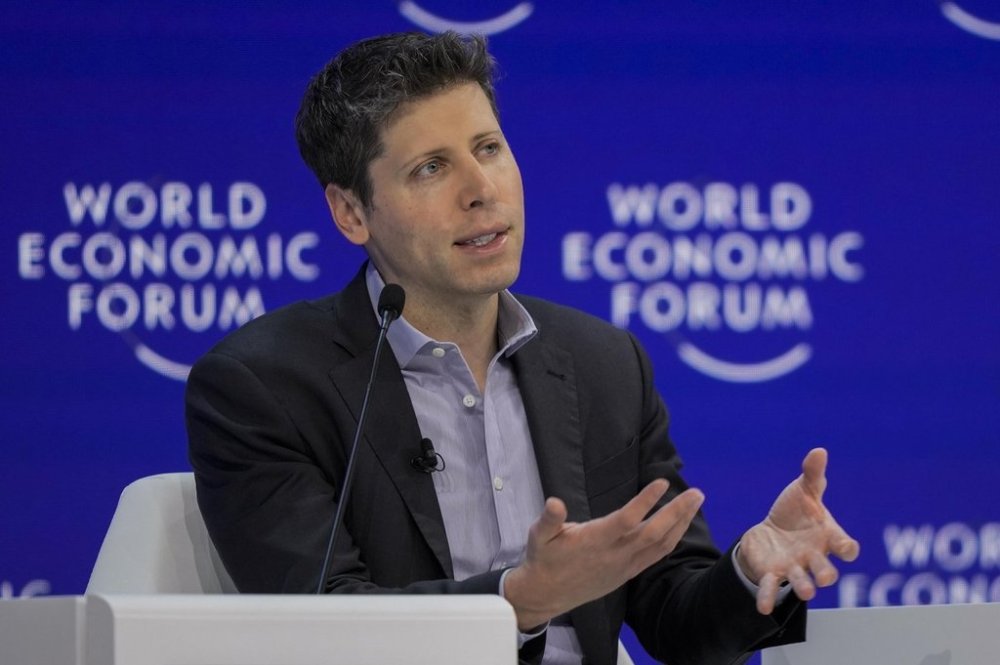
OpenAI CEO Sam Altman participates in a panel discussion during the annual meeting of the World Economic Forum in Davos, Switzerland, Thursday, Jan. 18, 2024. OpenAI was one of the major tech firms that promised to pursue watermarking technology. (AP Photo/Markus Schreiber)

AI companies’ systems embed a watermark, which is a hidden signature or pattern that isn’t visible to a person but can be identified by another system, Kassis explained.

He said the research shows the use of watermarks is most likely not a viable shield against the hazards posed by AI content.

“It tells us that the danger of deepfakes is something that we don’t even have the tools to start tackling at this point,” he said.

The tool developed at the University of Waterloo, called UnMarker, follows other academic research on removing watermarks. That includes work at the University of Maryland, a collaboration between researchers at the University of California and Carnegie Mellon, and work at ETH Zürich.

Kassis said his research goes further than earlier efforts and is the “first to expose a systemic vulnerability that undermines the very premise of watermarking as a defence against deepfakes.”

In a follow-up email statement, he said that “what sets UnMarker apart is that it requires no knowledge of the watermarking algorithm, no access to internal parameters, and no interaction with the detector at all.”

When tested, the tool worked more than 50 per cent of the time on different AI models, a university press release said.

AI systems can be misused to create deepfakes, spread misinformation and perpetrate scams — creating a need for a reliable way to identify content as AI-generated, Kassis said.

After AI tools became too advanced for AI detectors to work well, attention turned to watermarking.

The idea is that if we cannot “post facto understand or detect what’s real and what’s not,” it’s possible to inject “some kind of hidden signature or some kind of hidden pattern” earlier on, when the content is created, Kassis said.

The European Union’s AI Act requires providers of systems that put out large quantities of synthetic content to implement techniques and methods to make AI-generated or manipulated content identifiable, such as watermarks.

In Canada, a voluntary code of conduct launched by the federal government in 2023 requires those behind AI systems to develop and implement “a reliable and freely available method to detect content generated by the system, with a near-term focus on audio-visual content (e.g., watermarking).”

Kassis said UnMarker can remove watermarks without knowing anything about the system that generated it, or anything about the watermark itself.

“We can just apply this tool and within two minutes max, it will output an image that is visually identical to the watermark image” which can then be distributed, he said.

“It kind of is ironic that there’s billions that are being poured into this technology and then, just with two buttons that you press, you can just get an image that is watermark-free.”

Kassis said that while the major AI players are racing to implement watermarking technology, more effort should be put into finding alternative solutions.

Watermarks have “been declared as the de facto standard for future defence against these systems,” he said.

“I guess it’s a call for everyone to take a step back and then try to think about this problem again.”

This report by The Canadian Press was first published July 23, 2025.

Report Error Submit a Tip

More Stories

Bisons begin reshaping herd

Joshua Frey-Sam 7 minute read Preview

Bisons begin reshaping herd

Joshua Frey-Sam 7 minute read Yesterday at 7:49 PM CDT

The Manitoba Bisons turned the page on a storied chapter of the football program on the sidelines last season. This year, another new era dawns on the field.

With quarterback Jackson Tachinski graduated, third-year pivot Cole Anseeuw will take the reins of a younger Bisons offence as it figures out who its core group of playmakers are for the foreseeable future.

“It’s not just (Tachinski),” said head coach Stan Pierre, who enters his second year at the program’s helm. “I think he’s probably the face of this era, but we’re also losing essentially all our offensive backfield production from last year. So that’s really where the challenge lies for us.”

Besides the quarterback, the Bisons also graduated their centre, top two running backs and three of their top receivers. There’s fewer turnovers on defence, but young players will need to step up in the first and third level, as two starting linemen and three defensive backs have left the program.

Read
Yesterday at 7:49 PM CDT

Bombers give would-be boo birds their marching orders

Taylor Allen 3 minute read Preview

Bombers give would-be boo birds their marching orders

Taylor Allen 3 minute read Tuesday, Aug. 25, 2026

The Winnipeg Blue Bombers are being criticized by some fans online for booking the University of North Dakota’s marching band for Friday’s game against Montreal.

Read
Tuesday, Aug. 25, 2026

Puzzles Palace

1 minute read Monday, Jul. 27, 2026

To solve our puzzles, please subscribe with this special offer: |

Man who robbed tax accounts to pay his own bill given house arrest

Dean Pritchard 3 minute read Preview

Man who robbed tax accounts to pay his own bill given house arrest

Dean Pritchard 3 minute read Yesterday at 5:07 PM CDT

A Winnipeg man has been sentenced to 15 months of house arrest after he used money siphoned from Canada Revenue Agency accounts belonging to two city businesses and a doctor to pay his own income tax bill.

Mark Revelo, 38, pleaded guilty to one charge under the Income Tax Act in relation to five withdrawals from the victims’ accounts between February 2022 and April 2023 that totalled nearly $43,000.

“There may not be a more public system (in Canada) than the Canada Revenue Agency,” provincial court Judge Wanda Garreck told Revelo at a sentencing hearing Wednesday.

“Everyone is compelled to participate in that system… and when it gets compromised and used by someone it impacts the entire public and breaks down the trust and confidence people have in the system,” Garreck said.

Read
Yesterday at 5:07 PM CDT

Fear and loathing in bedbug-infested seniors building

Malak Abas and Morgan Modjeski 5 minute read Preview

Fear and loathing in bedbug-infested seniors building

Malak Abas and Morgan Modjeski 5 minute read Wednesday, Aug. 26, 2026

Years of living in a regularly infested suite in an always-infested building have given Lewie Gwyllt nightmares in which he’s wrestling giant bedbugs.

The 64-year-old has lived at 529 Country Club Blvd., a 107-unit seniors’ home run by Manitoba Housing, for nearly eight years. Much of his tenancy has been marked by monthly, but futile, bedbug-eradication treatments.

Gwyllt’s routine is set in stone: he bags his laundry, steams his clothes, and buys covers for any piece of furniture he buys. He has a physical disability and struggles to move things when the pest-control people arrive to spray for the bugs, but he knows the nooks and crannies of his baseboards are a problem spot.

The mental toll has weighed heavily on him. He takes anti-anxiety medication to deal with the stress and despair when the treatments don’t work.

Read
Wednesday, Aug. 26, 2026

Davidson to lead provincewide economic development agency

Gabrielle Piché 5 minute read Preview

Davidson to lead provincewide economic development agency

Gabrielle Piché 5 minute read Yesterday at 7:48 PM CDT

The lead of Manitoba’s chamber network will become the driving force behind a provincewide economic development agency.

Chuck Davidson is leaving his role as president of the Manitoba Chambers of Commerce. He’ll end his 13-year tenure at the non-profit, which represents more than 60 chambers, on Sept. 4.

On Sept. 8, he’ll begin as president and chief executive of Winnipeg Economic Development & Tourism. The provincial government announced Thursday it’s mandated WEDT to serve as a provincewide economic development agency (following a Budget 2026 promise).

However, the shape of such an agency — and how it will affect existing entities — hasn’t yet been determined, Davidson said.

Read
Yesterday at 7:48 PM CDT