Russia launches an Iranian communications satellite into orbit
Advertisement
Read this article for free:
or
Already have an account? Log in here »
To continue reading, please subscribe:

Digital Subscription
One year of digital access for only $205*
- Enjoy unlimited reading on winnipegfreepress.com
- Read the E-Edition, our digital replica newspaper
- Access News Break, our award-winning app
- Play interactive puzzles
*First annual payment billed as $205.00 + GST for one year. This annual subscription will automatically renew at $233.00 + GST every 52 weeks (10% off the regular annual price of $259.35). Offer available to new and qualified returning subscribers only. Cancel any time.
To continue reading, please subscribe:
Add Free Press access to your Brandon Sun subscription for only an additional
$1 for the first 4 weeks*
- Enjoy unlimited reading on winnipegfreepress.com
- Read the E-Edition, our digital replica newspaper
- Access News Break, our award-winning app
- Play interactive puzzles
*Your next Brandon Sun subscription payment will increase by $1.00 and you will be charged $17.95 plus GST for four weeks. After four weeks, your payment will increase to $24.95 plus GST every four weeks.
Read unlimited articles for free today:
or
Already have an account? Log in here »
Hey there, time traveller!
This article was published 25/07/2025 (396 days ago), so information in it may no longer be current.
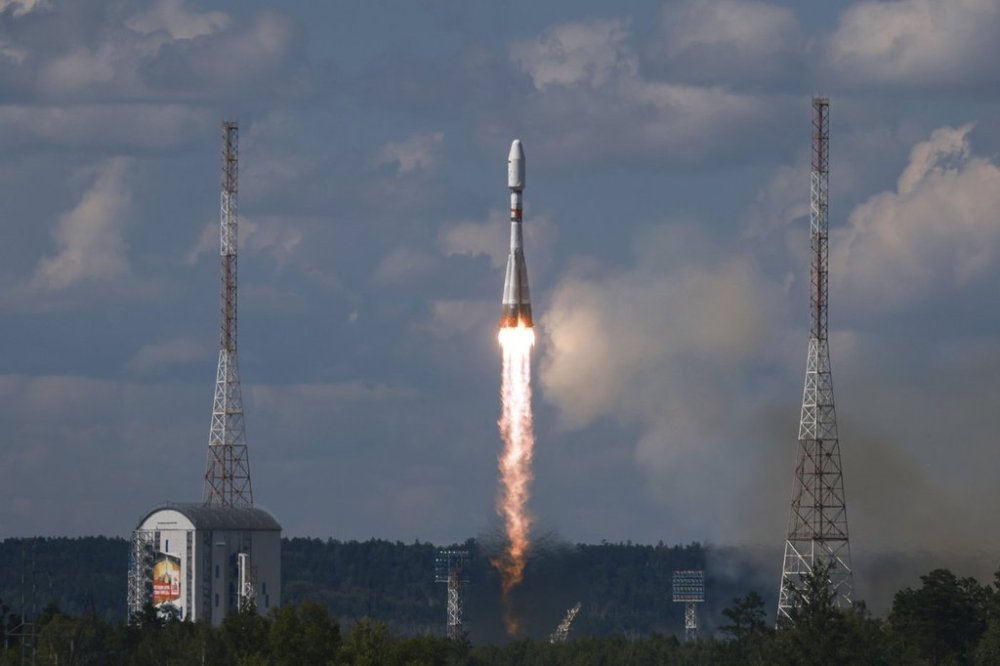
MOSCOW (AP) — A Russian rocket sent an Iranian communications satellite into orbit Friday, a launch that highlighted strong ties between the two countries.
The Soyuz rocket lifted off as scheduled from Vostochny launchpad in far eastern Russia, the country’s state-controlled Roscosmos corporation said. It carried two Russian Ionosphere-M Earth observation satellites, along with Iran’s Nahid-2 satellite and 17 smaller Russian satellites, and put them into designated orbits.
The 110-kilogram (242-pound) Iranian satellite is supposed to circle the Earth on a 500-kilometer (310-mile) orbit and has a service lifetime of two years.
In November, Russia launched a pair of Iranian satellites named Kowsar and Hodhod, the first launched on behalf of the country’s private sector. It followed two previous Russian launches of Iranian satellites in 2022 and 2024.
Russia, which signed a “strategic partnership” treaty with Iran in January, strongly condemned the Israeli and U.S. strikes on Iran last month. Russian President Vladimir Putin has suggested that Moscow could help negotiate a settlement that could allow Tehran to pursue a peaceful atomic program while assuaging Israeli security concerns.
At the same time, Putin has emphasized that Tehran hasn’t asked Moscow for military assistance and noted that the partnership treaty doesn’t envision such aid.
Russia has maintained a delicate balancing act in the Middle East for decades, trying to maintain warm relations with Israel even as it developed strong economic and military ties with Iran.